AB 2585 California Assembly · 2025-2026 Regular Session

California Guaranteed Income Pilot Program.

Summary
Existing law requires the State Department of Social Services, subject to an appropriation, to administer the California Guaranteed Income Pilot Program, until January 1, 2028, to provide grants to eligible entities for the purpose of administering pilot programs and projects that provide a guaranteed income to participants. Existing law requires the department to prioritize funding for pilot programs and projects California residents who age out of the extended foster care program at or after 21 years of age or who are pregnant individuals. Existing law requires the department, in determining the methodology and manner of distributing grants, to ensure that grant funds are awarded in an equitable manner to eligible entities in both rural and urban counties and in proportion to the number of individuals anticipated to be served by an eligible entity's pilot program or project. This bill would require the department to also prioritize pilot programs and projects that serve California residents who are parents of children between zero to 5 years of age, inclusive, or who are victims of domestic violence. The bill would remove the requirement that grant funds are awarded in proportion to the number of individuals anticipated to be served by an eligible entity's pilot program or project, and would require preference to be provided for eligible entities in regions where eligible entities have not yet been awarded grant funds pursuant to this program.
Bill status in committee 1 of 4 stages cleared
Introduction
Feb 2026
Committee Review
Floor Vote
Governor
Introduced Feb 20, 2026 Last action May 14, 2026
Maddy AI version diff · 2 comparisons

What changed between versions

02/20/26 - Introduced 03/19/26 - Amended Assembly · 9 edits · Mar 19, 2026
MAJOR
The amendment dramatically expands AB 2585 from a nonsubstantive special education cleanup bill into a major policy bill that rewrites Section 18997 of the Welfare and Institutions Code governing the California Guaranteed Income Pilot Program. The new provisions add two priority populations (parents of children ages 0-5 and domestic violence victims), add a geographic preference for regions without prior grant recipients, establish requirements for eligible entities including a 50 percent matching fund and benefits counseling, create income exclusion protections for Medi-Cal and other programs, and mandate evaluation and reporting. The fiscal committee designation changed from 'no' to 'yes,' reflecting the new budgetary implications.
SCOPE

Entirely new Section 1 amending Welfare and Institutions Code Section 18997 was added, expanding the bill from a nonsubstantive special education fix into a comprehensive rewrite of the California Guaranteed Income Pilot Program rules.

ELIGIBILITY

Two new priority populations were added for guaranteed income pilot funding: parents of children between zero and five years of age (inclusive) and victims of domestic violence, joining existing priorities for those aging out of extended foster care at 21 or older and pregnant individuals.

REQUIREMENT

A geographic preference was added requiring that eligible entities in regions where no entity has yet received a grant under the program be given preference in funding allocation.

Eligible entities must now present commitments of additional funding equal to or greater than 50 percent of the grant amount, provide benefits counseling and informational materials to participants about impacts on other public benefits, and assist in obtaining exemptions or waivers so guaranteed income payments are not counted as income in means-tested programs.

Guaranteed income payments are excluded from income or resource calculations for state and local benefit programs, and for Medi-Cal eligibility for a 12-month period from receipt (subject to federal law consistency).

DEFINITION

A new definition of 'eligible entity' was added, covering cities, counties, tribes, tribal organizations, combinations thereof, and 501(c)(3) or 501(c)(5) nonprofits that have a letter of support from a county or city where they will operate.

ENFORCEMENT

The department must review and evaluate pilot programs for economic impact and participant outcomes, including applicability of lessons learned to the CalWORKs program, and must submit reports to the Legislature and post them publicly.

FISCAL

The fiscal committee designation changed from 'no' to 'yes,' indicating the bill now has state fiscal implications requiring fiscal committee review.

TECHNICAL

The original nonsubstantive Education Code changes (updating pronouns and age range language in Section 56040) were retained but renumbered as Section 2 of the bill.

Floor votes

How they voted

No floor votes recorded yet.
Full legislative history

Actions timeline

Total actions
8
Key actions
3
Committee
6
Amendments
1
May 14, 2026
Lower · Passed
In committee: Held under submission.
lower
Apr 29, 2026
Committee
In committee: Set, first hearing. Referred to APPR. suspense file.
lower
Apr 15, 2026
Lower · Passed
From committee: Do pass and re-refer to Com. on APPR. (Ayes 5. Noes 2.) (April 14). Re-referred to Com. on APPR.
lower
Mar 23, 2026
Committee
Re-referred to Com. on HUM. S.
lower
Mar 19, 2026
Introduced
From committee chair, with author's amendments: Amend, and re-refer to Com. on HUM. S. Read second time and amended.
lower
Mar 19, 2026
Committee
Referred to Com. on HUM. S.
lower
Feb 21, 2026
Lower · Passed
From printer. May be heard in committee March 23.
lower
1 primary · 0 co-sponsors

Sponsors

Role
Legislator
Party
State
District
P
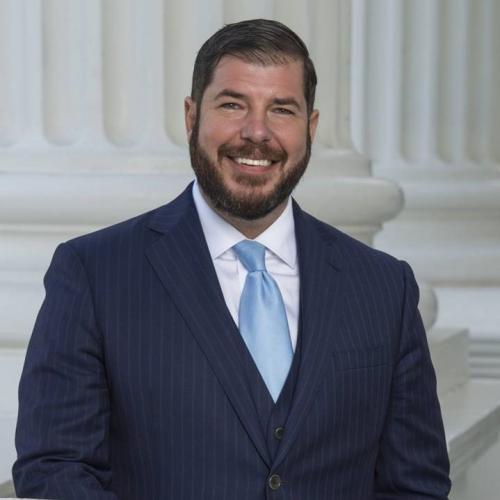
Photo of Joaquin Arambula
Joaquin Arambula
DDemocratic
CA
31