

Property taxation: active solar energy systems: customer sited: extension.
Summary
The California Constitution generally limits the maximum rate of ad valorem tax on real property to 1% of the full cash value of the property and defines "full cash value" for these purposes as the appraised value of real property when purchased, newly constructed, or a change in ownership has occurred after the 1975 assessment. Pursuant to constitutional authorization, existing property tax law excludes from the definition of "newly constructed" for these purposes the construction or addition of any active solar energy system, as defined, through the 2025–26 fiscal year, including the construction of an active solar energy system incorporated by the owner-builder in the initial construction of a new building that the owner-builder does not intend to occupy or use. This bill would extend, for lien dates commencing on or after January 1, 2027, and before January 1, 2031, the above-described exclusion for the addition of customer-sited, active solar energy systems with a system size of less than or equal to 10 kilowatts and for customer-sited, active solar energy systems that are sited on the property of a public entity customer. The bill would require that, for active solar energy systems sited on the property of a public entity customer, tax savings be utilized to maintain the affordability of, or to reduce the cost of, future lease agreements. The bill would limit the exclusion for active solar energy systems incorporated by the owner-builder to buildings where the initial construction permit for the new building is dated before January 1, 2027. The bill would make conforming changes. By imposing additional duties on local tax officials, the bill would impose a state-mandated local program. Existing law requires bills authorizing a new tax expenditure, as defined, to contain, among other things, specific goals that the tax expenditure will achieve, detailed performance indicators, and data collection requirements. This bill also would include additional information required for bills authorizing a new tax expenditure. The California Constitution requires the state to reimburse local agencies and school districts for certain costs mandated by the state. Statutory provisions establish procedures for making that reimbursement. This bill would provide that, if the Commission on State Mandates determines that the bill contains costs mandated by the state, reimbursement for those costs shall be made pursuant to the statutory provisions noted above. Existing law requires the state to reimburse local agencies annually for certain property tax revenues lost as a result of any exemption or classification of property for purposes of ad valorem property taxation. This bill would provide that, notwithstanding those provisions, no appropriation is made and the state shall not reimburse local agencies for property tax revenues lost by them pursuant to the bill. This bill would take effect immediately as a tax levy.
Bill status
in committee
1 of 4 stages cleared
Introduction
Feb 2026
Committee Review
Floor Vote
Governor
Introduced Feb 20, 2026
Last action May 14, 2026
Maddy AI version diff · 3 comparisons
What changed between versions
04/29/26 - Amended Assembly
→
AB2389
·
1 edit
MINOR
The diff between the two versions of AB 2389 reflects primarily a reformatting of the bill text from a printed legislative format (with line numbers and page headers) to a web-based presentation format, along with the addition of website navigation elements. The only textual change in the bill language itself is the conversion of the numeral '2' to the word 'two' in the system size threshold ('2 megawatts' becomes 'two megawatts'). No substantive policy changes were made.
TECHNICAL
The system size threshold was restated from '2 megawatts' to 'two megawatts' - a typographical change with no effect on the actual 2 MW (10 kW) limit for customer-sited active solar energy systems eligible for the property tax exclusion extension through January 1, 2031.
Floor votes
How they voted
No floor votes recorded yet.
Full legislative history
Actions timeline
Total actions
12
Key actions
3
Committee
7
Amendments
3
May 14, 2026
Lower · Passed
In committee: Held under submission.
lower
May 13, 2026
Committee
In committee: Set, first hearing. Referred to APPR. suspense file.
lower
Apr 30, 2026
Committee
Re-referred to Com. on APPR.
lower
Apr 29, 2026
Lower · Passed
Read second time and amended.
lower
Apr 28, 2026
Introduced
From committee: Amend, and do pass as amended and re-refer to Com. on APPR. (Ayes 7. Noes 0.) (April 27).
lower
Apr 21, 2026
Committee
Re-referred to Com. on REV. & TAX.
lower
Apr 20, 2026
Introduced
From committee chair, with author's amendments: Amend, and re-refer to Com. on REV. & TAX. Read second time and amended.
lower
Apr 6, 2026
Committee
In committee: Set, first hearing. Referred to REV. & TAX. suspense file.
lower
Mar 9, 2026
Committee
Referred to Com. on REV. & TAX.
lower
Feb 21, 2026
Lower · Passed
From printer. May be heard in committee March 23.
lower
1 primary · 2 co-sponsors
Sponsors
Role
Legislator
Party
State
District
P
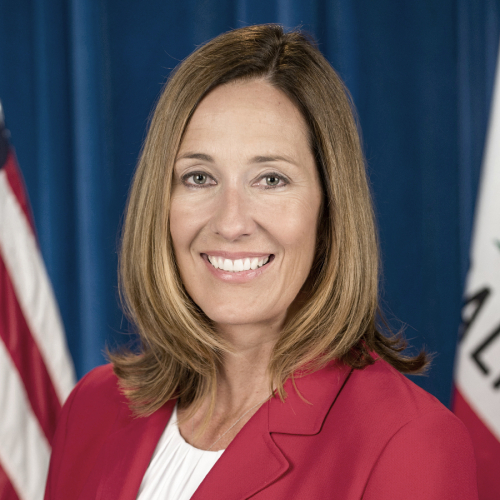
Jacqui Irwin
DDemocratic
Co

Catherine Blakespear
DDemocratic
Co

Jerry McNerney
DDemocratic
Ask Maddy
·
AI policy assistant
Ask Maddy about AB 2389
Scope: CA
Hi! I can help you understand AB 2389. What would you like to know?
Try one of these
i
Maddy answers using official bill text and legislative records. Always verify before sharing.
Sources cited inline