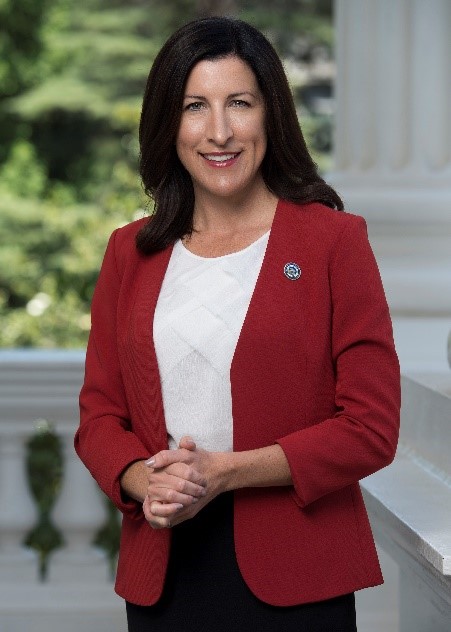
AB 2383 California Assembly · 2025-2026 Regular Session

Electricity: data centers.

Summary
Existing law vests the Public Utilities Commission with regulatory authority over public utilities, including electrical corporations. Existing law authorizes the commission to fix the rates and charges for every public utility and requires that those rates and charges be just and reasonable. Existing law authorizes the commission to investigate a single rate, classification, rule, contract, practice, or the entire schedule of rates, classifications, rules, contracts, and practices, of any public utility, and to establish new rates, classifications, rules, contracts, practices, or schedules. This bill would require, as part of a new or existing proceeding, the commission to require each electrical corporation to file a transmission and distribution service tariff and a generation service tariff for participating customers, as defined, that meet certain requirements, as specified. The bill would also require, on or before January 1, 2028, each community choice aggregator or electric service provider to adopt a tariff for generation service for data centers, as defined, consistent with certain requirements, as specified. By imposing new duties on community choice aggregators, the bill would impose a state-mandated local program. Under existing law, a violation of the Public Utilities Act or any order, decision, rule, direction, demand, or requirement of the commission is a crime. Because the above provisions would be a part of the act, and because a violation of a commission action implementing the above provisions would be a crime, the bill would impose a state-mandated local program. The California Constitution requires the state to reimburse local agencies and school districts for certain costs mandated by the state. Statutory provisions establish procedures for making that reimbursement. This bill would provide that no reimbursement is required by this act for specified reasons.
Bill status passed 3 of 5 stages cleared
Introduction
Feb 2026
Committee Review
Aug 2026
Assembly Passage
May 2026
Senate Passage
Governor
Introduced Feb 20, 2026 Last action Aug 30, 2026
Maddy AI version diff · 7 comparisons

What changed between versions

08/13/26 - Amended Senate 08/28/26 - Amended Senate · 9 edits · Aug 28, 2026
MAJOR
The August 28 Senate amendment to AB 2383 restructures the bill from a single article into separately numbered code sections, adds new definitions (including 'participating customer,' 'nonparticipating customer,' and 'unbundled customer'), broadens the data center definition to explicitly include graphics processing units and cooling systems, and introduces a detailed stranded-cost prevention mechanism requiring participating customers to provide upfront collateral, prepayment, or cost recovery guarantees. It also adds a 25-megawatt minimum peak demand threshold for tariff applicability and explicit exemptions for public safety, national security, and telecommunications facilities.
DEFINITION

The data center definition was expanded to explicitly include 'graphics and central processing units, servers, storage devices, networking equipment, and associated power and cooling systems' rather than the prior broader language about 'electronic equipment used to process, store, and transmit digital information.'

New definitions added for 'electrical corporation' (excluding electrical cooperatives), 'facility' (contiguous or adjacent properties under common ownership or control), 'nonparticipating customer,' 'participating customer,' and 'unbundled customer.'

REQUIREMENT

The transmission and distribution tariff requirement now includes the qualifier 'to the extent permitted by federal law' and changes the wildfire mitigation cost-sharing obligation from applying only to 'a data center interconnected at the transmission level' to 'all participating customers,' broadening who must pay.

FISCAL

A new stranded-cost prevention mechanism was added for both electrical corporations and community choice aggregators. Participating customers must provide upfront collateral or prepayment, pay fees if they do not complete interconnection, and be subject to a cost recovery mechanism based on projected load in their interconnection application. The minimum duration is 10 years.

ELIGIBILITY

A new provision allows participating customers to reduce their generation funding requirements by installing zero-emissions resources behind their meter, with reductions proportional to the amount of zero-emissions capacity installed.

Explicit exemptions were added to the generation tariff for publicly funded research facilities, public safety facilities, publicly funded national security facilities (as identified by the commission), publicly owned facilities, and utility facilities including terrestrial facilities-based telecommunications providers.

SCOPE

A minimum peak electricity demand threshold was added for both electrical corporation and community choice aggregator tariffs. The commission (or CCA/ESP) may not set this threshold above 25 megawatts, meaning smaller data centers below that level would be exempt from the special tariff.

TIMELINE

The community choice aggregator provision now includes an explicit deadline of 'on or before January 1, 2028' for adopting the generation service tariff, which was not previously stated in that section.

TECHNICAL

The bill was restructured from a single Article 14.7 (commencing with Section 945) into separately numbered sections (945.1, 945.4, 945.5, 945.6, and 945.8) added individually to the Public Utilities Code, changing how the provisions are codified.

Floor votes · Assembly May 27, 2026

How they voted

683
Passed · 8 other
Total votes 79
May 27, 2026
D Democratic59
58 Yea 1
98% Yea
R Republican20
10 Yea 3 Nay 7
50% Yea
Vote distribution
All Yea All Nay Mixed No data
Full legislative history

Actions timeline

Total actions
23
Key actions
8
Committee
7
Amendments
9
Aug 28, 2026
Upper · Passed
Read third time and amended. Ordered to second reading.
upper
Aug 13, 2026
Upper · Passed
Read second time and amended. Ordered returned to second reading.
upper
Aug 13, 2026
Introduced
From committee: Amend, and do pass as amended. (Ayes 5. Noes 2.) (August 13).
upper
Aug 3, 2026
Committee
In committee: Referred to APPR. suspense file.
upper
Jul 2, 2026
Upper · Passed
Read second time and amended. Re-referred to Com. on APPR.
upper
Jul 1, 2026
Introduced
From committee: Amend, and do pass as amended and re-refer to Com. on APPR. (Ayes 13. Noes 4.) (June 30).
upper
Jun 15, 2026
Introduced
From committee chair, with author's amendments: Amend, and re-refer to committee. Read second time, amended, and re-referred to Com. on E., U & C.
upper
Jun 10, 2026
Committee
Referred to Com. on E., U & C.
upper
May 27, 2026
Lower · Passed
Read third time. Passed. Ordered to the Senate. (Ayes 69. Noes 3.)
lower
May 22, 2026
Lower · Passed
Read third time and amended. Ordered to third reading. (Page 5274.)
lower
May 14, 2026
Lower · Passed
From committee: Do pass. (Ayes 12. Noes 1.) (May 14).
lower
May 13, 2026
Committee
In committee: Set, first hearing. Referred to APPR. suspense file.
lower
Apr 14, 2026
Committee
Re-referred to Com. on APPR.
lower
Apr 13, 2026
Lower · Passed
Read second time and amended.
lower
Apr 9, 2026
Introduced
From committee: Amend, and do pass as amended and re-refer to Com. on APPR. (Ayes 16. Noes 1.) (April 8).
lower
Mar 9, 2026
Committee
Referred to Com. on U. & E.
lower
Feb 21, 2026
Lower · Passed
From printer. May be heard in committee March 23.
lower
1 primary · 3 co-sponsors

Sponsors