AB 2376 California Assembly · 2025-2026 Regular Session

Vehicles: automated enforcement systems.

Summary
Existing law, until January 1, 2030, authorizes a local agency, as defined, to install automated forward-facing parking control devices on city-owned or district-owned parking enforcement vehicles for the purpose of taking photographs of parking violations occurring in bicycle lanes. Existing law requires a qualified and designated employee of a city, county, city and county, or contracted law enforcement agency for a special transit district to review these photographs for the purpose of determining whether a parking violation occurred in a bicycle lane and to issue a notice of violation to the registered owner of a vehicle within 15 calendar days, as specified. Existing law requires these photographic records to be confidential and makes these records available only to public agencies to enforce parking violations. Existing law requires any local agency that implements a parking enforcement program under these provisions to provide to specified committees of the Legislature an evaluation report on, among other things, the automated enforcement system's effectiveness and impact on traffic outcomes, by December 31, 2028. Existing law prohibits the stopping, standing, or parking of a vehicle in certain places and under certain conditions, including within an intersection, on a sidewalk or crosswalk, or in front of a fire station. This bill would instead authorize local agencies to install forward-facing parking control devices on specified enforcement vehicles for the purpose of taking video images of parking violations and expand the automated parking control device program to include the enforcement of the parking violations described above. The bill would similarly require any local agency that implements an automated device program for the enforcement of these additional parking violations to submit an evaluation report to specified committees of the Legislature by December 31, 2030. The bill would extend the operation of the program's provisions to January 1, 2033. The bill would also authorize a local agency to establish an enhanced curb management system that records images of vehicles for the purpose of enforcing parking violations or automating parking payments if certain requirements are met. The bill would require the governing body of the local agency to adopt a public ordinance or resolution that would authorize the use of a system in specified locations, including, among others, passenger loading zones and commercial loading zones. The bill would require a local agency that automates parking payments by charging vehicles a fee for access to outline the fee, and any adjusted rates, in an ordinance or resolution. The bill would require the system to record images of the vehicle and license plate at the time of the violation. The bill would require the image data to be reviewed and approved by a peace officer or person authorized to enforce parking laws before mailing the notice of violation. The bill would require the notice of violation to be mailed to the registered owner of the vehicle within 15 calendar days, as specified. The bill would require the image data collected by the system and any identifying information to be confidential and would require that the image data only be used for the purpose of processing parking violations and charging vehicles a fee for access. The bill would require a local agency to observe a public information campaign for at least 60 days before issuing citations, as specified. The bill would require a local agency to report periodically to the Legislature on the system's impact, as specified. The bill would expand the definition of "local agency" to include the parking enforcement agencies of the University of California, the California State University, or a college of the California Community Colleges, thereby authorizing these institutions to implement an automated parking control device program or an enhanced curb management system. Existing constitutional provisions require that a statute that limits the right of access to the meetings of public bodies or the writings of public officials and agencies be adopted with findings demonstrating the interest protected by the limitation and the need for protecting that interest. This bill would make legislative findings to that effect.
Bill status in committee 1 of 4 stages cleared
Introduction
Feb 2026
Committee Review
Floor Vote
Governor
Introduced Feb 19, 2026 Last action Mar 17, 2026
Maddy AI version diff · 2 comparisons

What changed between versions

02/19/26 - Introduced 03/16/26 - Amended Assembly · 13 edits · Mar 16, 2026
MAJOR
AB 2376 was dramatically expanded from a simple technical cleanup of a DMV license revocation statute into a comprehensive bill authorizing local agencies (including UC, CSU, and Community College parking authorities) to use automated camera systems for parking enforcement and to establish new 'enhanced curb management systems' with stationary cameras that can enforce parking violations and automate parking payments in loading zones. The amendment adds an entirely new Article 5 to the Vehicle Code, expands the existing bicycle-lane camera program to cover additional violations like blocking intersections and crosswalks, extends the program sunset from 2030 to 2033, and imposes privacy protections, public notice requirements, and warning-only periods before enforcement begins.
SCOPE

Entirely new Article 5 (Sections 40275-40279) authorizes local agencies to establish 'enhanced curb management systems' using stationary cameras or sensors to enforce parking violations and automate parking payments in passenger loading zones, commercial loading zones, smart loading zones, zero-emission delivery zones, bicycle lanes, no stopping zones, and crosswalks.

The existing automated forward-facing camera program (Article 3.6) is expanded from enforcing only bicycle lane parking violations to also cover violations under Section 22500, which includes stopping or parking in intersections, on sidewalks or crosswalks, and in front of fire stations.

ELIGIBILITY

The definition of 'local agency' is expanded to include the parking enforcement authorities of the University of California, California State University, and colleges of the California Community Colleges, allowing these institutions to implement automated parking enforcement programs.

TECHNICAL

The camera program now captures 'video images' rather than just 'photographs,' broadening the type of evidence that can be collected.

TIMELINE

The sunset date for the automated parking enforcement article is extended from January 1, 2030 to January 1, 2033.

REQUIREMENT

New enhanced curb management systems must have a 60-day public information campaign before citations begin, and the first 60 days of enforcement at each location must issue only warning notices with no monetary penalty.

Image data from enhanced curb management systems must be reviewed and approved by a peace officer or person authorized to enforce parking laws before a notice of violation is mailed to the registered owner.

A local agency may only install an enhanced curb management system if the issuing agency includes options to reduce or waive parking penalties for indigent persons as defined in Section 40220.

FISCAL

Local agencies may automate parking payments by charging vehicles a fee for access to passenger loading zones, commercial loading zones, and smart loading zones, with fees and adjusted rates required to be set in an ordinance or resolution.

The fiscal committee designation changed from 'no' to 'yes,' indicating the amended bill now has a state fiscal impact requiring fiscal committee review.

ENFORCEMENT

Data retention limits are imposed: image data from enhanced curb management systems may be retained no longer than 60 days after final disposition of a citation, six months after a paid loading zone session, or 30 days if no citation is issued or fee charged.

Local agencies using enhanced curb management systems must report periodically to the Legislature on the number of citations issued, accident or safety data in enforced areas, and public concerns received.

DEFINITION

Constitutional findings are added to justify limiting public access to image data and administrative records generated by automated parking enforcement programs, citing individual privacy rights as the protected interest.

Floor votes

How they voted

No floor votes recorded yet.
Full legislative history

Actions timeline

Total actions
5
Key actions
1
Committee
3
Amendments
1
Mar 17, 2026
Committee
Re-referred to Com. on TRANS.
lower
Mar 16, 2026
Introduced
From committee chair, with author's amendments: Amend, and re-refer to Com. on TRANS. Read second time and amended.
lower
Mar 16, 2026
Committee
Referred to Coms. on TRANS. and P. & C.P.
lower
Feb 20, 2026
Lower · Passed
From printer. May be heard in committee March 22.
lower
1 primary · 0 co-sponsors

Sponsors

Role
Legislator
Party
State
District
P
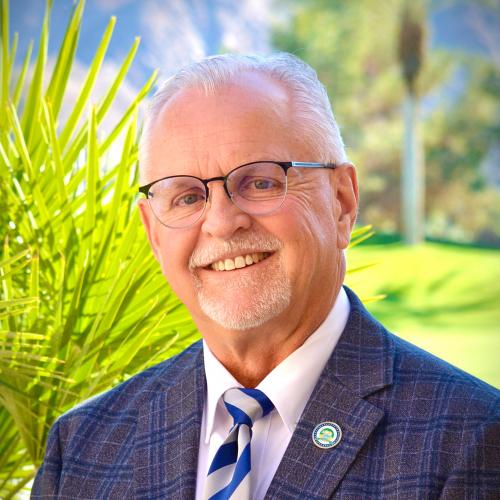
Photo of Tom Lackey
Tom Lackey
RRepublican
CA
34