

Supervision of Trustees and Fundraisers for Charitable Purposes Act.
Summary
Existing law, the Supervision of Trustees and Fundraisers for Charitable Purposes Act, requires the Attorney General to, among other things, establish and maintain a register of charitable corporations, unincorporated associations, and trustees subject to the act and of the particular trust or other relationship under which they hold property for charitable purposes. Existing law requires the Attorney General to establish rules and regulations necessary for the administration of these provisions. Existing law requires a charitable fundraising platform, as defined, before soliciting, permitting, or otherwise enabling charitable solicitations, to register with the Attorney General's Registry of Charities and Fundraisers, under oath, on a form provided by the Attorney General. Existing law requires a platform charity to have good standing, as defined, in order to facilitate acts of solicitation on a charitable fundraising platform. Existing law permits a charitable fundraising platform or platform charity to solicit, permit, or otherwise enable solicitations, or to receive, control, or distribute funds from donations, only for recipient charitable organizations or other charitable organizations in good standing. Existing law authorizes a charitable fundraising platform or platform charity to rely upon electronic lists periodically published by the Internal Revenue Service, the Franchise Tax Board, and the Attorney General's Registry of Charities and Fundraisers to determine good standing of recipient charitable organizations or other charitable organizations, however, if those lists are not published, then a charitable fundraising platform or platform charity is not required to comply with this provision for that applicable agency for the length of time that agency's list is unavailable. This bill would remove lists periodically published by the Internal Revenue Service from the electronic lists that a charitable fundraising platform or platform charity may rely upon to determine good standing of recipient charitable organizations or other charitable organizations. Existing law requires a charitable fundraising platform or platform charity that performs, permits, or otherwise enables acts of solicitation to, before a person can complete a donation or select or change a recipient charitable organization, provide conspicuous disclosures, including, among other things, a statement that a recipient charitable organization may not receive donations or grants or recommended donations, with an explanation identifying the most pertinent reasons why a recipient charitable organization may not receive the funds. This bill would also require the statement described above to include an explanation of what alternative disposition will occur for the donated funds that are not sent to a recipient charitable organization. The bill would provide that a charitable fundraising platform or platform charity that performs, permits, or otherwise enables specified acts of solicitation, when soliciting platform users at the time of checkout to make a donation of no more than $10, or higher if adjusted for inflation, may make certain disclosures through a conspicuous hyperlink, as prescribed, and is not required to comply with specified regulations. The bill would also make other conforming changes. Existing law requires that the rules and regulations established by the Attorney General for the administration of the registry include, among other things, provisions that specify the contents of the form and other information to be provided by a charitable fundraising platform for registration and in annual reports filed with the registry. This bill would require a person or entity that is required to file registration, reporting, or other submissions with the registry to do so through the Attorney General's online filing service in accordance with rules and regulations of the Attorney General. The bill would require the online filing service, by January 1, 2028, to support comprehensive electronic administration, as prescribed. The bill would make various other clarifying and technical changes to the act.
Bill status
passed both
4 of 5 stages cleared
Introduction
Feb 2026
Committee Review
Aug 2026
Assembly Passage
May 2026
Senate Passage
Aug 2026
Governor
Introduced Feb 19, 2026
Last action Aug 30, 2026
Maddy AI version diff · 4 comparisons
What changed between versions
08/27/26 - Amended Senate
→
AB2221
·
1 edit
MINOR
This diff reflects a transition from the formatted Senate amendment document to the final enrolled bill text in a web-based layout. The substantive policy content of AB 2221 remains unchanged between these two versions; the differences are primarily presentational, including removal of line numbers, page headers, and addition of website navigation elements.
TECHNICAL
The document was reformatted from a traditional printed legislative layout (with line numbers, page breaks, and centered headers) to a web-based bill text format with navigation menus, search tools, and metadata fields. No substantive statutory language was altered.
Floor votes · Senate Aug 20, 2026 · Assembly May 22, 2026
How they voted
39–0
Passed · 1 other
Total votes 40
Aug 20, 2026
D
Democratic30
96% Yea
R
Republican10
100% Yea
Vote distribution
All Yea
All Nay
Mixed
No data
Full legislative history
Actions timeline
Total actions
32
Key actions
12
Committee
11
Amendments
6
Aug 30, 2026
Lower · Passed
Senate amendments concurred in. To Engrossing and Enrolling.
lower
Aug 30, 2026
Introduced
In Assembly. Concurrence in Senate amendments pending.
lower
Aug 30, 2026
Upper · Passed
Read third time. Passed. Ordered to the Assembly. (Ayes 40. Noes 0.).
upper
Aug 27, 2026
Upper · Passed
Read third time and amended. Ordered to second reading.
upper
Aug 27, 2026
Upper · Passed
Action rescinded whereby the bill was read third time, passed, and to Assembly.
upper
Aug 20, 2026
Lower · Passed
In Assembly. Ordered to Engrossing and Enrolling.
lower
Aug 20, 2026
Upper · Passed
Read third time. Passed. Ordered to the Assembly. (Ayes 39. Noes 0.).
upper
Aug 13, 2026
Upper · Passed
From committee: Do pass. (Ayes 7. Noes 0.) (August 13).
upper
Aug 3, 2026
Committee
In committee: Referred to APPR. suspense file.
upper
Jun 24, 2026
Upper · Passed
From committee: Do pass and re-refer to Com. on APPR. with recommendation: To Consent Calendar. (Ayes 13. Noes 0.) (June 23). Re-referred to Com. on APPR.
upper
Jun 3, 2026
Committee
Referred to Com. on JUD.
upper
May 22, 2026
Lower · Passed
Read third time. Passed. Ordered to the Senate. (Ayes 73. Noes 0. Page 5265.)
lower
May 14, 2026
Lower · Passed
From committee: Do pass. (Ayes 15. Noes 0.) (May 14).
lower
May 13, 2026
Committee
In committee: Set, first hearing. Referred to APPR. suspense file.
lower
Apr 27, 2026
Committee
Re-referred to Com. on APPR.
lower
Apr 23, 2026
Lower · Passed
Read second time and amended.
lower
Apr 22, 2026
Introduced
From committee: Amend, and do pass as amended and re-refer to Com. on APPR. (Ayes 15. Noes 0.) (April 21).
lower
Apr 14, 2026
Committee
Re-referred to Com. on P. & C.P.
lower
Apr 13, 2026
Introduced
From committee chair, with author's amendments: Amend, and re-refer to Com. on P. & C.P. Read second time and amended.
lower
Mar 16, 2026
Committee
Referred to Com. on P. & C.P.
lower
Feb 20, 2026
Lower · Passed
From printer. May be heard in committee March 22.
lower
1 primary · 0 co-sponsors
Sponsors
Role
Legislator
Party
State
District
P
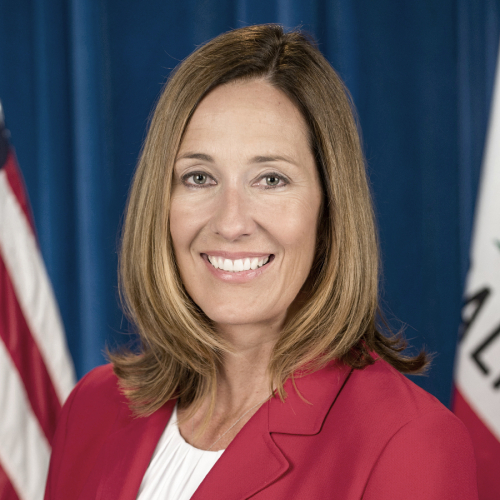
Jacqui Irwin
DDemocratic
Ask Maddy
·
AI policy assistant
Ask Maddy about AB 2221
Scope: CA
Hi! I can help you understand AB 2221. What would you like to know?
Try one of these
i
Maddy answers using official bill text and legislative records. Always verify before sharing.
Sources cited inline