

California Environmental Quality Act: exemption: passenger rail service.
Summary
The California Environmental Quality Act (CEQA) requires a lead agency, as defined, to prepare, or cause to be prepared, and certify the completion of, an environmental impact report on a project that it proposes to carry out or approve that may have a significant effect on the environment or to adopt a negative declaration if it finds that the project will not have that effect. CEQA also requires a lead agency to prepare a mitigated negative declaration for a project that may have a significant effect on the environment if revisions in the project would avoid or mitigate that effect and there is no substantial evidence that the project, as revised, would have a significant effect on the environment. CEQA, until January 1, 2040, exempts from its requirements certain projects for the improvement, institution, or increase of passenger rail service, including the maintenance, construction, or rehabilitation of stations, terminals, or existing operations facilities, which will be exclusively used by zero-emission trains or certified Tier 4 or cleaner rolling stock or locomotives, as provided. CEQA requires, for purposes of this exemption, that the project be located entirely within an existing rail right-of-way or existing highway right-of-way, as provided. This bill would instead eliminate the condition that the public project be exclusively used by zero-emission trains or certified Tier 4 or cleaner rolling stock or locomotives, thereby expanding the scope of the exemption. The bill would require, for purposes of the exemption, the mainline rail of the project, instead of the whole project, to be located entirely within an existing right-of-way or existing highway right-of-way. As part of the above-described exemption, CEQA prohibits a public project from being eligible for that exemption if used by certified Tier 4 or cleaner rolling stock or locomotives that are not zero-emission rolling stock or locomotives and the project is located in an air basin designated as a serious, severe, or extreme nonattainment area for particulate matter and ozone. This bill would instead authorize an otherwise ineligible project, as described above, to be eligible for the exemption if the project would provide daily passenger rail service between termini more than 5 miles apart where none exists as of January 1, 2027, and the rail service would run parallel to a state highway or interstate highway corridor. Because a lead agency would be required to determine whether a project qualifies for these expanded exemptions, the bill would impose a state-mandated local program. The California Constitution requires the state to reimburse local agencies and school districts for certain costs mandated by the state. Statutory provisions establish procedures for making that reimbursement. This bill would provide that no reimbursement is required by this act for a specified reason.
Bill status
in committee
1 of 4 stages cleared
Introduction
Feb 2026
Committee Review
Floor Vote
Governor
Introduced Feb 11, 2026
Last action Feb 23, 2026
Maddy AI version diff · 1 comparison
What changed between versions
02/11/26 - Introduced
→
AB1855
·
1 edit
MINOR
No substantive policy changes were made to AB 1855 between these two versions. The bill text amending Section 21080.25 of the Public Resources Code is identical in both versions. The differences are entirely presentational: the document was reformatted from a plain legislative text layout into a web page with navigation menus, search tools, and additional links (such as Bill Analysis, Compare Versions, and Track Bill).
TECHNICAL
The bill was republished in a web-based format with added navigation elements (Quick Search, Bill Information, California Law, Publications, My Subscriptions, My Favorites, Bill Search, PDF links, Votes, History, Bill Analysis, Compare Versions, Status, Comments To Author, Track Bill, Add To My Favorites). No changes to the underlying statutory text.
Floor votes
How they voted
No floor votes recorded yet.
Full legislative history
Actions timeline
Total actions
3
Key actions
1
Committee
2
Feb 23, 2026
Committee
Referred to Com. on NAT. RES.
lower
Feb 12, 2026
Lower · Passed
From printer. May be heard in committee March 14.
lower
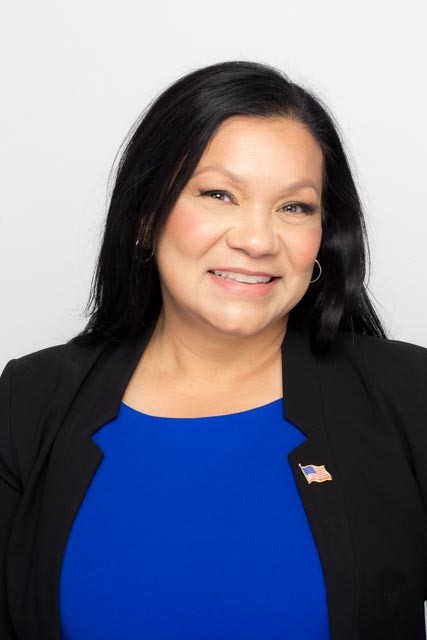
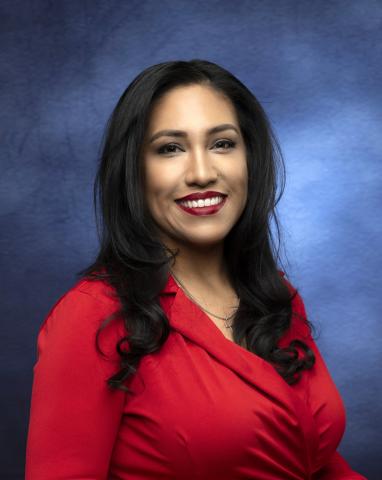
1 primary · 6 co-sponsors
Sponsors





Ask Maddy
·
AI policy assistant
Ask Maddy about AB 1855
Scope: CA
Hi! I can help you understand AB 1855. What would you like to know?
Try one of these
i
Maddy answers using official bill text and legislative records. Always verify before sharing.
Sources cited inline