

Electricity: calculation methodology: nonbypassable charges: data disclosure.
Summary
Existing law vests the Public Utilities Commission with regulatory authority over public utilities, including electrical corporations. Existing law authorizes the commission to fix the rates and charges for every public utility and requires that those rates and charges be just and reasonable. This bill would require the commission to ensure that all data serving as a basis for any decision or ruling issued by the commission, or in any proposal or analysis provided by commission staff, for the determination or application of a calculation methodology for any nonbypassable charge imposed on customers of a load-serving entity to recover costs associated with contracts, electrical corporation-owned generation, or any other resource or value included in that charge and any other charge derived from those costs, is made available to load-serving entities and ratepayer advocates on behalf of customers. The bill would require the commission to require an electrical corporation, member association, load-serving entity, or other party, in submitting a proposal or analysis for the determination or application of a calculation methodology for any nonbypasssable charge imposed on customers of a load-serving entity to recover costs associated with contracts, electrical corporation-owned generation, or any other resource or value included in that charge and any other charge derived from those costs, to make all data serving as a basis for that proposal or analysis available to load-serving entities and ratepayer advocates on behalf of customers. The bill would require that the data exclude any information that can reasonably be used to identify an individual, family, household, residence, or nonresidential customer. The bill would require that the data meet specified requirements, including that it is made available through a public disclosure, except for market-sensitive data, as provided. Under existing law, a violation of the Public Utilities Act or any order, decision, rule, direction, demand, or requirement of the commission is a crime. Because the above provisions would be a part of the act, and because a violation of a commission action implementing the above provisions would be a crime, the bill would impose a state-mandated local program. The California Constitution requires the state to reimburse local agencies and school districts for certain costs mandated by the state. Statutory provisions establish procedures for making that reimbursement. This bill would provide that no reimbursement is required by this act for a specified reason.
Bill status
passed both
4 of 5 stages cleared
Introduction
Feb 2026
Committee Review
Aug 2026
Assembly Passage
May 2026
Senate Passage
Aug 2026
Governor
Introduced Feb 9, 2026
Last action Aug 26, 2026
Maddy AI version diff · 4 comparisons
What changed between versions
08/30/26 - Enrolled
→
AB1761
·
1 edit
MINOR
No substantive policy changes were made between these two versions of AB 1761. The diff reflects only a change in document presentation format, from a formal enrolled legislative document (with page numbers, clerk signatures, and traditional layout) to a web-based bill text display (with navigation menus, search tools, and tracking features). All statutory language in Section 365.4 and Section 2 is identical in both versions.
TECHNICAL
The document was reformatted from a formal enrolled bill layout (with page numbers, Chief Clerk and Secretary signatures, and Governor's receipt block) to a web-based display format with navigation elements, quick search, bill tracking, and version history. No legislative text was altered.
Floor votes · Senate Aug 25, 2026 · Assembly May 27, 2026
How they voted
40–0
Passed
Total votes 40
Aug 25, 2026
D
Democratic30
100% Yea
R
Republican10
100% Yea
Vote distribution
All Yea
All Nay
Mixed
No data
Full legislative history
Actions timeline
Total actions
20
Key actions
8
Committee
8
Amendments
6
Aug 26, 2026
Lower · Passed
Senate amendments concurred in. To Engrossing and Enrolling. (Ayes 65. Noes 9.).
lower
Aug 25, 2026
Introduced
In Assembly. Concurrence in Senate amendments pending.
lower
Aug 25, 2026
Upper · Passed
Read third time. Passed. Ordered to the Assembly. (Ayes 39. Noes 0.).
upper
Aug 13, 2026
Upper · Passed
Read second time and amended. Ordered returned to second reading.
upper
Aug 13, 2026
Introduced
From committee: Amend, and do pass as amended. (Ayes 5. Noes 0.) (August 13).
upper
Aug 3, 2026
Committee
In committee: Referred to APPR. suspense file.
upper
Jun 30, 2026
Upper · Passed
From committee: Do pass and re-refer to Com. on APPR. (Ayes 17. Noes 0.) (June 30). Re-referred to Com. on APPR.
upper
Jun 10, 2026
Committee
Referred to Com. on E., U & C.
upper
May 27, 2026
Lower · Passed
Read third time. Passed. Ordered to the Senate. (Ayes 61. Noes 8.)
lower
May 14, 2026
Lower · Passed
From committee: Do pass. (Ayes 13. Noes 1.) (May 14).
lower
Apr 29, 2026
Committee
In committee: Set, first hearing. Referred to APPR. suspense file.
lower
Mar 23, 2026
Committee
Re-referred to Com. on APPR.
lower
Mar 19, 2026
Lower · Passed
Read second time and amended.
lower
Mar 18, 2026
Introduced
From committee: Amend, and do pass as amended and re-refer to Com. on APPR. (Ayes 15. Noes 0.) (March 18).
lower
Feb 23, 2026
Committee
Referred to Com. on U. & E.
lower
Feb 10, 2026
Lower · Passed
From printer. May be heard in committee March 12.
lower
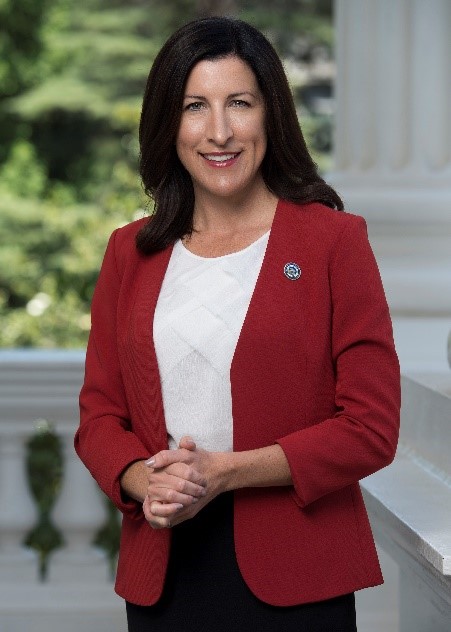
1 primary · 6 co-sponsors
Sponsors





Ask Maddy
·
AI policy assistant
Ask Maddy about AB 1761
Scope: CA
Hi! I can help you understand AB 1761. What would you like to know?
Try one of these
i
Maddy answers using official bill text and legislative records. Always verify before sharing.
Sources cited inline