

Federal Workforce Pell Grant program: local workforce development boards: participant training requirement.
Summary
(1) Beginning on July 1, 2026, for the financial aid award year of 2026–27 and each award year thereafter, existing federal law establishes the federal Workforce Pell Grant program to award grants to eligible students who are enrolled, or accepted for enrollment, in a short-term educational program that, among other things, provides an education aligned with the requirements of high-skill, high-wage, or in-demand industry sectors or occupations, as provided. Existing law establishes the Labor and Workforce Development Agency, which is composed of various departments responsible for protecting and promoting the rights and interests of workers in California. Existing law establishes the Student Aid Commission as the primary state agency for the administration of state-authorized student financial aid programs available to students attending all segments of postsecondary education. This bill would prohibit a postsecondary educational institution from disbursing federal Workforce Pell Grant program funds to students enrolled in the institution's short-term programs, and advertising, marketing, or informing students about the availability of those funds unless the institution has (A) obtained authorization from the commission, on behalf of the Governor, that the institution meets the requirements of specified provisions related to the federal Workforce Pell Grant program, and (B) obtained approvals and met all requirements set forth by the United States Department of Education. This bill would prohibit the commission from authorizing a postsecondary educational institution to receive federal Workforce Pell Grant program funds for a short-term program if the institution, among other things, partners, contracts, or affiliates with an entity that is not accredited by a specified accrediting agency, as provided. The bill would authorize the commission to use the California Priority Programs List to determine whether a short-term program satisfies specified requirements under the federal Workforce Pell Grant program, as provided. (2) Existing federal law, the Workforce Innovation and Opportunity Act (WIOA) , provides for workforce development activities, including activities in which states may participate. Existing state law, the California Workforce Innovation and Opportunity Act (CalWIOA) , establishes the California Workforce Development Board to assist the Governor in the development, oversight, and continuous improvement of California's workforce investment system and the alignment of the education and workforce investment systems to the needs of the 21st century economy and workforce. CalWIOA creates the Consolidated Work Program Fund in the State Treasury, for the receipt of all moneys deposited pursuant to WIOA and requires moneys in the fund to be made available, upon appropriation by the Legislature, to the Employment Development Department for expenditure consistent with the purposes of WIOA. Existing law contains various programs for job training and employment investment, including work incentive programs, as specified, and establishes local workforce investment boards to perform duties related to the implementation and coordination of local workforce investment activities. Existing law requires local workforce investment boards to spend a minimum percentage of specified funds for adults and dislocated workers on federally identified workforce training programs and allows the boards to leverage specified funds to meet the funding requirements, as specified. Existing law requires a local workforce development area that does not meet the expenditure requirements to submit a corrective action plan to the Employment Development Department that provides reasons for not meeting the requirements and describes actions taken to address the identified expenditure deficiencies. Existing law also requires the department to calculate for each local workforce development board whether the local workforce development board met the expenditure requirements and make annual reports regarding the training and supportive services expenditures. This bill, starting July 1, 2028, instead of requiring the local workforce development boards to spend a minimum percentage of specified funds for adults and dislocated workers, would require the boards to ensure that at least 50% of participants enrolled in the adult and dislocated worker programs receive workforce training services, and would prescribe the training services that count toward the participant training requirement. The bill would require a local workforce development area that does not meet the participant training requirement to submit a corrective action plan to the Employment Development Department that provides reasons for not meeting that requirement and describes actions taken to address the identified participant training deficiencies. By imposing new requirements on local workforce development boards, the bill would impose a state-mandated local program. The bill would require the Employment Development Department to calculate for each local workforce development board, among other things, whether the local workforce development board met the participant training requirement and make annual reports regarding the number of participants enrolled in adult and dislocated worker program, the percentage of those enrolled participants receiving training services, and the training expenditures and supportive service expenditures made by local workforce development boards, as specified. The bill would also make nonsubstantive conforming changes. The California Constitution requires the state to reimburse local agencies and school districts for certain costs mandated by the state. Statutory provisions establish procedures for making that reimbursement. This bill would provide that, if the Commission on State Mandates determines that the bill contains costs mandated by the state, reimbursement for those costs shall be made pursuant to the statutory provisions noted above.
Bill status
passed both
4 of 5 stages cleared
Introduction
Jan 2026
Committee Review
Aug 2026
Assembly Passage
May 2026
Senate Passage
Aug 2026
Governor
Introduced Jan 5, 2026
Last action Aug 28, 2026
Maddy AI version diff · 6 comparisons
What changed between versions
08/21/26 - Amended Senate
→
AB1534
·
2 edits
MINOR
This diff reflects a change in document presentation format rather than a change in bill content. The previous version was formatted as a printed legislative document with line numbers and page headers, while the new version presents the same bill text within a web-based viewing interface that includes navigation menus, search fields, and metadata elements. No substantive policy changes are apparent.
TECHNICAL
The bill text was reformatted from a printed document layout (with line numbers, page headers like '94 AB 1534', and column formatting) into a web page interface with navigation elements (home, accessibility, FAQ, sitemap, login), search functionality, and structured sections (Bill Information, Text, Votes, History, etc.).
Web-based metadata was added including a publication date of 08/22/2026, version selection options for all prior amendment dates, and links to related resources such as Bill Analysis, Today's Law As Amended, Compare Versions, and Status.
Floor votes · Senate Aug 27, 2026 · Assembly May 21, 2026
How they voted
40–0
Passed
Total votes 40
Aug 27, 2026
D
Democratic30
100% Yea
R
Republican10
100% Yea
Vote distribution
All Yea
All Nay
Mixed
No data
Full legislative history
Actions timeline
Total actions
30
Key actions
13
Committee
12
Amendments
9
Aug 28, 2026
Lower · Passed
Senate amendments concurred in. To Engrossing and Enrolling. (Ayes 78. Noes 0.).
lower
Aug 27, 2026
Introduced
In Assembly. Concurrence in Senate amendments pending.
lower
Aug 27, 2026
Upper · Passed
Read third time. Passed. Ordered to the Assembly. (Ayes 40. Noes 0.).
upper
Aug 21, 2026
Upper · Passed
Read third time and amended. Ordered to second reading.
upper
Aug 19, 2026
Upper · Passed
Read third time and amended. Ordered to second reading.
upper
Aug 13, 2026
Upper · Passed
From committee: Do pass. (Ayes 7. Noes 0.) (August 13).
upper
Aug 3, 2026
Committee
In committee: Referred to APPR. suspense file.
upper
Jul 1, 2026
Upper · Passed
From committee: Do pass and re-refer to Com. on APPR. (Ayes 5. Noes 0.) (July 1). Re-referred to Com. on APPR.
upper
Jun 25, 2026
Upper · Passed
From committee: Do pass and re-refer to Com. on L., P.E. & R. (Ayes 7. Noes 0.) (June 24). Re-referred to Com. on L., P.E. & R.
upper
Jun 15, 2026
Introduced
From committee chair, with author's amendments: Amend, and re-refer to committee. Read second time, amended, and re-referred to Com. on ED.
upper
Jun 3, 2026
Committee
Referred to Coms. on ED. and L., P.E. & R.
upper
May 21, 2026
Assembly · Passed
Assembly Vote: pass (60-10-9)
assembly
May 21, 2026
Lower · Passed
Read third time. Urgency clause adopted. Passed. Ordered to the Senate. (Ayes 61. Noes 10. Page 5185.).
lower
May 14, 2026
Lower · Passed
From committee: Do pass. (Ayes 12. Noes 1.) (May 14).
lower
May 6, 2026
Committee
In committee: Set, first hearing. Referred to APPR. suspense file.
lower
Apr 23, 2026
Lower · Passed
From committee: Do pass and re-refer to Com. on APPR. (Ayes 7. Noes 0.) (April 22). Re-referred to Com. on APPR.
lower
Mar 23, 2026
Committee
Re-referred to Com. on L. & E.
lower
Mar 19, 2026
Lower · Passed
Read second time and amended.
lower
Mar 18, 2026
Introduced
From committee: Amend, and do pass as amended and re-refer to Com. on L. & E. (Ayes 8. Noes 2.) (March 17).
lower
Mar 9, 2026
Committee
Re-referred to Com. on HIGHER ED.
lower
Mar 5, 2026
Introduced
From committee chair, with author's amendments: Amend, and re-refer to Com. on HIGHER ED. Read second time and amended.
lower
Feb 9, 2026
Committee
Referred to Coms. on HIGHER ED. and L. & E.
lower
Jan 6, 2026
Lower · Passed
From printer. May be heard in committee February 5.
lower
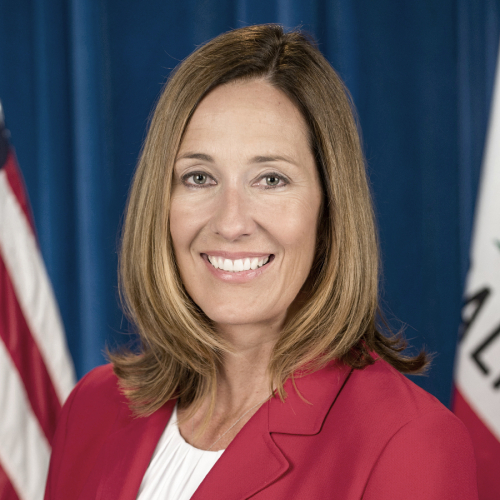
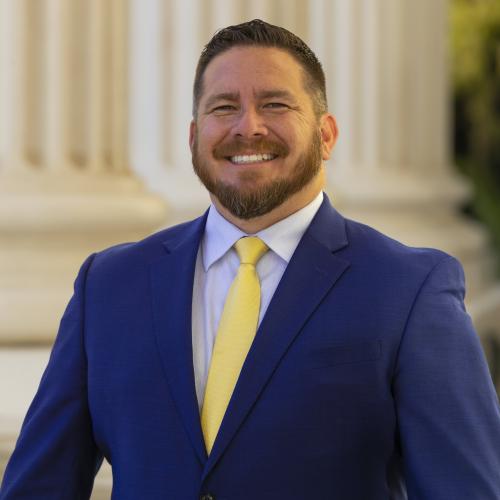
1 primary · 1 co-sponsor
Sponsors
Ask Maddy
·
AI policy assistant
Ask Maddy about AB 1534
Scope: CA
Hi! I can help you understand AB 1534. What would you like to know?
Try one of these
i
Maddy answers using official bill text and legislative records. Always verify before sharing.
Sources cited inline