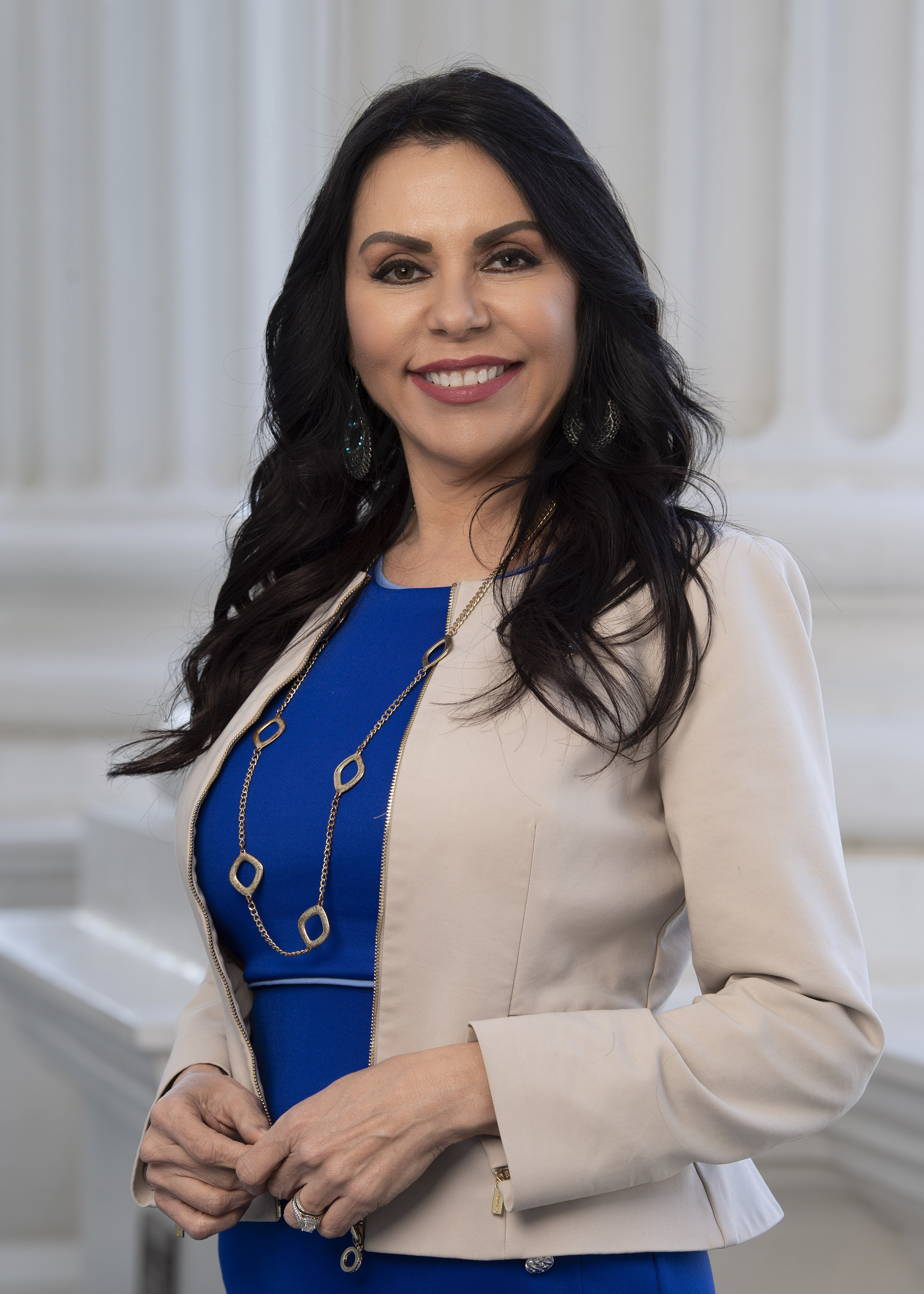
AB 1405 California Assembly · 2025-2026 Regular Session

Artificial intelligence: auditors: registration.

Summary
Existing law establishes the Department of Technology within the Government Operations Agency. Existing law requires the department to conduct, in coordination with other interagency bodies as it deems appropriate, a comprehensive inventory of all high-risk automated decision systems that have been proposed for use, development, or procurement by, or are being used, developed, or procured by, any state agency. Existing law generally regulates artificial intelligence, including the Transparency in Frontier Artificial Intelligence Act, which, among other things related to the safety of certain artificial intelligence models, requires a large frontier developer to write, implement, comply with, and clearly and conspicuously publish on its internet website a frontier AI framework that applies to the large frontier developer's frontier models and describes how the large frontier developer approaches certain safety-related items. Existing law defines "artificial intelligence" as an engineered or machine-based system that varies in its level of autonomy and that can, for explicit or implicit objectives, infer from the input it receives how to generate outputs that can influence physical or virtual environments. This bill would require the Government Operations Agency to, no later than January 1, 2029, establish an AI Auditor Registry on the agency's internet website allowing AI auditors to register with the agency and allowing natural persons to report misconduct by a registered AI auditor, and require the agency to fix annual registration fees, as specified. The bill would, commencing January 1, 2029, prohibit an unregistered person from offering, selling, or conducting a covered AI audit, as defined, and would require the agency to, among other things, issue a unique registration number to each registered AI auditor and publish information provided by a registered AI auditor on the agency's internet website. The bill would require the registration number of a registered AI auditor to be clearly and conspicuously displayed on all advertising materials offering or soliciting covered AI audit services. The bill would authorize the agency to adopt regulations that are reasonably necessary to effectuate the purposes of the bill. This bill would require an AI auditor that registers with the agency to provide specified information to the agency and would impose various requirements on a registered AI auditor that conducts a covered AI audit, including, among other things, providing the auditee with a report that includes a signed and dated statement indicating that the audit was conducted according to the provisions of this bill. This bill would require a registered AI auditor to adhere to various standards of independence, objectivity, and integrity, including not seeking, soliciting, negotiating for, or accepting employment with an auditee while participating in the audit and not conducting a covered AI audit if the auditor has a financial, business, employment, or other interest or relationship that would reasonably be expected to impair the auditor's independence or objectivity. The bill would prohibit a registered AI auditor from preventing an employee from engaging in, or from retaliating against an employee who has engaged in, specified whistleblower activity. The bill would authorize the agency to investigate alleged violations of the bill, as specified, and provide that a violation constitutes grounds for removal from the registry and referral to the Attorney General or other appropriate enforcement authority. This bill would create the AI Auditors' Registration Fund within the State Treasury, to be administered by the agency, and would require that all moneys collected or received by the agency pursuant to the above-described provisions be deposited into the fund to be available, upon appropriation by the Legislature, to administer the above-described provisions. Existing law establishes the California Board of Accountancy, which is within the Department of Consumer Affairs, and requires the board to license and regulate accountants in this state. This bill would exempt a registered AI auditor licensed or authorized to practice public accountancy and a firm holding a permit to practice public accountancy issued by the California Board of Accountancy, as specified, from complying with certain requirements related to reporting information to the agency and standards of independence, objectivity, and integrity under the bill if certain requirements are met. The bill would require the Government Operations Agency to, if the agency determines that a certified public accountant, public accountant, or accounting firm in good standing has violated this bill, notify the accountant or firm and the California Board of Accountancy in writing, and would require the board to investigate the complaint and provide the agency with a report of its findings and any resulting action.
Bill status passed both 4 of 5 stages cleared
Introduction
Feb 2025
Committee Review
Aug 2026
Assembly Passage
Jun 2025
Senate Passage
Aug 2026
Governor
Introduced Feb 21, 2025 Last action Aug 30, 2026
Maddy AI version diff · 4 comparisons

What changed between versions

08/25/26 - Amended Senate AB1405 · 10 edits
MAJOR
AB 1405 was substantially revised in its final version, most notably delaying the effective date of the AI auditor registration system from January 1, 2027 to January 1, 2029 (a two-year delay). The bill also shifted terminology from 'enrollment' to 'registration,' expanded audit report requirements, added whistleblower protections for auditor employees, strengthened independence standards, and clarified the definition of a covered AI audit. These changes give the state more time to build out the regulatory infrastructure while tightening the substantive obligations on registered auditors.
TIMELINE

The deadline for the Government Operations Agency to establish the AI Auditor Registry and begin operations was pushed from January 1, 2027 to January 1, 2029, giving the state two additional years to implement the system.

DEFINITION

The definition of 'covered AI audit' was narrowed to specifically mean an audit that assesses internal controls, processes, or systems implemented for an AI system or model that are necessary for compliance with state law, rather than any audit required by a state statute.

REQUIREMENT

New whistleblower protections were added prohibiting registered AI auditors from preventing employees from disclosing information to the Attorney General or Labor Commissioner, or retaliating against employees who do so.

Audit report requirements were expanded to include descriptions of remedial measures for each deficiency identified, whether the auditee adhered to internal safety standards and protocols, and a description of audit limitations including unassessed matters and material gaps in evidence or access.

Independence standards were strengthened with new prohibitions on conducting audits that require evaluating the auditor's own work, a requirement to exercise independent and impartial professional judgment, a competency requirement for assigned personnel, and compliance with additional agency-adopted professional standards.

A new requirement was added that the registration number of a registered AI auditor must be clearly and conspicuously displayed on all advertising materials offering or soliciting covered AI audit services.

TECHNICAL

The standard operating procedure requirement was softened from requiring 'documentation substantiating the basis' for claims about accuracy, reliability, or validity of protocols to merely requiring 'a description of the basis' for such claims.

The maximum word limit for the written description of the AI auditor and its services was increased from 200 words to 500 words.

ENFORCEMENT

Enforcement provisions were restructured to include explicit procedures for agency investigation, written notice and opportunity to cure before removal from the registry, and a coordination mechanism requiring the agency to notify the California Board of Accountancy when a licensed CPA or accounting firm violates the chapter, with the board required to investigate and report findings back.

SCOPE

Terminology was changed throughout from 'enroll/enrollment' to 'register/registration,' reflecting a shift in how the bill frames the relationship between auditors and the state agency.

Floor votes · Senate Aug 30, 2026 · Assembly Jun 3, 2025

How they voted

3010
Passed
Total votes 40
Aug 30, 2026
D Democratic30
30 Yea
100% Yea
R Republican10
10 Nay
100% Nay
Vote distribution
All Yea All Nay Mixed No data
Full legislative history

Actions timeline

Total actions
26
Key actions
12
Committee
10
Amendments
7
Aug 30, 2026
Lower · Passed
Senate amendments concurred in. To Engrossing and Enrolling.
lower
Aug 30, 2026
Introduced
In Assembly. Concurrence in Senate amendments pending.
lower
Aug 30, 2026
Upper · Passed
Read third time. Passed. Ordered to the Assembly. (Ayes 29. Noes 10.).
upper
Aug 25, 2026
Upper · Passed
Read third time and amended. Ordered to second reading.
upper
Aug 13, 2026
Upper · Passed
From committee: Do pass. (Ayes 5. Noes 2.) (August 13).
upper
Aug 29, 2025
Upper · Passed
In committee: Held under submission.
upper
Aug 18, 2025
Committee
In committee: Referred to suspense file.
upper
Jul 9, 2025
Upper · Passed
Read second time and amended. Re-referred to Com. on APPR.
upper
Jul 8, 2025
Introduced
From committee: Amend, and do pass as amended and re-refer to Com. on APPR. (Ayes 11. Noes 2.) (July 8).
upper
Jul 2, 2025
Upper · Passed
From committee: Do pass and re-refer to Com. on G.O. (Ayes 11. Noes 1.) (July 1). Re-referred to Com. on G.O.
upper
Jun 11, 2025
Committee
Referred to Coms. on JUD. and G.O.
upper
Jun 3, 2025
Assembly · Passed
Assembly Vote: pass (61-4-13)
assembly
Jun 2, 2025
Lower · Passed
Read third time. Passed. Ordered to the Senate. (Ayes 62. Noes 4. Page 1890.)
lower
May 23, 2025
Lower · Passed
From committee: Do pass. (Ayes 11. Noes 0.) (May 23).
lower
Apr 23, 2025
Committee
In committee: Set, first hearing. Referred to suspense file.
lower
Apr 7, 2025
Committee
Re-referred to Com. on APPR.
lower
Apr 3, 2025
Lower · Passed
Read second time and amended.
lower
Apr 2, 2025
Introduced
From committee: Amend, and do pass as amended and re-refer to Com. on APPR. (Ayes 11. Noes 1.) (April 1).
lower
Mar 17, 2025
Committee
Referred to Com. on P. & C.P.
lower
Feb 22, 2025
Lower · Passed
From printer. May be heard in committee March 24.
lower
Feb 21, 2025
Introduced
Introduced. To print.
lower
1 primary · 3 co-sponsors

Sponsors