

Hemp: low-dose hemp drinks.
Summary
The Sherman Food, Drug, and Cosmetic Law, among other things, regulates the labeling of food, beverages, and cosmetics and makes it a crime to distribute in commerce any food, drug, device, or cosmetic if its packaging or labeling does not conform to these provisions. Existing law establishes a process for the embargo, condemnation, and destruction of a food, drug, device, or cosmetic that is adulterated, misbranded, or falsely advertised, gives the authority to place items under embargo to authorized agents of the State Department of Public Health, and requires the department to take specified actions. Violation of the Sherman Food, Drug, and Cosmetic Law is a misdemeanor. Existing law also requires hemp manufacturers who produce specified products that include industrial hemp or who produce raw hemp extract, as defined, to complete a registration process, under the State Department of Public Health, and to meet various requirements for testing and labeling on products. Existing law, as part of the registration process, requires the department to assess specified fees, including an oversight and authorization enrollment fee, to cover the actual reasonable costs of implementing the regulatory program. This bill would authorize a hemp manufacturer to produce and sell low-dose hemp drinks, as defined, if specified requirements are met, including that the low-dose hemp drink contains no greater than 5 milligrams of total THC per container and does not contain cannabis, as defined. The bill would require the low-dose hemp drink to be tested by an independent testing laboratory, and would prohibit a low-dose hemp drink from being sold to or consumed by an individual under 21 years of age. This bill would impose a low-dose hemp drink excise tax upon purchasers of low-dose hemp drinks sold in the state at 10% of the gross receipts of any retail sale of low-dose hemp drinks, as specified. The bill would require the California Department of Tax and Fee Administration to administer the tax pursuant to the Fee Collection Procedures Law, the violation of which is a crime. The bill would require a retailer to collect the tax from the purchaser and remit it to the California Department of Tax and Fee Administration. The bill would require the tax, and interest, penalties, and other amounts collected and paid to the department pursuant to the tax, to be deposited into the Low-Dose Hemp Drink Excise Tax Fund, which the bill would establish, and would continuously appropriate the moneys in the fund to the department and to the State Department of Public Health for regulatory purposes related to low-dose hemp drinks, as specified. By extending the application of the Fee Collection Procedures Law, and by expanding the application of the Sherman Food, Drug, and Cosmetic Law, both of which make a violation of their provisions a crime, the bill would impose a state-mandated local program. The California Constitution requires the state to reimburse local agencies and school districts for certain costs mandated by the state. Statutory provisions establish procedures for making that reimbursement. This bill would provide that no reimbursement is required by this act for a specified reason. This bill would include a change in state statute that would result in a taxpayer paying a higher tax within the meaning of Section 3 of Article XIIIA of the California Constitution, and thus would require for passage the approval of 23 of the membership of each house of the Legislature.
Bill status
failed
1 of 4 stages cleared
Introduction
Feb 2025
Committee Review
Floor Vote
Governor
Introduced Feb 21, 2025
Last action Feb 2, 2026
Maddy AI version diff · 2 comparisons
What changed between versions
02/21/25 - Introduced
→
03/28/25 - Amended Assembly
·
1 edit
·
Mar 28, 2025
MINOR
AB 1397 was amended to raise the maximum allowable total THC content in low-dose hemp drinks from 0.5 milligrams per container to 0.55 milligrams per container. This is a modest increase to the THC threshold that would allow manufacturers slightly more flexibility in formulating their products while still keeping them in the 'low-dose' category. All other changes are technical (page renumbering and formatting).
REQUIREMENT
The maximum total THC per container for low-dose hemp drinks was increased from 0.5 milligrams to 0.55 milligrams, as reflected in both the legislative digest and Section 111929.6(a)(1) of the Health and Safety Code.
Floor votes
How they voted
No floor votes recorded yet.
Full legislative history
Actions timeline
Total actions
9
Key actions
3
Committee
5
Amendments
1
Feb 2, 2026
Lower · Passed
From committee: Filed with the Chief Clerk pursuant to Joint Rule 56.
lower
Apr 10, 2025
Lower · Passed
In committee: Set, first hearing. Hearing canceled at the request of author.
lower
Apr 1, 2025
Committee
Re-referred to Com. on B. & P.
lower
Mar 28, 2025
Introduced
From committee chair, with author's amendments: Amend, and re-refer to Com. on B. & P. Read second time and amended.
lower
Mar 28, 2025
Committee
Referred to Coms. on B. & P. and Rev. & Tax.
lower
Feb 22, 2025
Lower · Passed
From printer. May be heard in committee March 24.
lower
Feb 21, 2025
Introduced
Introduced. To print.
lower
1 primary · 0 co-sponsors
Sponsors
Role
Legislator
Party
State
District
P
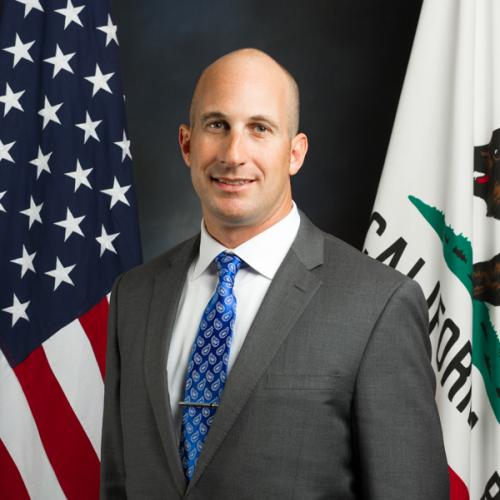
Heath Flora
RRepublican
Ask Maddy
·
AI policy assistant
Ask Maddy about AB 1397
Scope: CA
Hi! I can help you understand AB 1397. What would you like to know?
Try one of these
i
Maddy answers using official bill text and legislative records. Always verify before sharing.
Sources cited inline