

Climate change: market-based compliance mechanism: extension.
Summary
The California Global Warming Solutions Act of 2006 requires the State Air Resources Board to adopt regulations for greenhouse gas emissions limits and emissions reduction measures to achieve the maximum technologically feasible and cost-effective reductions in greenhouse gas emissions in furtherance of achieving the statewide greenhouse gas emissions limit, as defined. The act authorizes the state board to revise regulations or adopt additional regulations to further the act. The act authorizes that state board to include in those regulations the use of a market-based compliance mechanism to comply with those regulations. This bill would require the state board to adopt regulations for greenhouse gas emissions limits and emissions reduction measures to achieve the maximum technologically feasible and cost-effective reductions in greenhouse gas emissions to instead achieve certain emissions reductions goals and the purposes of the act. The bill would require the state board, in adopting regulations, to design the regulations in a manner that transitions support from gas corporations to electrical distribution utilities to minimize ratepayer impacts and meet the emissions reduction goals of the act. The bill would require the state board to consider the effects of the regulations on affordability, cost-effectiveness, minimization of leakage in California, and achieving the emissions reduction goals of the act. The bill would state the intent of the Legislature that the market-based compliance mechanism be known as the California Cap-and-Invest Program. The act, until January 1, 2031, authorizes the state board to adopt a regulation establishing a market-based compliance mechanism that is a system of market-based declining aggregate emissions limits for sources or categories of sources that emit greenhouse gases meeting certain requirements, including the establishment of a price ceiling, as provide, the allowance price containment reserve, and a requirement for state board, if the allowance from the allowance price containment reserve is exhausted, to offer covered entities additional allowances at the price ceiling if need for compliance. The act requires that moneys generated by the sale of those additional allowances be expended by the state board to achieve emissions reductions, as provided. The act, until January 1, 2031, establishes the Compliance Offsets Protocol Task Force to provide guidance to the state board in approving new offset protocols for the market-based compliance mechanism for purposes of increasing offset projects, as provided. The act, until January 1, 2031, establishes the Independent Emissions Market Advisory Committee within the California Environmental Protection Agency and requires the committee to annually report to the state board and the Joint Legislative Committee on Climate Change Policies on the environmental and economic performance of the regulation establishing the market-based compliance mechanism and other relevant climate change policies. The act, until January 1, 2031, requires the state board to designate the market-based compliance mechanism as the rule for petroleum refineries and oil and gas production facilities to achieve their greenhouse gas emissions reductions. The act provides that a violation of any rule, regulation, order, emissions limitation, emissions reduction measure, or other measure adopted by the state board under the act is a crime. Existing law requires moneys collected by the state board from the auction or sale of allowances as part of a market-based compliance mechanism to be deposited in the Greenhouse Gas Reduction Fund and continuously appropriates a portion of the moneys in the fund for various purposes. This bill would extend the above-described provisions until January 1, 2046. The bill would require the state board, in adopting those regulations, to additionally do certain things, including establish offset credit limits from January 1, 2026, to December 31, 2045, inclusive, as provided. The bill would require that moneys generated from the sale of additional allowances at the price ceiling be deposited into the California Climate Mitigation Fund, which the bill would create in the State Treasury. The bill would require moneys in the California Climate Mitigation Fund be available, upon appropriation by the Legislature, for purposes of providing direct rebates and investments to reduce household energy costs. Because a violation of the market-based compliance mechanism whose operation would be extended by the bill would be a crime, the bill would impose a state-mandated local program. By extending the operation of the market-based compliance mechanism, thereby extending the deposit of moneys from that market-based compliance mechanism into the fund, the bill would make an appropriation. This bill would specify that the members of the Independent Emissions Market Advisory Committee are to be considered designated employees of the California Environmental Protection Agency for purposes of the Political Reform Act of 1974. This bill would, if the state board initiates a regulatory process to update those regulations that is expected to be a major regulation for purposes of the Administrative Procedure Act, require the chairperson of the state board, until January 1, 2046, to present to the Joint Legislative Committee on Climate Change Policies and other relevant policy committees of the Legislature on the current state of the market-based compliance mechanism and provide the rationale for updating the regulations, as provided, and to transmit certain information to the joint legislative committee and the relevant budget subcommittees, including the economic analysis required by the Administrative Procedure Act of the proposed amendments to the regulations. The bill would require the state board and other state agencies implementing programs that are funded by the Greenhouse Gas Reduction Fund, upon request, to appear annually before the Joint Legislative Committee on Climate Change Policies and the relevant budget subcommittees to give a presentation on the expenditures of those moneys. The act requires the state board, on or before January 1, 2009, to prepare and adopt a scoping plan for achieving the maximum technologically feasible and cost-effective reductions in greenhouse gas emissions and to update the scoping plan at least once every 5 years. This bill would require the state board, until January 1, 2046, to include in the updates to the scoping plan the progress towards meeting certain greenhouse gas emissions reduction targets and recommendations to the Legislature on necessary statutory changes to the market-based compliance mechanism to further cost-effectively reduce emissions of greenhouse gases. Existing law authorizes the Public Utilities Commission to allocate 15% of the revenues received by electrical corporations as a result of the direct allocation of greenhouse gas allowances to electric corporations for clean energy and energy efficiency projects that are administered by the electrical corporations or a qualified third-party administrator and that are not otherwise funded by other funding sources. Existing law requires the commission to require the balance of those revenues to be credited directly to the residential, small business, and emissions-intensive, trade-exposed retail customers of the electrical corporations. Existing law requires the commission to require the adoption and implementation of a customer outreach plan for each electrical corporation for purposes of obtaining the maximum feasible public awareness of the crediting of greenhouse gas allowance revenues. This bill would require the credits provided to residential customers to be provided on the bills of those customers in no more than 4 high-billed months of each year to maximize customer electric bill affordability or as otherwise directed by the commission to address extreme, unforeseen, and temporary circumstances. The bill would instead authorize the commission to require those revenues to be credited to small businesses and emission-intensive trade-exposed retail customers of the electrical corporations. The bill would require the commission, not later than January 1, 2027, to require each electrical corporation to update its customer outreach plan, as provided. This bill would make the 15% allocation for clean energy and energy efficiency projects inoperative on July 1, 2026. The bill would require, from July 1, 2026, to January 1, 2031, inclusive, 5% of those revenues be remitted to the State Treasury for deposit into the California Transmission Accelerator Revolving Fund and be available to California Infrastructure and Economic Development Bank for purposes of the California Transmission Accelerator Revolving Fund Program. Under existing law, a violation of the Public Utilities Act or an order, decision, rule, direction, demand, or requirement of the commission is a crime. Because certain provisions of the bill would be part of the Public Utilities Act and a violation of a commission action implementing the bill's requirements would be a crime, this bill would impose a state-mandated local program. This bill would require local publicly owned electric utilities receiving a direct allocation of greenhouse gas allowances in addition to the greenhouse gas allowance totals specified in the regulations implementing the market-based compliance mechanism to provide a credit, as provided. The bill would require local publicly owned electric utilities to report to the state board on the uses of all revenues received by those utilities as a result of the direct allocation of greenhouse gas allowances under those regulations and would require the state board to annually submit a report to the Legislature on the uses of those revenues. By imposing additional duties on local publicly owned electric utilities, the bill would impose a state-mandated local program. The California Constitution requires the state to reimburse local agencies and school districts for certain costs mandated by the state. Statutory provisions establish procedures for making that reimbursement. This bill would provide that no reimbursement is required by this act for specified reasons. This bill would declare that it is to take effect immediately as an urgency statute.
Bill status
signed
all 5 stages cleared
Introduction
Feb 2025
Committee Review
Sep 2025
Assembly Passage
Sep 2025
Senate Passage
Sep 2025
Signed into Law
Sep 2025
Introduced Feb 21, 2025
Signed Sep 19, 2025
Floor votes · Senate Sep 13, 2025 · Assembly May 27, 2025
How they voted
29–6
Passed · 5 other
Total votes 40
Sep 13, 2025
D
Democratic30
96% Yea
R
Republican10
60% Nay
Vote distribution
All Yea
All Nay
Mixed
No data
Full legislative history
Actions timeline
Total actions
33
Key actions
13
Committee
12
Amendments
5
Sep 19, 2025
Signed into law
Approved by the Governor.
legislature
Sep 13, 2025
Senate · Passed
Senate Vote: pass (29-6-5)
senate
Sep 13, 2025
Lower · Passed
Urgency clause adopted. Senate amendments concurred in. To Engrossing and Enrolling. (Ayes 58. Noes 10. Page 3488.).
lower
Sep 13, 2025
Introduced
In Assembly. Concurrence in Senate amendments pending.
lower
Sep 13, 2025
Upper · Passed
Read third time. Urgency clause adopted. Passed. Ordered to the Assembly. (Ayes 29. Noes 6. Page 3050.).
upper
Sep 11, 2025
Upper · Passed
From committee: Do pass. (Ayes 5. Noes 1.) (September 11).
upper
Sep 10, 2025
Committee
Re-referred to Com. on E.Q.
upper
Sep 10, 2025
Committee
Re-referred to Com. on RLS. pursuant to Senate Rule 29.10(C).
upper
Sep 10, 2025
Upper · Passed
Read third time and amended. Ordered to second reading.
upper
Aug 19, 2025
Upper · Passed
From committee: Be ordered to second reading pursuant to Senate Rule 28.8.
upper
Jul 16, 2025
Upper · Passed
From committee: Do pass and re-refer to Com. on APPR. (Ayes 7. Noes 0.) (July 16). Re-referred to Com. on APPR.
upper
Jun 24, 2025
Upper · Passed
In committee: Hearing postponed by committee.
upper
Jun 4, 2025
Committee
Referred to Com. on E.Q.
upper
May 27, 2025
Lower · Passed
Read third time. Passed. Ordered to the Senate. (Ayes 60. Noes 2. Page 1727.)
lower
May 7, 2025
Lower · Passed
From committee: Do pass. (Ayes 11. Noes 0.) (May 7).
lower
Apr 29, 2025
Lower · Passed
From committee: Do pass and re-refer to Com. on APPR. (Ayes 11. Noes 0.) (April 28). Re-referred to Com. on APPR.
lower
Mar 18, 2025
Committee
Re-referred to Com. on NAT. RES.
lower
Mar 17, 2025
Introduced
From committee chair, with author's amendments: Amend, and re-refer to Com. on NAT. RES. Read second time and amended.
lower
Mar 17, 2025
Committee
Referred to Com. on NAT. RES.
lower
Feb 22, 2025
Lower · Passed
From printer. May be heard in committee March 24.
lower
Feb 21, 2025
Introduced
Introduced. To print.
lower
1 primary · 3 co-sponsors
Sponsors
Role
Legislator
Party
State
District
P
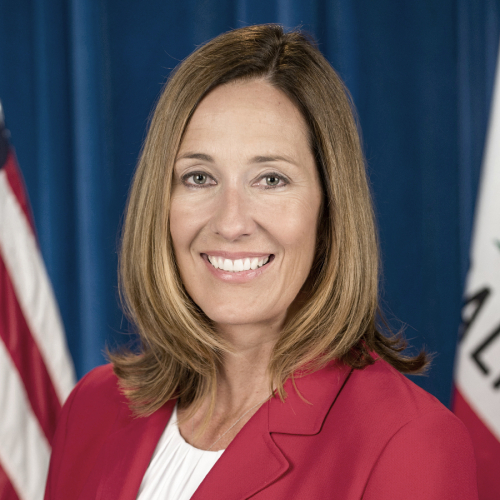
Jacqui Irwin
DDemocratic
Co

Mike McGuire
DDemocratic
Co
ML
Monique Limón
DDemocratic
Co

Robert Rivas
DDemocratic
Ask Maddy
·
AI policy assistant
Ask Maddy about AB 1207
Scope: CA
Hi! I can help you understand AB 1207. What would you like to know?
Try one of these
i
Maddy answers using official bill text and legislative records. Always verify before sharing.
Sources cited inline