

Electricity: rates: optional dynamic rate tariffs.
Summary
Existing law vests the Public Utilities Commission with regulatory authority over public utilities, including electrical corporations. Existing law authorizes the commission to fix the rates and charges for every public utility and requires that those rates and charges be just and reasonable. Existing law requires each electrical corporation to identify a separate rate component to fund certain programs that enhance system reliability and provide in-state benefits, and requires that the rate component be a nonbypassable element of the local distribution service. This bill would require the commission, through a new or existing proceeding, to develop optional dynamic rate tariffs applicable to each large electrical corporation for the large electrical corporation's customers. The bill would require at least one optional dynamic rate tariff for each segment of medium and large commercial and industrial customers on or before July 1, 2028, and at least one optional dynamic rate tariff for each segment of residential and small commercial customers on or before July 1, 2030. The bill would require each optional dynamic rate tariff to include, at minimum, a time-varying distribution rate that reflects dynamic grid constraints, a time-varying generation rate that reflects wholesale market conditions, and nonbypassable charges, as specified. The bill would require the commission to ensure, among other things, any overcollection of transmission-, distribution-, and generation-related revenue requirements from participating bundled customers is returned to the participating bundled customers and any undercollection of those revenue requirements is borne by those same customers. The bill would additionally require that any overcollection of transmission- or distribution-related revenue requirements from unbundled customers be returned to the same unbundled customers, and any undercollection of those revenue requirements be borne by those same customers. The bill would require that any customer of an electrical corporation with an installed smart meter who chooses to take service under an optional dynamic rate tariff be provided access to their own interval usage data directly from the smart meter as that data is generated, as provided. The bill would also require the commission to determine whether each large electrical corporation would be required to allow medium and large commercial and industrial customers taking service under an optional dynamic rate tariff to also participate in supply-side resource demand response programs, as provided. The bill would require the commission to consider rules or conditions on participation by vulnerable residential customers to ensure adequate protection for those customers, as provided. The bill would require the commission to incorporate the load shift and load reduction effects of dynamic rate adoption in proceedings on revenue requirement cost recovery, as provided. The bill would require the commission to ensure load-serving entities provide adequate electricity bill comparison information to residential and small business customers interested in taking service under an optional dynamic rate tariff. Under existing law, a violation of any order, decision, rule, direction, demand, or requirement of the commission is a crime. Because a violation of a commission action implementing this bill's requirements would be a crime, the bill would impose a state-mandated local program. The California Constitution requires the state to reimburse local agencies and school districts for certain costs mandated by the state. Statutory provisions establish procedures for making that reimbursement. This bill would provide that no reimbursement is required by this act for a specified reason.
Bill status
passed
3 of 5 stages cleared
Introduction
Feb 2025
Committee Review
Aug 2025
Assembly Passage
Jun 2025
Senate Passage
Governor
Introduced Feb 20, 2025
Last action Aug 29, 2025
Floor votes · Assembly Jun 2, 2025
How they voted
52–4
Passed · 22 other
Total votes 78
Jun 2, 2025
D
Democratic59
84% Yea
R
Republican19
21% Nay
Vote distribution
All Yea
All Nay
Mixed
No data
Full legislative history
Actions timeline
Total actions
19
Key actions
6
Committee
9
Amendments
6
Aug 29, 2025
Upper · Passed
In committee: Held under submission.
upper
Aug 18, 2025
Committee
In committee: Referred to suspense file.
upper
Jul 17, 2025
Upper · Passed
Read second time and amended. Re-referred to Com. on APPR.
upper
Jul 17, 2025
Introduced
From committee: Amend, and do pass as amended and re-refer to Com. on APPR. (Ayes 10. Noes 3.) (July 15).
upper
Jul 2, 2025
Introduced
From committee chair, with author's amendments: Amend, and re-refer to committee. Read second time, amended, and re-referred to Com. on E., U & C.
upper
Jun 11, 2025
Committee
Referred to Com. on E., U & C.
upper
Jun 2, 2025
Lower · Passed
Read third time. Passed. Ordered to the Senate. (Ayes 53. Noes 4. Page 1878.)
lower
May 23, 2025
Lower · Passed
From committee: Do pass. (Ayes 11. Noes 0.) (May 23).
lower
Apr 30, 2025
Committee
In committee: Set, first hearing. Referred to suspense file.
lower
Apr 8, 2025
Committee
Re-referred to Com. on APPR.
lower
Apr 7, 2025
Lower · Passed
Read second time and amended.
lower
Apr 3, 2025
Introduced
From committee: Amend, and do pass as amended and re-refer to Com. on APPR. (Ayes 14. Noes 0.) (April 2).
lower
Mar 12, 2025
Committee
Re-referred to Com. on U. & E.
lower
Mar 11, 2025
Introduced
From committee chair, with author's amendments: Amend, and re-refer to Com. on U. & E. Read second time and amended.
lower
Mar 10, 2025
Committee
Referred to Com. on U. & E.
lower
Feb 21, 2025
Lower · Passed
From printer. May be heard in committee March 23.
lower
1 primary · 3 co-sponsors
Sponsors
Role
Legislator
Party
State
District
P

Nick Schultz
DDemocratic
Co
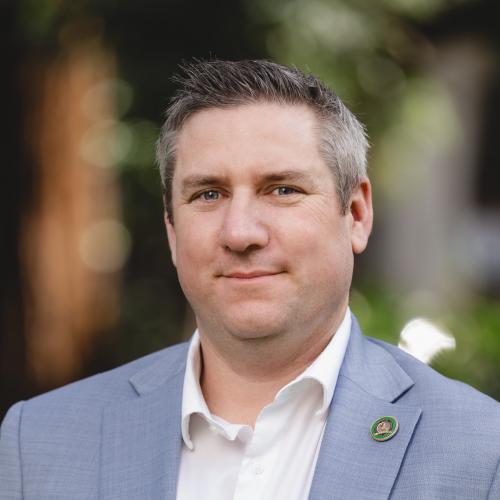
Chris Rogers
DDemocratic
Co

Henry Stern
DDemocratic
Co
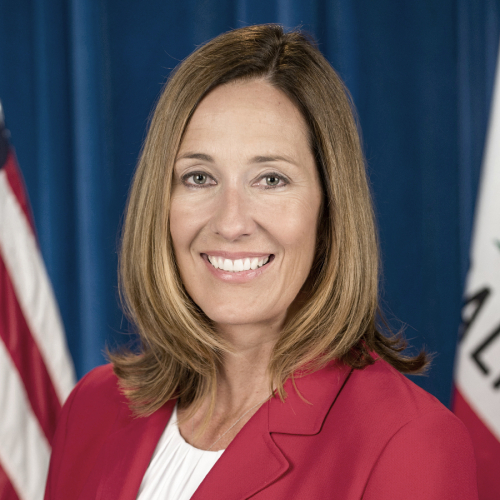
Jacqui Irwin
DDemocratic
Ask Maddy
·
AI policy assistant
Ask Maddy about AB 1117
Scope: CA
Hi! I can help you understand AB 1117. What would you like to know?
Try one of these
i
Maddy answers using official bill text and legislative records. Always verify before sharing.
Sources cited inline