

Rosenthal Fair Debt Collection Practices Act: covered debt: commercial debts.
Summary
Existing law, the Rosenthal Fair Debt Collection Practices Act, prohibits debt collectors from engaging in unfair or deceptive acts or practices in the collection of consumer debts and requires debtors to act fairly in entering into and honoring those debts. Existing law defines "debt collection" as any act or practice in connection with the collection of consumer debts. Existing law defines "consumer debt" for these purposes to mean money, property, or their equivalent, due or owing, or alleged to be due or owing, from a natural person by reason of a consumer credit transaction. Existing law also defines "consumer debt" to include a mortgage debt. This bill would recast those provisions to expand the scope of those provisions to additionally prohibit debt collectors from engaging in unfair or deceptive acts or practices in the collection of covered commercial debts, as defined, entered into, renewed, sold, or assigned on or after July 1, 2025, and to make conforming changes. For all delinquent debt sold or assigned on or after July 1, 2022, existing law requires a debt collector to which delinquent debt has been assigned to provide the debtor, upon the debtor's written request, a statement that includes specified information. For purposes of these provisions, existing law defines "delinquent debt" as a consumer debt, other than a mortgage debt, as specified. This bill would revise the definition of "delinquent debt" to mean a covered debt, other than a mortgage debt, as specified, and would specify that these provisions apply to all delinquent covered commercial debt sold or assigned on or after July 1, 2025. Existing law prohibits a debt collector from collecting or attempting to collect a consumer debt, other than one reduced to judgment, by means of judicial proceedings in a county other than the county in which the debtor has incurred the consumer debt or the county in which the debtor resides at the time those proceedings are instituted, or resided at the time the debt was incurred. This bill would authorize a debt collector to collect or attempt to collect covered commercial debt by means of a judicial proceeding in the county in which the nonnatural person for whose purpose the commercial debt was incurred is located, as specified. The bill would also specify that the provisions related to judicial proceedings apply to all delinquent covered commercial debt sold or assigned on or after July 1, 2025. Existing law makes it a crime, with respect to attempted collection of a consumer debt, for a debt collector, creditor, or an attorney to send a communication that simulates legal or judicial process or that gives the appearance of being authorized, issued, or approved by a governmental agency or attorney if it is not. This bill would expand that provision to make it a crime to engage in those acts with respect to the collection of a covered debt. By expanding the scope of this crime, the bill would impose a state-mandated local program. Existing law requires a debt collector to stop collecting a consumer debt when an alleged debtor provides the debt collector with certain information, including information relating to the debtor's status as an alleged victim of identity theft. This information may also include a specified written statement that certifies that the representations are true, correct, and contain no material omissions of fact. A person submitting the certification who declares as true a material matter that the person knows to be false is guilty of a misdemeanor. This bill would expand those provisions to also apply in the case of collection of a covered debt. By expanding the scope of this crime, this bill would impose a state-mandated local program. Existing law, the Debt Collection Licensing Act, prohibits a person from engaging in the business of debt collection, as defined, in California without first obtaining a license, as specified. Existing law provides various exceptions to this licensing requirement. This bill would specify, with respect to the collection of covered commercial debt or covered commercial credit, that the Rosenthal Fair Debt Collection Practices Act does not intend to create or impose any additional licensing requirement on a debt collector. This bill would incorporate additional changes to Section 1788.14 of the Civil Code proposed by SB 1061 to be operative only if this bill and SB 1061 are enacted and this bill is enacted last. The California Constitution requires the state to reimburse local agencies and school districts for certain costs mandated by the state. Statutory provisions establish procedures for making that reimbursement. This bill would provide that no reimbursement is required by this act for a specified reason.
Bill status
signed
all 5 stages cleared
Introduction
Feb 2024
Committee Review
Aug 2024
Senate Passage
May 2024
Assembly Passage
Aug 2024
Signed into Law
Sep 2024
Introduced Feb 15, 2024
Signed Sep 24, 2024
Floor votes · Senate May 21, 2024 · Assembly Aug 29, 2024
How they voted
28–9
Passed · 3 other
Total votes 40
May 21, 2024
D
Democratic31
90% Yea
R
Republican9
100% Nay
Vote distribution
All Yea
All Nay
Mixed
No data
Full legislative history
Actions timeline
Total actions
31
Key actions
14
Committee
7
Amendments
8
Sep 24, 2024
Signed into law
Approved by the Governor.
legislature
Aug 31, 2024
Upper · Passed
Assembly amendments concurred in. (Ayes 30. Noes 9. Page 5772.) Ordered to engrossing and enrolling.
upper
Aug 30, 2024
Introduced
In Senate. Concurrence in Assembly amendments pending.
upper
Aug 29, 2024
Lower · Passed
Read third time. Passed. (Ayes 49. Noes 17. Page 6891.) Ordered to the Senate.
lower
Aug 23, 2024
Lower · Passed
Read third time and amended.
lower
Aug 15, 2024
Lower · Passed
From committee: Do pass. (Ayes 11. Noes 3.) (August 15).
lower
Jul 3, 2024
Lower · Passed
Read second time and amended. Re-referred to Com. on APPR.
lower
Jul 2, 2024
Lower · Passed
From committee: Do pass as amended and re-refer to Com. on APPR. (Ayes 9. Noes 2.) (July 2).
lower
Jul 2, 2024
Lower · Passed
From committee: Do pass and re-refer to Com. on JUD. (Ayes 6. Noes 2.) (July 1). Re-referred to Com. on JUD.
lower
Jun 3, 2024
Committee
Referred to Coms. on B. & F. and JUD.
lower
May 21, 2024
Upper · Passed
Read third time. Passed. (Ayes 28. Noes 9. Page 4057.) Ordered to the Assembly.
upper
May 13, 2024
Upper · Passed
From committee: Be ordered to second reading pursuant to Senate Rule 28.8.
upper
Apr 25, 2024
Upper · Passed
Read second time and amended. Re-referred to Com. on APPR.
upper
Apr 24, 2024
Upper · Passed
From committee: Do pass as amended and re-refer to Com. on APPR. (Ayes 9. Noes 2. Page 3726.) (April 23).
upper
Apr 17, 2024
Upper · Passed
From committee: Do pass and re-refer to Com. on JUD. (Ayes 4. Noes 2. Page 3658.) (April 17). Re-referred to Com. on JUD.
upper
Apr 3, 2024
Committee
Re-referred to Coms. on B. & F.I. and JUD.
upper
Mar 18, 2024
Upper · Passed
From committee with author's amendments. Read second time and amended. Re-referred to Com. on RLS.
upper
Feb 29, 2024
Committee
Referred to Com. on RLS.
upper
Feb 15, 2024
Introduced
Introduced. Read first time. To Com. on RLS. for assignment. To print.
upper
1 primary · 0 co-sponsors
Sponsors
Role
Legislator
Party
State
District
P
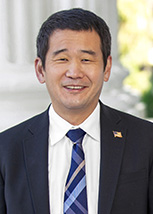
Dave Min
DDemocratic
Ask Maddy
·
AI policy assistant
Ask Maddy about SB 1286
Scope: CA
Hi! I can help you understand SB 1286. What would you like to know?
Try one of these
i
Maddy answers using official bill text and legislative records. Always verify before sharing.
Sources cited inline