

Safe and Secure Innovation for Frontier Artificial Intelligence Models Act.
Summary
Existing law requires the Secretary of Government Operations to develop a coordinated plan to, among other things, investigate the feasibility of, and obstacles to, developing standards and technologies for state departments to determine digital content provenance. For the purpose of informing that coordinated plan, existing law requires the secretary to evaluate, among other things, the impact of the proliferation of deepfakes, defined to mean audio or visual content that has been generated or manipulated by artificial intelligence that would falsely appear to be authentic or truthful and that features depictions of people appearing to say or do things they did not say or do without their consent, on state government, California-based businesses, and residents of the state. This bill would enact the Safe and Secure Innovation for Frontier Artificial Intelligence Models Act to, among other things, require that a developer, before beginning to initially train a covered model, as defined, comply with various requirements, including implementing the capability to promptly enact a full shutdown, as defined, and implement a written and separate safety and security protocol, as specified. The bill would require a developer to retain an unredacted copy of the safety and security protocol for as long as the covered model is made available for commercial, public, or foreseeably public use plus 5 years, including records and dates of any updates or revisions and would require a developer to grant to the Attorney General access to the unredacted safety and security protocol. The bill would prohibit a developer from using a covered model or covered model derivative for a purpose not exclusively related to the training or reasonable evaluation of the covered model or compliance with state or federal law or making a covered model or a covered model derivative available for commercial or public, or foreseeably public, use, if there is an unreasonable risk that the covered model or covered model derivative will cause or materially enable a critical harm, as defined. The bill would require a developer, beginning January 1, 2026, to annually retain a third-party auditor to perform an independent audit of compliance with those provisions, as prescribed. The bill would require the auditor to produce an audit report, as prescribed, and would require a developer to retain an unredacted copy of the audit report for as long as the covered model is made available for commercial, public, or foreseeably public use plus 5 years. The bill would require a developer to grant to the Attorney General access to the unredacted auditor's report upon request. The bill would exempt from disclosure under the California Public Records Act the safety and security protocol and the auditor's report described above. This bill would require a developer of a covered model to submit to the Attorney General a statement of compliance with these provisions, as specified. The bill would also require a developer of a covered model to report each artificial intelligence safety incident affecting the covered model or any covered model derivative controlled by the developer to the Attorney General, as prescribed. This bill would require a person that operates a computing cluster, as defined, to implement written policies and procedures to do certain things when a customer utilizes compute resources that would be sufficient to train a covered model, including assess whether a prospective customer intends to utilize the computing cluster to train a covered model. This bill would authorize the Attorney General to bring a civil action, as provided. The bill would also provide for whistleblower protections, including by prohibiting a developer of a covered model or a contractor or subcontractor of the developer from preventing an employee from disclosing information, or retaliating against an employee for disclosing information, to the Attorney General or Labor Commissioner if the employee has reasonable cause to believe the information indicates the developer is out of compliance with certain requirements or that the covered model poses an unreasonable risk of critical harm. This bill would create the Board of Frontier Models within the Government Operations Agency, independent of the Department of Technology, and provide for the board's membership. The bill would require the Government Operations Agency to, on or before January 1, 2027, and annually thereafter, issue regulations to, among other things, update the definition of a "covered model," as provided, and would require the regulations to be approved by the board before taking effect. This bill would establish in the Government Operations Agency a consortium required to develop a framework for the creation of a public cloud computing cluster to be known as "CalCompute" that advances the development and deployment of artificial intelligence that is safe, ethical, equitable, and sustainable by, among other things, fostering research and innovation that benefits the public, as prescribed. The bill would, on or before January 1, 2026, require the Government Operations Agency to submit a report from the consortium to the Legislature with that framework. The bill would make those provisions operative only upon an appropriation in a budget act for its purposes. Existing constitutional provisions require that a statute that limits the right of access to the meetings of public bodies or the writings of public officials and agencies be adopted with findings demonstrating the interest protected by the limitation and the need for protecting that interest. This bill would make legislative findings to that effect.
Bill status
vetoed
4 of 5 stages cleared
Introduction
Feb 2024
Committee Review
Jun 2024
Senate Passage
May 2024
Assembly Passage
Aug 2024
Vetoed
Sep 2024
Introduced Feb 7, 2024
Vetoed Sep 29, 2024
Floor votes · Senate May 21, 2024 · Assembly Aug 28, 2024
How they voted
32–1
Passed · 7 other
Total votes 40
May 21, 2024
D
Democratic31
96% Yea
R
Republican9
22% Yea
Vote distribution
All Yea
All Nay
Mixed
No data
Full legislative history
Actions timeline
Total actions
37
Key actions
19
Committee
3
Amendments
17
Sep 29, 2024
Vetoed
In Senate. Consideration of Governor's veto pending.
upper
Sep 29, 2024
Vetoed
Vetoed by the Governor.
upper
Aug 29, 2024
Upper · Passed
Assembly amendments concurred in. (Ayes 30. Noes 9. Page 5639.) Ordered to engrossing and enrolling.
upper
Aug 28, 2024
Introduced
In Senate. Concurrence in Assembly amendments pending.
upper
Aug 28, 2024
Lower · Passed
Read third time. Passed. (Ayes 48. Noes 16. Page 6719.) Ordered to the Senate.
lower
Aug 22, 2024
Lower · Passed
Read third time and amended.
lower
Aug 19, 2024
Lower · Passed
Read second time and amended. Ordered to second reading.
lower
Aug 15, 2024
Lower · Passed
From committee: Do pass as amended. (Ayes 11. Noes 3.) (August 15).
lower
Jul 3, 2024
Lower · Passed
Read second time and amended. Re-referred to Com. on APPR.
lower
Jul 2, 2024
Lower · Passed
From committee: Do pass as amended and re-refer to Com. on APPR. (Ayes 9. Noes 1.) (July 2).
lower
Jun 20, 2024
Lower · Passed
Read second time and amended. Re-referred to Com. on JUD.
lower
Jun 19, 2024
Lower · Passed
From committee: Do pass as amended and re-refer to Com. on JUD. (Ayes 8. Noes 0.) (June 18).
lower
Jun 5, 2024
Lower · Passed
From committee with author's amendments. Read second time and amended. Re-referred to Com. on P. & C.P.
lower
Jun 3, 2024
Committee
Referred to Coms. on P. & C.P. and JUD.
lower
May 21, 2024
Upper · Passed
Read third time. Passed. (Ayes 32. Noes 1. Page 4091.) Ordered to the Assembly.
upper
May 16, 2024
Upper · Passed
Read second time and amended. Ordered to second reading.
upper
May 16, 2024
Upper · Passed
From committee: Do pass as amended. (Ayes 5. Noes 0. Page 3969.) (May 16).
upper
Apr 30, 2024
Upper · Passed
From committee with author's amendments. Read second time and amended. Re-referred to Com. on APPR.
upper
Apr 23, 2024
Upper · Passed
From committee: Do pass and re-refer to Com. on APPR. (Ayes 11. Noes 0. Page 3721.) (April 23). Re-referred to Com. on APPR.
upper
Apr 16, 2024
Upper · Passed
From committee with author's amendments. Read second time and amended. Re-referred to Com. on G.O.
upper
Apr 8, 2024
Upper · Passed
Read second time and amended. Re-referred to Com. on G.O.
upper
Apr 4, 2024
Upper · Passed
From committee: Do pass as amended and re-refer to Com. on G.O. (Ayes 9. Noes 0. Page 3447.) (April 2).
upper
Mar 20, 2024
Upper · Passed
From committee with author's amendments. Read second time and amended. Re-referred to Com. on JUD.
upper
Feb 14, 2024
Committee
Referred to Coms. on JUD. and G.O.
upper
Feb 7, 2024
Introduced
Introduced. Read first time. To Com. on RLS. for assignment. To print.
upper
1 primary · 2 co-sponsors
Sponsors
Role
Legislator
Party
State
District
P
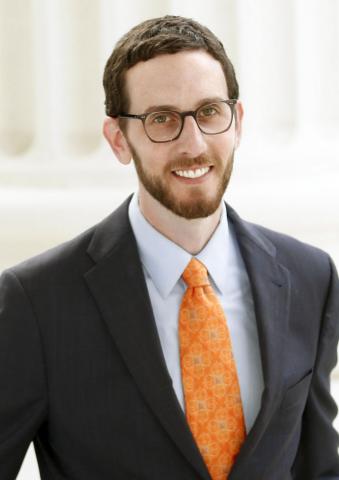
Scott Wiener
DDemocratic
Co
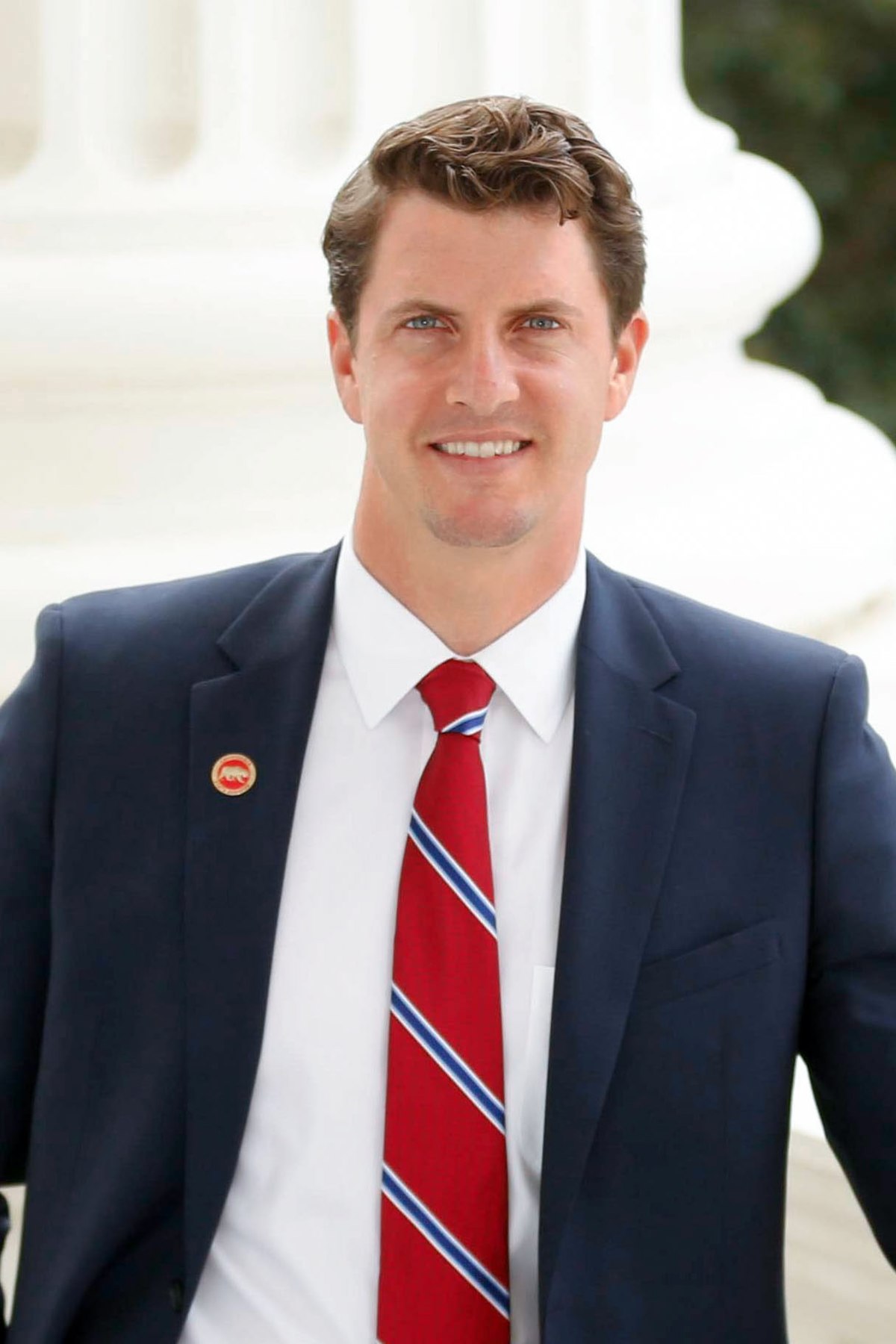
Henry Stern
DDemocratic
Co

Richard Roth
DDemocratic
Ask Maddy
·
AI policy assistant
Ask Maddy about SB 1047
Scope: CA
Hi! I can help you understand SB 1047. What would you like to know?
Try one of these
i
Maddy answers using official bill text and legislative records. Always verify before sharing.
Sources cited inline