

Veterans' aid and welfare: housing.
Summary
Existing law, the Veterans Housing and Homeless Prevention Act of 2014 (the act) , requires the California Housing Finance Agency, the Department of Housing and Community Development, and the Department of Veterans Affairs (referred to collectively as "the departments") to establish and implement programs that focus on veterans at risk for homelessness or experiencing temporary or chronic homelessness, as specified. In this regard, existing law requires the departments to establish and implement programs that, among other things, prioritize projects that combine housing and supportive services. Existing law requires the departments to ensure at least 50% of funds awarded for capital development provide housing to veteran households with extremely low incomes. Existing law requires a determination of whether a potential tenant is eligible under those provisions to consider all of a household's income sources upon initial tenancy, as specified. Existing law, for purposes of supportive housing units that are restricted to extremely low income veterans pursuant to a regulatory agreement with the committee, authorizes an entity tasked with making referrals of those units targeted to extremely low income households that is unable to place a qualified tenant in a qualified unit, as specified, to match prospective secondary tenants to qualified units. For purposes of the act, existing law defines a "secondary tenant" as (1) a veteran who is homeless, has an income of up to 50% of the median income, and is receiving income as a result of service-connected disability benefits or (2) a veteran who is homeless and has an income of up to 60% of the area median income, but would otherwise have an income below 50% of the area median income if not for their income as a result of their service-connected disability. For purposes of supportive housing for veterans funded by tax credits and private activity bonds, existing law defines a "secondary tenant" as a veteran who is homeless, who has an income of up to 60% of the area median income, and who is receiving income as a result of service-connected disability benefits. This bill would instead, for both purposes described above, define a "secondary tenant" to mean a veteran who is homeless and has an income of up to 60% of the area median income. The bill would prohibit a determination of whether a potential tenant is eligible for supportive, affordable, or transitional housing under the act from considering a potential tenant's service-connected disability benefits. This bill would declare that it is to take effect immediately as an urgency statute.
Bill status
signed
all 5 stages cleared
Introduction
Feb 2023
Committee Review
Aug 2024
Assembly Passage
May 2023
Senate Passage
Aug 2024
Signed into Law
Sep 2024
Introduced Feb 8, 2023
Signed Sep 29, 2024
Floor votes · Senate Aug 30, 2024 · Assembly Jun 1, 2023
How they voted
39–0
Passed · 1 other
Total votes 40
Aug 30, 2024
D
Democratic31
100% Yea
R
Republican9
88% Yea
Vote distribution
All Yea
All Nay
Mixed
No data
Full legislative history
Actions timeline
Total actions
37
Key actions
14
Committee
14
Amendments
5
Sep 29, 2024
Signed into law
Approved by the Governor.
legislature
Aug 31, 2024
Lower · Passed
Urgency clause adopted. Senate amendments concurred in. To Engrossing and Enrolling. (Ayes 77. Noes 0.).
lower
Aug 31, 2024
Introduced
In Assembly. Concurrence in Senate amendments pending.
lower
Aug 30, 2024
Upper · Passed
Read third time. Urgency clause adopted. Passed. Ordered to the Assembly. (Ayes 39. Noes 0.).
upper
Aug 28, 2024
Upper · Passed
From committee: Do pass. (Ayes 7. Noes 0.) (August 28).
upper
Aug 27, 2024
Upper · Passed
From committee: Do pass and re-refer to Com. on APPR. (Ayes 10. Noes 0.) (August 27). Re-referred to Com. on APPR.
upper
Aug 26, 2024
Committee
Re-referred to Com. on HOUSING.
upper
Aug 26, 2024
Committee
Re-referred to Com. on RLS pursuant to Senate Rule 29.10(C).
upper
Aug 22, 2024
Upper · Passed
Read second time and amended. Ordered returned to second reading.
upper
Sep 1, 2023
Upper · Passed
From committee: Do pass. (Ayes 7. Noes 0.) (September 1).
upper
Jul 3, 2023
Committee
In committee: Referred to APPR suspense file.
upper
Jun 21, 2023
Upper · Passed
From committee: Do pass and re-refer to Com. on APPR. (Ayes 7. Noes 0.) (June 21). Re-referred to Com. on APPR.
upper
Jun 14, 2023
Committee
Referred to Com. on ED.
upper
Jun 1, 2023
Assembly · Passed
Assembly Vote: pass (80-0)
assembly
May 31, 2023
Lower · Passed
Read third time. Passed. Ordered to the Senate. (Ayes 80. Noes 0. Page 2054.)
lower
May 18, 2023
Lower · Passed
From committee: Do pass. (Ayes 15. Noes 0.) (May 18).
lower
Apr 19, 2023
Committee
In committee: Set, first hearing. Referred to APPR. suspense file.
lower
Apr 6, 2023
Committee
Re-referred to Com. on APPR.
lower
Apr 5, 2023
Lower · Passed
Read second time and amended.
lower
Apr 5, 2023
Introduced
From committee: Amend, and do pass as amended and re-refer to Com. on APPR. with recommendation: To Consent Calendar. (Ayes 6. Noes 0.) (March 29).
lower
Mar 15, 2023
Lower · Passed
In committee: Set, first hearing. Hearing canceled at the request of author.
lower
Feb 17, 2023
Committee
Referred to Com. on ED.
lower
Feb 9, 2023
Lower · Passed
From printer. May be heard in committee March 11.
lower
1 primary · 2 co-sponsors
Sponsors
Role
Legislator
Party
State
District
P

Pilar Schiavo
DDemocratic
Co

Chris Ward
DDemocratic
Co
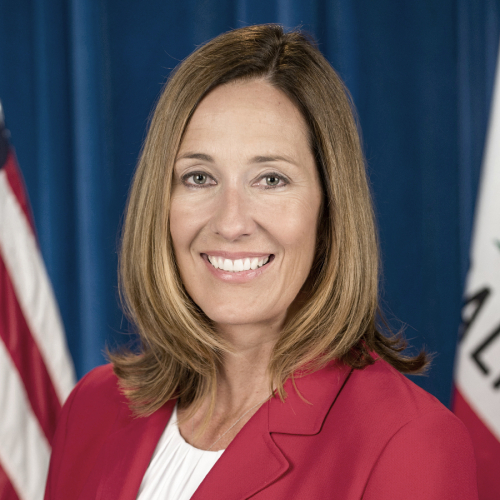
Jacqui Irwin
DDemocratic
Ask Maddy
·
AI policy assistant
Ask Maddy about AB 535
Scope: CA
Hi! I can help you understand AB 535. What would you like to know?
Try one of these
i
Maddy answers using official bill text and legislative records. Always verify before sharing.
Sources cited inline