

Clean Energy Reliability Program.
Summary
Existing law vests the Public Utilities Commission with regulatory authority over load-serving entities, which include electrical corporations, electric service providers, and community choice aggregators. Existing law requires the commission, in consultation with the Independent System Operator, to establish resource adequacy requirements for all load-serving entities. Existing law requires the commission, in establishing those resource adequacy requirements, to ensure the reliability of electrical service in California while advancing, to the extent possible, the state's goals for clean energy, reducing air pollution, and reducing emissions of greenhouse gases. This bill would establish the Clean Energy Reliability Program, to be administered by the commission, upon appropriation, to provide incentive payments to qualifying load-serving entities that exceed procurement targets for eligible resources established by the commission, as specified. The bill would require a load-serving entity to remit incentive payments to its customers as a bill credit or use the payment in a manner determined by the commission to reduce ratepayer costs arising from the additional procurement of eligible resources. The bill would require a load-serving entity to meet specified conditions to be eligible for an incentive payment. Under existing law, a violation of the Public Utilities Act or any order, decision, rule, direction, demand, or requirement of the commission is a crime. Because its provisions would be part of the act and a violation of a commission action implementing its requirements would therefore be a crime, the bill would impose a state-mandated local program. The California Constitution requires the state to reimburse local agencies and school districts for certain costs mandated by the state. Statutory provisions establish procedures for making that reimbursement. This bill would provide that no reimbursement is required by this act for a specified reason.
Bill status
failed
1 of 4 stages cleared
Introduction
Feb 2023
Committee Review
Floor Vote
Governor
Introduced Feb 17, 2023
Last action Feb 1, 2024
Floor votes
How they voted
No floor votes recorded yet.
Full legislative history
Actions timeline
Total actions
14
Key actions
6
Committee
9
Amendments
3
Feb 1, 2024
Lower · Passed
From committee: Filed with the Chief Clerk pursuant to Joint Rule 56.
lower
May 18, 2023
Lower · Passed
In committee: Held under submission.
lower
May 10, 2023
Committee
In committee: Set, first hearing. Referred to APPR. suspense file.
lower
May 3, 2023
Lower · Passed
In committee: Hearing postponed by committee.
lower
Apr 26, 2023
Lower · Passed
In committee: Hearing postponed by committee.
lower
Apr 17, 2023
Committee
Re-referred to Com. on APPR. pursuant to Assembly Rule 96.
lower
Apr 17, 2023
Lower · Passed
Read second time and amended.
lower
Apr 13, 2023
Introduced
From committee: Amend, and do pass as amended and re-refer to Com. on NAT. RES. (Ayes 12. Noes 2.) (April 12).
lower
Apr 3, 2023
Committee
Re-referred to Com. on U. & E.
lower
Mar 30, 2023
Introduced
From committee chair, with author's amendments: Amend, and re-refer to Com. on U. & E. Read second time and amended.
lower
Mar 9, 2023
Committee
Referred to Coms. on U. & E. and NAT. RES.
lower
Feb 18, 2023
Lower · Passed
From printer. May be heard in committee March 20.
lower
1 primary · 0 co-sponsors
Sponsors
Role
Legislator
Party
State
District
P
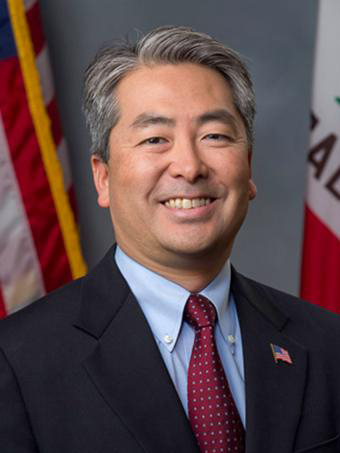
Al Muratsuchi
DDemocratic
Ask Maddy
·
AI policy assistant
Ask Maddy about AB 1538
Scope: CA
Hi! I can help you understand AB 1538. What would you like to know?
Try one of these
i
Maddy answers using official bill text and legislative records. Always verify before sharing.
Sources cited inline