

Enhanced Clinically Integrated Program for Federally Qualified Health Centers.
Summary
Existing law establishes the Medi-Cal program, which is administered by the State Department of Health Care Services and under which qualified low-income individuals receive health care services. The Medi-Cal program is, in part, governed and funded by federal Medicaid program provisions. Under existing law, federally qualified health center (FQHC) services are covered benefits under the Medi-Cal program, to be reimbursed on a per-visit basis, as specified, to the extent that federal financial participation is obtained. Existing federal law authorizes a state plan to provide for payment in any fiscal year to an FQHC for specified services in an amount that is determined under an alternative payment methodology (APM) if it is agreed to by the state and the FQHC and results in a payment to the FQHC of an amount that is at least equal to the amount otherwise required to be paid to the FQHC. Existing state law requires the department to authorize an APM pilot project for FQHCs that agree to participate, for implementation with respect to a county for a period of up to 3 years. This bill would require the department to authorize a new supplemental payment program for FQHCs pursuant to federal law, or as specified, to be named the Enhanced Clinically Integrated Program (ECIP) . Under the bill, ECIP funding would be subject to an appropriation. The bill would require the department to request an amount, as necessary to fund, implement, and maintain ECIP at sufficient capacity, on an ongoing basis in future fiscal years. Under the bill, participation in ECIP would be optional for FQHCs, funding under ECIP would be provided in addition to all other funding received by FQHCs, as specified, and participation in ECIP would result in total payments to participating FQHCs that are greater than the prospective payment system (PPS) rate otherwise required to be paid to the FQHC. The bill would, subject to an appropriation, require the department, no later than July 1, 2023, to make funding available for the purpose of direct compensation of health center workers. The bill would require ECIP to improve quality and access to care by allocating funds, if appropriated, to FQHCs that meet certain standards relating to wage thresholds and commitment to participation in bona fide labor-management cooperation committees (LMCCs) , as specified. The bill would set forth various requirements for funding allocations to, and uses by, participating FQHCs. The bill would require the department to develop eligibility criteria, an application process, a fund distribution process, reporting requirements, and a methodology for adjusting funding allocations based on health care inflation. The bill would authorize the department to choose to implement the program as a state-only funded program, as specified. If the department seeks federal financial participation in the first year of the program, the bill would require the department to apply for federal approval no later than February 1, 2023, but would authorize seeking federal financial participation in subsequent years. If federal financial participation is sought, the department would have discretion to modify the terms of ECIP if necessary to obtain federal approval so long as the modifications further the goals of increasing FQHC workforce compensation particularly for lower-paid workers and furthering the creation of, and participation in, bona fide LMCCs for FQHC worker education and training. The bill would authorize the department to implement these provisions through all-county letters or similar instructions, until any necessary regulations are adopted. The bill would make these provisions severable.
Bill status
passed
3 of 5 stages cleared
Introduction
Feb 2022
Committee Review
Aug 2022
Senate Passage
May 2022
Assembly Passage
Governor
Introduced Feb 14, 2022
Last action Aug 30, 2022
Floor votes · Senate May 24, 2022
How they voted
25–10
Passed · 5 other
Total votes 40
May 24, 2022
D
Democratic31
80% Yea
R
Republican9
100% Nay
Vote distribution
All Yea
All Nay
Mixed
No data
Full legislative history
Actions timeline
Total actions
25
Key actions
10
Committee
5
Amendments
6
Aug 11, 2022
Lower · Passed
From committee: Do pass. (Ayes 12. Noes 4.) (August 11).
lower
Aug 3, 2022
Lower · Passed
August 3 hearing postponed by committee.
lower
Jun 30, 2022
Lower · Passed
Read second time and amended. Re-referred to Com. on APPR.
lower
Jun 29, 2022
Lower · Passed
From committee: Do pass as amended and re-refer to Com. on APPR. (Ayes 10. Noes 3.) (June 28).
lower
Jun 20, 2022
Lower · Passed
From committee with author's amendments. Read second time and amended. Re-referred to Com. on HEALTH.
lower
May 27, 2022
Committee
Referred to Com. on HEALTH.
lower
May 24, 2022
Upper · Passed
Read third time. Passed. (Ayes 25. Noes 10. Page 3890.) Ordered to the Assembly.
upper
May 19, 2022
Upper · Passed
From committee: Do pass. (Ayes 5. Noes 2. Page 3779.) (May 19).
upper
Apr 25, 2022
Upper · Passed
Read second time and amended. Re-referred to Com. on APPR.
upper
Apr 21, 2022
Upper · Passed
From committee: Do pass as amended and re-refer to Com. on APPR. (Ayes 7. Noes 1. Page 3462.) (April 20).
upper
Apr 7, 2022
Upper · Passed
From committee with author's amendments. Read second time and amended. Re-referred to Com. on HEALTH.
upper
Feb 23, 2022
Committee
Referred to Com. on HEALTH.
upper
Feb 14, 2022
Introduced
Introduced. Read first time. To Com. on RLS. for assignment. To print.
upper
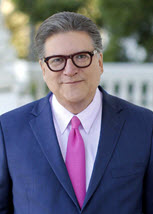
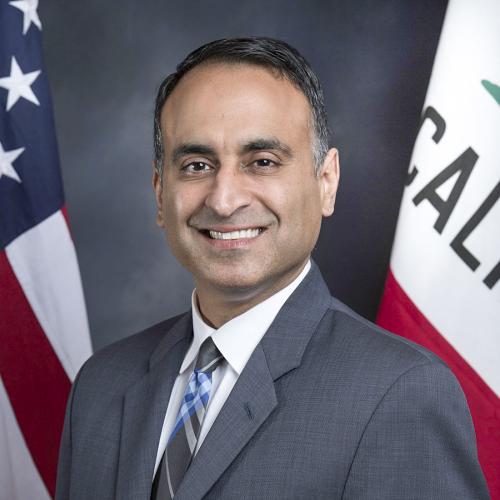
1 primary · 5 co-sponsors
Sponsors


Ask Maddy
·
AI policy assistant
Ask Maddy about SB 1014
Scope: CA
Hi! I can help you understand SB 1014. What would you like to know?
Try one of these
i
Maddy answers using official bill text and legislative records. Always verify before sharing.
Sources cited inline