

Foster youth.
Summary
(1) Existing law, the California Community Care Facilities Act, provides for the licensure and regulation of community care and residential facilities, including short-term residential therapeutic programs, by the State Department of Social Services. A violation of the act is a misdemeanor. Existing law provides for the implementation of the resource family approval process, which replaces the multiple processes for licensing foster family homes, certifying foster homes by foster family agencies, approving relatives and nonrelative extended family members as foster care providers, and approving guardians and adoptive families. Existing law imposes various requirements on resource families, including training standards. This bill would require the department to license specialized foster homes as residential facilities providing board, care, and supervision by a resource parent pursuant to standards developed in consultation with specified entities and persons. The bill would require specialized foster homes to meet prescribed standards, including training, that apply to resource families, and to complete training as a condition of obtaining and maintaining licensure. The bill would establish rates standards, including regional rate requirements, and, by January 1, 2023, would require the department to adopt regulations and determine appropriate provider rates. The bill would authorize the department to implement these provisions by specified means, including information releases, until the department adopts regulations. Because a willful violation of the bill's requirements relative to specialized foster homes under the act would be a crime, the bill would impose a state-mandated local program. Existing law defines "short-term residential therapeutic program" as a residential facility licensed by the department and operated by any public agency or private organization that provides an integrated program of specialized and intensive care and supervision, services and supports, treatment, and short-term, 24-hour care and supervision to children, including foster children. This bill would require a short-term residential therapeutic program, as a condition of licensure, to provide specified trauma-informed support and transition services to foster youth as part of a planned or unplanned discharge. By creating requirements for short-term residential therapeutic programs, the violation of which is a crime, the bill would impose a state-mandated local program. (2) Existing law establishes the Aid to Families with Dependent Children-Foster Care (AFDC-FC) program, under which counties provide payments to specified foster care providers on behalf of qualified children in foster care. Existing law requires the department to administer a state system for establishing rates in the AFDC-FC program. This bill would make specialized foster homes eligible for the AFDC-FC program. By imposing new duties on counties, this bill would impose a state-mandated local program. Existing law establishes a rate that is paid for 24-hour out-of-home care and supervision provided to children and eligible nonminor dependents who are both consumers of regional center services and receiving AFDC-FC. Existing law requires the State Department of Social Services and the State Department of Developmental Services to develop objective criteria to be used by counties in determining eligibility for AFDC-FC and the level of a supplement to that rate for children who the county determines need extraordinary care and supervision. This bill would require the State Department of Social Services, by February 1, 2022, to update its payment guidance to authorize counties to claim federal funding for placements made to a regional center vendored facility. (3) Existing law requires the Secretary of California Health and Human Services and the Superintendent of Public Instruction to establish a joint interagency resolution team, consisting of representatives from specified state departments, whose primary roles would be to develop guidance and provide support and technical assistance to counties with regard to those children and youth and the memoranda of understanding. Existing law required the team, no later than January 1, 2020, to review the placement and service options available to county child welfare agencies and county probation departments for those children and youth, and to develop and submit recommendations to the Legislature, on identified gaps in placement, needed services, and a centralized process for services. This bill would require the joint interagency resolution team to update that review and provide recommendations to the Legislature no later than December 31, 2022, that take into account the specific needs and characteristics of youth with unplanned discharges from short-term residential therapeutic programs and youth for whom counties were unable to, or have difficulty with, securing placements and providing trauma-informed services, and articulate a plan to build trauma-informed, therapeutic programs for those in-state youth. The bill would require the joint interagency resolution team to track and report deidentified information of youth who have been assisted to preserve, or secure new, intensive therapeutic options and to post that information on the internet website of the California Health and Human Services Agency. This bill would continuously appropriate $20,000,000 from the General Fund, on an annual basis, to the State Department of Social Services for use by county child welfare and probation agencies to support foster youth with unplanned discharges or who are unable to secure a therapeutic program due to exceptional needs, to be allocated to counties in a manner determined by the department in consultation with the County Welfare Directors Association of California and the Chief Probation Officers of California. The bill would end that continuous appropriation in the fiscal year following a determination by the joint interagency resolution team of adequate capacity of high-end services and supports for foster youth. The bill would require the joint interagency team to oversee the execution of a statewide request for proposal for services to youth with severe mental health and intellectual or developmental disabilities and to report to the State Department of Social Services on the status of services, to be included in a specified report. The bill would appropriate $2,000,000 to the department to support that contract. The bill would require the joint interagency resolution team to convene stakeholders to determine the feasibility of, and make recommendations for, establishing one or more child and family networks of care to consolidate purchasing power across counties and enhancing quality improvement activities to meet the needs of children, youth, and families involved and at risk of involvement in the child welfare and juvenile justice systems, and would require the joint interagency resolution team to submit prescribed reports to the Legislature. (4) Existing law generally provides for the placement of foster youth in various placement settings, and governs the provision of mental health services to foster youth. Among other things, existing law authorizes foster youth to be placed in a short-term residential therapeutic program if an interagency placement committee determines that the youth meets certain criteria, including that the youth either meets the medical necessity criteria for Medi-Cal specialty mental health services, is assessed as seriously emotionally disturbed, or their individual behavioral or treatment needs can only be met by the level of care provided in a short-term residential therapeutic program. Existing law also establishes an intensive services foster care program to provide specialized programs to serve children with specific needs, including behavioral and specialized health care needs. This bill would require the State Department of Social Services, in collaboration with the State Department of Health Care Services, to establish the Children's Crisis Continuum Pilot Program for the purpose of developing treatment options that are needed to support California's commitment to eliminate the placement of foster youth with complex needs in out-of-state facilities. The bill would require the pilot program to be implemented for 5 years. The bill would require the State Department of Social Services to take specified actions, including providing technical assistance to applicants and participating entities, awarding grants to participating entities, and developing a request for proposal process and selection criteria to determine which applicants will participate in the pilot program. The bill would require the selection criteria to include certain components, including submission of a plan of operation by an applicant. The bill would require the State Department of Social Services to select counties or regional collaboratives of counties on a competitive basis and would require proposals to participate in the pilot program to be submitted no later than March 1, 2022, and would require grant funds to be disbursed no later than May 1, 2022. This bill would require participating entities to develop and implement a highly integrated continuum of care for foster youth with high acuity mental health needs that permits the seamless transition of foster youth between treatment settings and programs, as needed for the appropriate treatment of the foster youth. The bill would authorize a participating entity to adjust or modify any required component of the continuum of care based on local needs and circumstances. The bill would require the continuum of care, across all service settings, to reflect specified core program features and service approaches, including highly individualized and trauma-informed services. The bill would state the intent of the Legislature to appropriate moneys to the State Department of Social Services in the annual Budget Act or another statute for the purpose of administering a grant program to provide funding to participating entities for the duration of the pilot program. The bill would require the department, 3 years after the commencement of the program, but not later than April 1, 2025, and again within one year after the pilot program's end date, to submit a report relating to the pilot program to the Assembly Committee on Human Services and the Senate Committees on Human Services. The bill would authorize the pilot program to be implemented through all-county letters or other similar instruction and would require any guidance issued pursuant to that authorization to be issued by January 1, 2022. (5) Existing law requires each county to, at the county's option, develop a county plan for wraparound services. Existing law requires the State Department of Social Services to seek applicable federal approval to make the maximum number of children being served through wraparound services eligible for federal financial participation, and to amend any applicable state regulations to the extent necessary to eliminate any limitations on the numbers of children who can participate in those programs. This bill would additionally require the State Department of Social Services and the State Department of Health Care Services, in consultation with county representatives and other stakeholders, to develop recommendations for implementing and expanding high-fidelity wraparound services statewide. (6) Existing law establishes the jurisdiction of the juvenile court and authorizes the removal of a child subject to the jurisdiction of the juvenile court from the physical custody of their parent. Existing law provides for the placement of children removed for the physical custody of their parent pursuant to these provisions and authorizes a child to be placed in an out-of-state group home if the juvenile court finds that certain conditions have been met, including that in-state facilities or programs have been determined to be unavailable or inadequate to meet the needs of the minor. This bill would instead prohibit the placement of a minor in an out-of-state group care facility and would require the State Department of Social Services, by July 1, 2021, to terminate all placements in, and certifications of, out-of-state group care facilities accepting California children placed by county social services agencies or probation departments. The bill would make related changes to reflect this prohibition. (7) The California Constitution requires the state to reimburse local agencies and school districts for certain costs mandated by the state. Statutory provisions establish procedures for making that reimbursement. This bill would provide that no reimbursement is required by this act for specified reasons. (8) This bill would appropriate $9,000,000 from the General Fund to the State Department of Developmental Services to expand home- and community-based regional center vendored facilities serving children with intellectual and developmental disabilities who are in crisis or require specialized, ongoing care and services.
Bill status
passed
3 of 5 stages cleared
Introduction
Feb 2021
Committee Review
Jul 2021
Assembly Passage
Jun 2021
Senate Passage
Governor
Introduced Feb 16, 2021
Last action Jul 13, 2021
Floor votes · Assembly Jun 2, 2021
How they voted
79–0
Passed
Total votes 79
Jun 2, 2021
D
Democratic59
100% Yea
I
Independent1
100% Yea
R
Republican19
100% Yea
Vote distribution
All Yea
All Nay
Mixed
No data
Full legislative history
Actions timeline
Total actions
19
Key actions
8
Committee
8
Amendments
6
Jul 13, 2021
Upper · Passed
In committee: Set, first hearing. Hearing canceled at the request of author.
upper
Jun 24, 2021
Upper · Passed
Read second time and amended. Re-referred to Com. on HEALTH.
upper
Jun 23, 2021
Introduced
From committee: Amend, and do pass as amended and re-refer to Com. on HEALTH. (Ayes 4. Noes 0.) (June 22).
upper
Jun 15, 2021
Introduced
From committee chair, with author's amendments: Amend, and re-refer to committee. Read second time, amended, and re-referred to Com. on HUMAN S.
upper
Jun 9, 2021
Committee
Referred to Coms. on HUMAN S. and HEALTH.
upper
Jun 2, 2021
Assembly · Passed
Assembly Vote: pass (79-0)
assembly
Jun 1, 2021
Lower · Passed
Read third time. Passed. Ordered to the Senate. (Ayes 79. Noes 0. Page 1769.)
lower
May 24, 2021
Lower · Passed
Read second time and amended. Ordered returned to second reading.
lower
May 20, 2021
Introduced
From committee: Amend, and do pass as amended. (Ayes 16. Noes 0.) (May 20).
lower
May 12, 2021
Committee
In committee: Set, first hearing. Referred to APPR. suspense file.
lower
Apr 28, 2021
Lower · Passed
From committee: Do pass and re-refer to Com. on APPR. (Ayes 15. Noes 0.) (April 27). Re-referred to Com. on APPR.
lower
Apr 22, 2021
Lower · Passed
From committee: Do pass and re-refer to Com. on HEALTH. (Ayes 8. Noes 0.) (April 21). Re-referred to Com. on HEALTH.
lower
Mar 26, 2021
Committee
Re-referred to Com. on HUM. S.
lower
Mar 25, 2021
Introduced
From committee chair, with author's amendments: Amend, and re-refer to Com. on HUM. S. Read second time and amended.
lower
Mar 25, 2021
Committee
Referred to Coms. on HUM. S. and HEALTH.
lower
Feb 17, 2021
Lower · Passed
From printer. May be heard in committee March 19.
lower
1 primary · 3 co-sponsors
Sponsors
Role
Legislator
Party
State
District
P
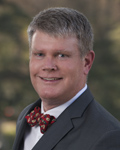
Mark Stone
DDemocratic
Co
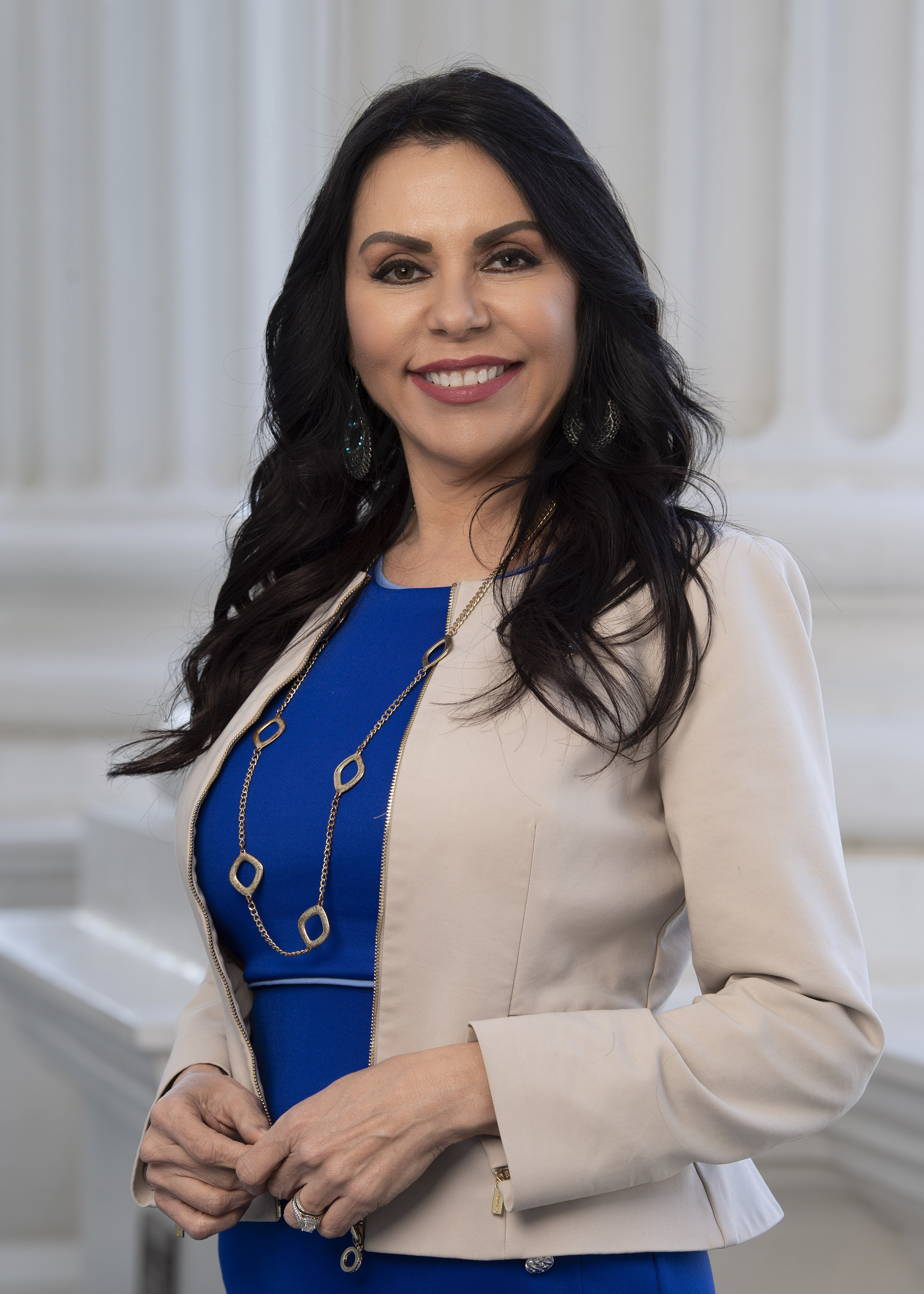
Blanca Rubio
DDemocratic
Co
CV
Carlos Villapudua
DDemocratic
Co
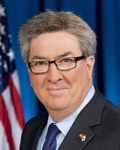
Ken Cooley
DDemocratic
Ask Maddy
·
AI policy assistant
Ask Maddy about AB 808
Scope: CA
Hi! I can help you understand AB 808. What would you like to know?
Try one of these
i
Maddy answers using official bill text and legislative records. Always verify before sharing.
Sources cited inline