

Wards: probation.
Summary
Existing law subjects a minor between 12 and 17 years of age, inclusive, who violates any federal, state, or local law or ordinance, who persistently or habitually refuses to obey the reasonable and proper orders or directions of the minor's parents, guardian, or custodian, or who is beyond the control of that person, who violates an ordinance establishing a curfew or is truant, and a minor under 12 years of age who is alleged to have committed specified serious offenses, to the jurisdiction of the juvenile court, which may adjudge the minor to be a ward of the court. When a minor is adjudged to be a ward of the court, as previously described, and is placed under the supervision of the probation officer or committed to the care, custody, and control of the probation officer, existing law authorizes the court to make any and all reasonable orders for the conduct of the ward, and to impose and require any and all reasonable conditions that it may determine fitting and proper to the end that justice may be done and the reformation and rehabilitation of the ward enhanced. This bill would limit to 6 months the period of time a ward may remain on probation, except that a court may extend the probation period for a period not to exceed increments of 6 months after a noticed hearing and upon proof by a preponderance of the evidence that it is in the ward's best interest. The bill would require the probation agency to submit a report to the court detailing the basis for any request to extend probation at the noticed hearing. The bill would require the court to provide the ward and the prosecuting attorney with the opportunity to present relevant evidence, as specified. The bill would require the court to hold a noticed hearing for the ward not less frequently than every 6 months for the remainder of the wardship period if the court extends probation. The bill would additionally require, among other things, that conditions of probation for a ward be individually tailored, developmentally appropriate, and reasonable. Existing law authorizes the court, as part of the order adjudging the minor to be a ward of the court, to order the ward to pay restitution, to pay a fine up to $250 for deposit in the county treasury if the court finds the minor has the financial ability to pay, or to participate in an uncompensated work program. This bill would remove the authority of the court to order the minor to pay the $250 fine or participate in an uncompensated work program in lieu of restitution. Existing law requires the court, for specified offenses, to order certain actions as a condition of a minor's probation including attending counseling, repairing property, repaying the cost of apprehension to the city or county, and performing community service. This bill would, in specified instances, no longer require the court to order certain actions as a condition of a minor's probation. The bill would instead impose requirements on the conditions of a minor's probation ordered by the court. Existing law requires a court to order a minor who is subject to the jurisdiction of the juvenile court to pay restitution to the victim and a restitution fine that is deposited in the Restitution Fund, as specified. Under existing law, the board of supervisors of a county may, at its discretion, impose a fee to cover the actual administrative cost of collecting the restitution fine, as specified, with the proceeds deposited in the general fund of the county. This bill would remove the authority of the board of supervisors of a county to impose this fee.
Bill status
vetoed
4 of 5 stages cleared
Introduction
Feb 2021
Committee Review
Jun 2021
Assembly Passage
Apr 2021
Senate Passage
Aug 2022
Vetoed
Sep 2022
Introduced Feb 9, 2021
Vetoed Sep 29, 2022
Floor votes · Assembly Apr 19, 2021
How they voted
This bill passed the Senate by voice vote (no roll call recorded).
Full legislative history
Actions timeline
Total actions
29
Key actions
10
Committee
6
Amendments
6
Sep 29, 2022
Vetoed
Vetoed by Governor.
lower
Aug 31, 2022
Lower · Passed
Senate amendments concurred in. To Engrossing and Enrolling. (Ayes 45. Noes 22.).
lower
Aug 30, 2022
Introduced
In Assembly. Concurrence in Senate amendments pending.
lower
Aug 30, 2022
Upper · Passed
Read third time. Passed. Ordered to the Assembly. (Ayes 21. Noes 13.).
upper
Aug 4, 2022
Upper · Passed
Read third time and amended. Ordered to second reading.
upper
Jun 28, 2022
Upper · Passed
Read second time and amended. Ordered returned to second reading.
upper
Aug 18, 2021
Upper · Passed
Read third time and amended. Ordered to second reading.
upper
Jun 30, 2021
Upper · Passed
From committee: Do pass. (Ayes 4. Noes 1. Page 1721.) (June 29).
upper
Jun 17, 2021
Introduced
From committee chair, with author's amendments: Amend, and re-refer to committee. Read second time, amended, and re-referred to Com. on PUB. S.
upper
Jun 8, 2021
Upper · Passed
In committee: Set, first hearing. Hearing canceled at the request of author.
upper
May 12, 2021
Committee
Referred to Com. on PUB. S.
upper
Apr 19, 2021
Lower · Passed
Read third time. Passed. Ordered to the Senate. (Ayes 41. Noes 22. Page 1072.)
lower
Mar 24, 2021
Lower · Passed
From committee: Do pass. (Ayes 6. Noes 2.) (March 23).
lower
Feb 18, 2021
Committee
Referred to Com. on PUB. S.
lower
Feb 10, 2021
Lower · Passed
From printer. May be heard in committee March 12.
lower
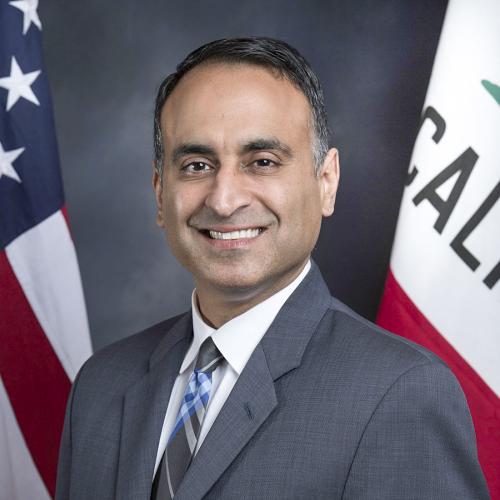
1 primary · 6 co-sponsors
Sponsors





Ask Maddy
·
AI policy assistant
Ask Maddy about AB 503
Scope: CA
Hi! I can help you understand AB 503. What would you like to know?
Try one of these
i
Maddy answers using official bill text and legislative records. Always verify before sharing.
Sources cited inline