

Telehealth.
Summary
Existing law provides for the Medi-Cal program, which is administered by the State Department of Health Care Services, under which qualified low-income individuals receive health care services. The Medi-Cal program is, in part, governed and funded by federal Medicaid program provisions. Under existing law, Medi-Cal services may be provided pursuant to contracts with various types of managed care health plans, including through a county organized health system. Under existing law, in-person contact between a health care provider and a patient is not required under the Medi-Cal program for services appropriately provided through telehealth. Existing law provides that neither face-to-face contact nor a patient's physical presence on the premises of an enrolled community clinic is required for services provided by the clinic to a Medi-Cal beneficiary during or immediately following a proclamation declaring a state of emergency. Existing law defines "immediately following" for this purpose to mean up to 90 days following the termination of the proclaimed state of emergency, unless there are extraordinary circumstances. Under existing law, federally qualified health center (FQHC) services and rural health clinic (RHC) services are covered benefits under the Medi-Cal program, to be reimbursed, to the extent that federal financial participation is available, to providers on a per-visit basis. "Visit" is defined as a face-to-face encounter between an FQHC or RHC patient and any of specified health care professionals. Under existing law, "visit" also includes an encounter between an FQHC or RHC patient and specified medical professionals when services delivered through that interaction meet the applicable standard of care. Existing law prohibits an FQHC or RHC from establishing a new patient relationship using an audio-only synchronous interaction and authorizes the department to provide specific exceptions to that prohibition, developed in consultation with affected stakeholders and published in departmental guidance. This bill would authorize the department to authorize an FQHC or RHC to establish a new patient relationship using an audio-only synchronous interaction when the visit is related to sensitive services, as defined, and authorize an FQHC or RHC to establish a new patient relationship using an audio-only synchronous interaction when the patient requests an audio-only modality or attests they do not have access to video. Existing law provides that face-to-face contact is not required when covered health care services are provided by video synchronous interaction, audio-only synchronous interaction, remote patient monitoring, or other permissible virtual communication modalities when those services and settings meet certain criteria. Existing law, effective as specified, requires a provider furnishing services via audio-only synchronous interaction to also offer those same health care services via video synchronous interaction to preserve beneficiary choice. Existing law authorizes the department to provide specific exceptions to that requirement based on a Medi-Cal provider's access to requisite technologies, as specified. Existing law also prohibits a health care provider from establishing a new patient relationship with a Medi-Cal beneficiary via, among other interactions, telephonic (audio-only) synchronous interaction. Existing law authorizes the department to provide specific exceptions to that prohibition, as specified. This bill would authorize the department to take into consideration the availability of broadband access when providing those specific exceptions. The bill would authorize the department to authorize a health care provider to establish a new patient relationship using an audio-only synchronous interaction when the visit is related to sensitive services, as defined, and authorize a health care provider to establish a new patient relationship using an audio-only synchronous interaction when the patient requests an audio-only modality or attests they do not have access to video. This bill would incorporate additional changes to Section 14132.100 of the Welfare and Institutions Code proposed by SB 966 to be operative only if this bill and SB 966 are enacted and this bill is enacted last.
Bill status
signed
all 5 stages cleared
Introduction
Dec 2020
Committee Review
Aug 2022
Assembly Passage
Jun 2021
Senate Passage
Aug 2022
Signed into Law
Sep 2022
Introduced Dec 7, 2020
Signed Sep 25, 2022
Floor votes · Senate Aug 31, 2022 · Assembly Jun 1, 2021
How they voted
37–0
Passed
Total votes 37
Aug 31, 2022
D
Democratic29
100% Yea
R
Republican8
100% Yea
Vote distribution
All Yea
All Nay
Mixed
No data
Full legislative history
Actions timeline
Total actions
37
Key actions
13
Committee
12
Amendments
10
Sep 25, 2022
Signed into law
Approved by the Governor.
legislature
Aug 31, 2022
Lower · Passed
Senate amendments concurred in. To Engrossing and Enrolling. (Ayes 71. Noes 0.).
lower
Aug 31, 2022
Introduced
In Assembly. Concurrence in Senate amendments pending.
lower
Aug 31, 2022
Upper · Passed
Read third time. Passed. Ordered to the Assembly. (Ayes 40. Noes 0. Page 5367.).
upper
Aug 24, 2022
Upper · Passed
Read third time and amended. Ordered to second reading.
upper
Aug 22, 2022
Upper · Passed
Read third time and amended. Ordered to second reading.
upper
Aug 11, 2022
Upper · Passed
From committee: Do pass. (Ayes 7. Noes 0.) (August 11).
upper
Aug 8, 2022
Committee
In committee: Referred to suspense file.
upper
Aug 1, 2022
Introduced
From committee chair, with author's amendments: Amend, and re-refer to committee. Read second time, amended, and re-referred to Com. on APPR.
upper
Jul 27, 2022
Upper · Passed
In committee: Hearing postponed by committee.
upper
Jun 30, 2022
Upper · Passed
From committee: Do pass and re-refer to Com. on APPR. (Ayes 10. Noes 0.) (June 29). Re-referred to Com. on APPR.
upper
Jun 20, 2022
Introduced
From committee chair, with author's amendments: Amend, and re-refer to committee. Read second time, amended, and re-referred to Com. on HEALTH.
upper
Jul 8, 2021
Upper · Passed
In committee: Set, first hearing. Hearing canceled at the request of author.
upper
Jun 9, 2021
Committee
Referred to Com. on HEALTH.
upper
Jun 1, 2021
Lower · Passed
Read third time. Passed. Ordered to the Senate. (Ayes 78. Noes 0. Page 1744.)
lower
May 24, 2021
Lower · Passed
Read second time and amended. Ordered returned to second reading.
lower
May 20, 2021
Introduced
From committee: Amend, and do pass as amended. (Ayes 16. Noes 0.) (May 20).
lower
May 12, 2021
Committee
In committee: Set, first hearing. Referred to APPR. suspense file.
lower
Apr 28, 2021
Lower · Passed
From committee: Do pass and re-refer to Com. on APPR. (Ayes 13. Noes 0.) (April 27). Re-referred to Com. on APPR.
lower
Apr 26, 2021
Committee
Re-referred to Com. on HEALTH.
lower
Apr 22, 2021
Introduced
From committee chair, with author's amendments: Amend, and re-refer to Com. on HEALTH. Read second time and amended.
lower
Feb 16, 2021
Committee
Re-referred to Com. on HEALTH.
lower
Feb 12, 2021
Introduced
From committee chair, with author's amendments: Amend, and re-refer to Com. on HEALTH. Read second time and amended.
lower
Jan 11, 2021
Committee
Referred to Com. on HEALTH.
lower
Dec 8, 2020
Lower · Passed
From printer. May be heard in committee January 7.
lower
1 primary · 24 co-sponsors
Sponsors
Role
Legislator
Party
State
District
P

Cecilia Aguiar-Curry
DDemocratic
Co

Alex Lee
DDemocratic
Co
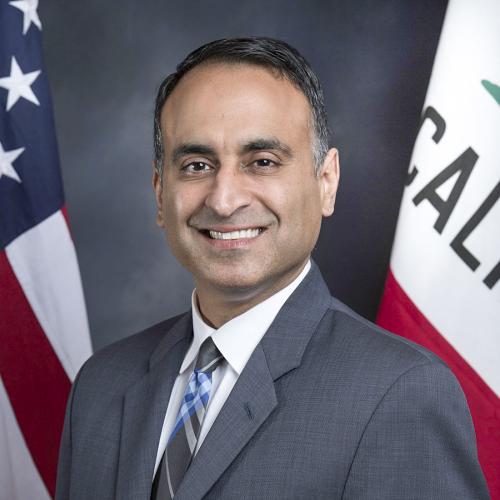
Ash Kalra
DDemocratic
Co

Bill Quirk
DDemocratic
Co

Blanca Rubio
DDemocratic
Co
BM
Brian Maienschein
DDemocratic
Co
CV
Carlos Villapudua
DDemocratic
Co
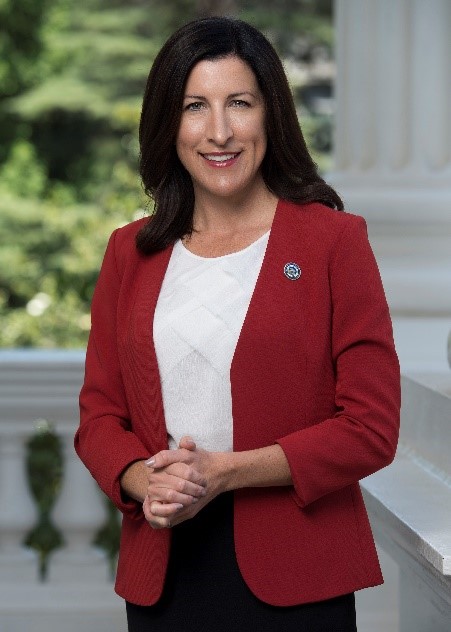
Cottie Petrie-Norris
DDemocratic
Co

Cristina Garcia
DDemocratic
Co
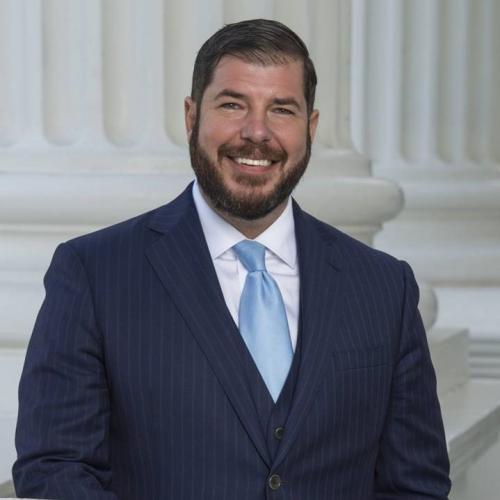
Joaquin Arambula
DDemocratic
Co

Jordan Cunningham
RRepublican






Ask Maddy
·
AI policy assistant
Ask Maddy about AB 32
Scope: CA
Hi! I can help you understand AB 32. What would you like to know?
Try one of these
i
Maddy answers using official bill text and legislative records. Always verify before sharing.
Sources cited inline