

Nursing.
Summary
Existing law, the Nursing Practice Act, establishes the Board of Registered Nurses within the Department of Consumer Affairs, until January 1, 2023, for the licensure and regulation of the practice of nursing, and makes a violation of the act a crime. Existing law grants the power to remove, for cause, a member of any board within the department to the appointing authority that appointed that member. Existing law also grants the Governor the power to remove any member of the board from office for cause, as specified. This bill would extend the provisions establishing the board and the power of the board to January 1, 2027. The bill would authorize each appointing power, rather than only the Governor, to remove members of the board for cause, as specified. The bill would also make other nonsubstantive changes. Existing federal law, the Clinical Laboratory Improvement Amendments of 1988 (CLIA) , requires all United States facilities or sites that test human specimens for health assessment or to diagnose, prevent, or treat disease, to abide by specific standards. Existing law authorizes various licensed medical professionals, as specified, to perform provider-performed microscopy, as described, under CLIA, to dispense, furnish, prescribe, and order contraceptives, drugs, and devices, as appropriate, to their patients, and to apply topical medications, as specified. The bill would extend these authorizations to nurse practitioners, as specified. Existing law authorizes the board, with the permission of the Director of Consumer Affairs, to form advisory committees that advise the board on the implementation of the Nursing Practice Act. The Administrative Procedure Act generally governs the procedure for the adoption, amendment, or repeal of regulations by state agencies and for the review of those regulatory actions by the Office of Administrative Law. This bill would create within the board a Nursing Education and Workforce Advisory Committee, which the bill would require to solicit input from approved nursing programs and members of the nursing and health care profession to study and recommend nursing education standards, simulated clinical experiences, and solutions to workforce issues to the board. The bill would require the committee be comprised of representatives from various sectors of the nursing profession. The bill would limit the terms of these appointments as specified. The bill would authorize the committee to establish subcommittees as specified. The bill would authorize the board to implement, interpret, or make specific the provisions governing the committee in a charter, which would be exempt from the requirements of the Administrative Procedure Act. Existing law specifies that an approved school of nursing, or an approved nursing program, is one that has been approved by the board, gives the course of instruction approved by the board, covering not less than 2 academic years, is affiliated or conducted in connection with one or more hospitals, and is an institution of higher education, as specified. Existing law imposes specified duties on the board related to the approval and regulation of schools of nursing and nursing programs, including a requirement that the board prepare and maintain a list of approved schools of nursing in this state whose graduates are eligible to apply for a license to practice nursing. This bill would provide that the board's executive officer is required to develop a uniform method for evaluating requests and granting approvals pursuant to the above-described provisions, as specified, and would require the executive officer to post the uniform method and any revisions on the board's website. The bill would prohibit an institution of higher education or a private postsecondary school of nursing subject to the above-described provisions from paying any clinical agency or facility for clinical experience placements for students enrolled in a nursing program offered by that school of nursing, as specified. By adding a prohibition to the Nursing Practice Act, the violation of which is a crime, this bill would impose a state-mandated local program. This bill would additionally require an approved school of nursing or nursing program to meet a minimum of 500 direct patient care clinical hours, as specified. The bill would authorize an approved school of nursing or nursing program to cover fewer than 2 academic years if approved to providing a course of instruction that prepares a licensed vocational nurse, as specified. This bill would, for approved schools of nursing actively accredited, as specified, require the board to accept continuing approval decisions from the accreditor, approve substantive change requests if approved by the accreditor, and consider limited factors when considering a request to increase enrollment, among other things. The bill would prohibit the board from requiring a fee for substantive changes approved under those provisions. Existing law, until the end of the 2021–22 academic year, and whenever the Governor declares a state of emergency for a county, as provided, requires a board nursing education consultant to approve a request from an approved nursing program to revise certain clinical experience requirements, provided the request meets specified conditions. Existing law authorizes an approved nursing program to request to reduce the required number of direct patient care hours as specified if it meets certain conditions, including using the list of alternative agencies or facilities designated by the facility finder on the Office of Statewide Health Planning and Development website to show no alternative agency or facility has a sufficient number of open placements, as specified. Existing law requires the board's executive officer to develop a uniform method for evaluating those requests and granting approvals. This bill would extend these provisions to the end of the 2023–24 academic year and require the board's executive officer to post the uniform method and any revisions on the board's website. The bill would authorize an approved nursing program to request to reduce the number of direct patient care hours only when it provides more than 500 direct patient care hours and would specify the approved nursing program would use the list of alternative agencies or facilities on the facility finder on the Department of Health Care Access and Information's website. Existing law prescribes various fees, not to subceed or exceed specified amounts, to be paid by licensees and applicants for licensure, and requires these fees to be credited to the Board of Registered Nursing Fund, which is available upon appropriation by the Legislature. Existing law prescribes specified fees for certain approvals by the board of institutions of higher education or a private postsecondary school of nursing approved by the board, and requires these fees not to subceed or exceed certain amounts. Existing law requires these fees to be deposited into the Registered Nurse Education Fund, as specified, which is available upon appropriation by the Legislature. This bill would remove the minimum fee amounts stated for each type of licensure application, as specified. The bill would require fees for certificates, as specified, to be an amount sufficient to cover the reasonable regulatory cost of issuing that certificate. Existing law authorizes a nurse practitioner who meets certain education, experience, and certification requirements to perform, in certain settings or organizations, specified functions without standardized procedures, including prescribing, administering, dispensing, and furnishing pharmacological agents. Existing law, beginning January 1, 2023, also authorizes a nurse practitioner who holds an active certification issued by the board to perform those functions without standardized procedures outside of specified settings in accordance with certain conditions and requirements. Existing law requires a nurse practitioner who is practicing pursuant to those provisions to consult with a physician under specified circumstances and to establish a referral plan for referral of complex medical cases and emergencies that addresses specified situations. This bill would revise the circumstances under which consultation with a physician is required and the situations required to be addressed in the referral plan, including when a patient is acutely decompensating. The bill would impose additional requirements for a nurse practitioner practicing pursuant to the above provisions to prescribe, administer, dispense, and furnish pharmacological agents, including requiring the issuance of a furnishing number by the board. The California Constitution requires the state to reimburse local agencies and school districts for certain costs mandated by the state. Statutory provisions establish procedures for making that reimbursement. This bill would provide that no reimbursement is required by this act for a specified reason.
Bill status
signed
all 5 stages cleared
Introduction
Feb 2022
Committee Review
Aug 2022
Assembly Passage
May 2022
Senate Passage
Aug 2022
Signed into Law
Sep 2022
Introduced Feb 18, 2022
Signed Sep 18, 2022
Floor votes · Senate Aug 30, 2022 · Assembly May 25, 2022
How they voted
36–0
Passed · 1 other
Total votes 37
Aug 30, 2022
D
Democratic29
96% Yea
R
Republican8
100% Yea
Vote distribution
All Yea
All Nay
Mixed
No data
Full legislative history
Actions timeline
Total actions
26
Key actions
10
Committee
7
Amendments
9
Sep 18, 2022
Signed into law
Approved by the Governor.
legislature
Aug 31, 2022
Lower · Passed
Senate amendments concurred in. To Engrossing and Enrolling. (Ayes 80. Noes 0.).
lower
Aug 30, 2022
Introduced
In Assembly. Concurrence in Senate amendments pending.
lower
Aug 30, 2022
Upper · Passed
Read third time. Passed. Ordered to the Assembly. (Ayes 39. Noes 0.).
upper
Aug 25, 2022
Upper · Passed
Read third time and amended. Ordered to third reading.
upper
Aug 11, 2022
Upper · Passed
Read second time and amended. Ordered returned to second reading.
upper
Aug 11, 2022
Introduced
From committee: Amend, and do pass as amended. (Ayes 6. Noes 0.) (August 11).
upper
Aug 2, 2022
Committee
In committee: Referred to suspense file.
upper
Jun 30, 2022
Upper · Passed
Read second time and amended. Re-referred to Com. on APPR.
upper
Jun 29, 2022
Introduced
From committee: Amend, and do pass as amended and re-refer to Com. on APPR. (Ayes 13. Noes 0.) (June 27).
upper
Jun 8, 2022
Committee
Referred to Com. on B., P. & E.D.
upper
May 25, 2022
Lower · Passed
Read third time. Passed. Ordered to the Senate. (Ayes 76. Noes 0. Page 4945.)
lower
May 19, 2022
Lower · Passed
From committee: Do pass. (Ayes 16. Noes 0.) (May 19).
lower
May 18, 2022
Committee
In committee: Set, first hearing. Referred to suspense file.
lower
Apr 28, 2022
Committee
Re-referred to Com. on APPR.
lower
Apr 27, 2022
Lower · Passed
Read second time and amended.
lower
Apr 26, 2022
Introduced
From committee: Amend, and do pass as amended and re-refer to Com. on APPR. (Ayes 17. Noes 0.) (April 26).
lower
Mar 10, 2022
Committee
Referred to Com. on B. & P.
lower
Feb 19, 2022
Lower · Passed
From printer. May be heard in committee March 21.
lower
Feb 18, 2022
Introduced
Introduced. To print.
lower
1 primary · 3 co-sponsors
Sponsors
Role
Legislator
Party
State
District
P
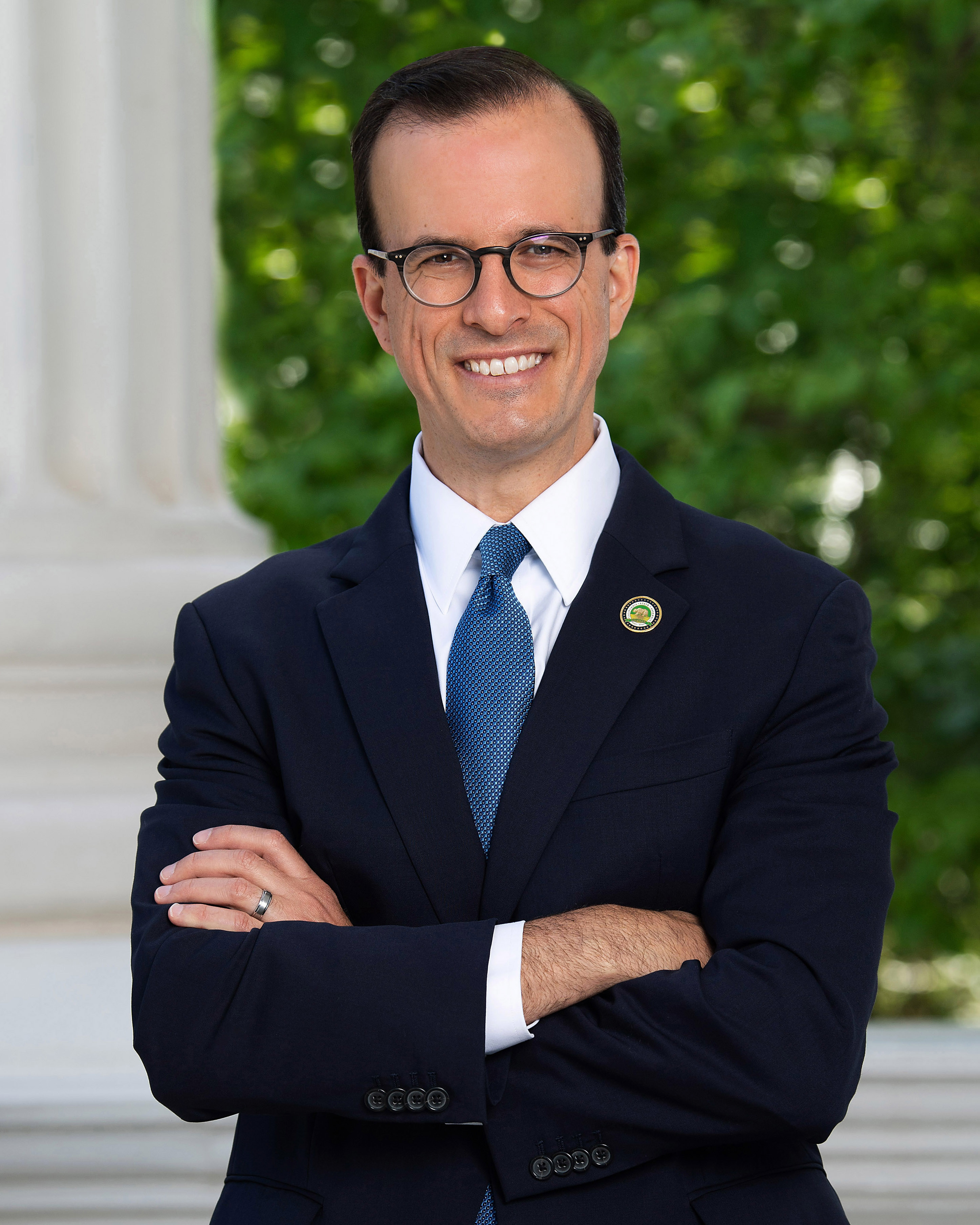
Marc Berman
DDemocratic
Co

Blanca Rubio
DDemocratic
Co
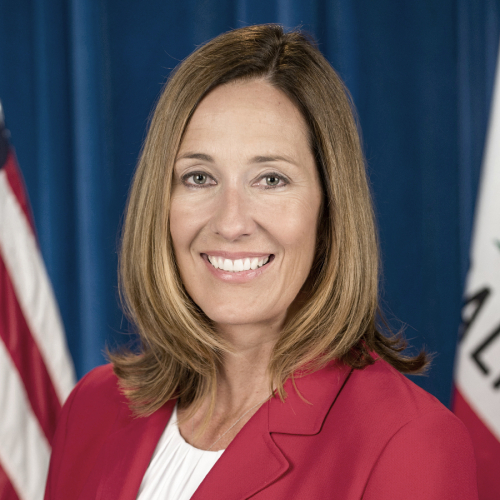
Jacqui Irwin
DDemocratic
Co

Richard Roth
DDemocratic
Ask Maddy
·
AI policy assistant
Ask Maddy about AB 2684
Scope: CA
Hi! I can help you understand AB 2684. What would you like to know?
Try one of these
i
Maddy answers using official bill text and legislative records. Always verify before sharing.
Sources cited inline