

CalWORKs and CalFresh: work requirements.
Summary
(1) Existing law provides for the California Work Opportunity and Responsibility to Kids (CalWORKs) program, under which each county provides cash assistance and other benefits to qualified low-income families and individuals. Existing law generally requires a recipient of CalWORKs benefits who is 16 years of age or older to participate in welfare-to-work activities as a condition of eligibility for aid. Existing law exempts certain persons from the welfare-to-work activities, including a child attending an elementary, secondary, vocational, or technical school on a full-time basis. Existing law, however, prohibits a person who is 16 or 17 years of age, or a custodial parent who is under 20 years of age, who loses this exemption from requalifying for the exemption by attending school as a required activity. This bill would remove that prohibition, thereby allowing that person to requalify for benefits by attending school on a full-time basis. Existing law prohibits sanctions from being applied for a failure or refusal to comply with program requirements if, among other reasons, the employment, offer of employment, activity, or other training for employment discriminates on specified bases or involves conditions that are in violation of applicable health and safety standards, or the employment or offer of employment exceeds the daily or weekly hours of work customary to the occupation. This bill would additionally prohibit sanctions from being applied for a failure or refusal to comply with program requirements if the recipient provides documentation that the anticipated hours would be so unpredictable for that specific recipient that they would not allow the recipient to anticipate compliance with program requirements related to the job, or if the recipient provides documentation that the scheduled hours exhibit a pattern of unpredictability for that specific recipient so that the recipient cannot anticipate compliance with program requirements related to the job. The bill would also prohibit sanctions from being applied if the recipient states that the employment or offer of employment fails to comply with the Healthy Workplaces, Healthy Families Act of 2014, that the recipient experienced sexual harassment or other abusive conduct at the workplace, or that the recipient's rights under specified laws were violated. The bill would require the county human services agency, when an applicant or recipient reports refusing any offer of employment, reducing hours, voluntarily quitting any employment, or being discharged from any employment, to provide the applicant or recipient with information regarding workplace rights generally, as specified, and would require the State Department of Social Services to convene a stakeholder workgroup to develop instructions for county human services agencies on how to best inform applicants and recipients of aid of those rights and remedies, and how to document an applicant's or recipient's statement of a violation of the law, as specified. Existing law requires a county to redetermine the amount of a CalWORKs grant on a semiannual basis, as specified. Under existing law, certain amounts are exempt from the calculation of income of the family for purposes of determining the amount of a grant under the CalWORKs program, including disability-based unearned income, as specified. Under existing law, disability-based unearned income means state disability insurance benefits, private disability insurance benefits, temporary workers' compensation benefits, social security disability benefits, and any veteran's disability compensation. This bill, commencing October 1, 2024, or the date the department notifies the Legislature that the Statewide Automated Welfare System (SAWS) can perform the necessary automation to implement the these provisions, whichever is later, would expand the definition of disability-based unearned income to include paid family leave benefits. Under existing law, a parent or caretaker relative is not eligible for CalWORKs aid when the parent or caretaker has received aid for a cumulative total of 48 months. Existing law increases that time limit to 60 months on May 1, 2022, or upon a specified notification to the Legislature from the department. Existing law excepts from those time limits any month in which specified conditions exist, including that the recipient is exempt from participating in welfare-to-work activities because the recipient has primary responsibility for personally providing care to a child 24 months of age or younger. This bill would additionally except from those time limits any month in which the recipient is receiving Paid Family Leave benefits. The bill would make this provision operative on October 1, 2024, unless the changes made by this act cannot be implemented without an update to SAWS, in which case this provision would become operative on the date that the department notifies the Legislature that SAWS has been updated to perform the necessary automation to implement this provision. By imposing additional duties on counties under the CalWORKs program, the bill would impose a state-mandated local program. (2) Existing federal law provides for the federal Supplemental Nutrition Assistance Program (SNAP) , known in California as CalFresh, under which supplemental nutrition assistance benefits allocated to the state by the federal government are distributed to eligible individuals by each county. Existing federal law, as a condition of eligibility for CalFresh, requires a household member who is not exempt to comply with specified work requirements, including the requirement that a member does not voluntarily and without good cause quit a job of 30 or more hours a week or reduce work effort less than 30 hours a week. Existing federal law defines "good cause" to include, among other things, circumstances beyond a member's control, resigning from a job that is unsuitable, and discrimination by an employer based on age, race, sex, color, handicap, religious beliefs, national origin, or political beliefs. This bill would, to the extent permitted by federal law, regulation, or waiver thereof, require that good cause exists for purposes of the above-mentioned work requirement if an applicant for, or recipient of, CalFresh benefits has voluntarily quit a job or reduced work hours based on at least one of the above-mentioned reasons for which welfare-to-work sanctions for a recipient of CalWORKs benefits shall not be applied, or because the scheduled work hours were so unpredictable that they did not allow an the applicant or recipient to anticipate the amount of monthly income from the job. When an the applicant or recipient reports refusing any offer of employment, reducing hours, voluntarily quitting any employment, or being discharged from any employment, the bill would require the county human services agency to provide the applicant or recipient with information regarding workplace rights generally, as specified. By imposing additional duties on counties, the bill would impose a state-mandated local program. (3) The bill would authorize the department to implement these provisions through an all-county letter or similar instruction from the Director of Social Services, until regulations are adopted on or before October 1, 2025. (4) Existing law continuously appropriates moneys from the General Fund to defray a portion of county costs under the CalWORKs program. This bill would provide that the continuous appropriation would not be made for purposes of implementing the bill. (5) The California Constitution requires the state to reimburse local agencies and school districts for certain costs mandated by the state. Statutory provisions establish procedures for making that reimbursement. This bill would provide that, if the Commission on State Mandates determines that the bill contains costs mandated by the state, reimbursement for those costs shall be made pursuant to the statutory provisions noted above.
Bill status
signed
all 5 stages cleared
Introduction
Feb 2022
Committee Review
Aug 2022
Assembly Passage
May 2022
Senate Passage
Aug 2022
Signed into Law
Sep 2022
Introduced Feb 16, 2022
Signed Sep 27, 2022
Floor votes · Senate Aug 25, 2022 · Assembly May 25, 2022
How they voted
31–6
Passed · 3 other
Total votes 40
Aug 25, 2022
D
Democratic31
100% Yea
R
Republican9
66% Nay
Vote distribution
All Yea
All Nay
Mixed
No data
Full legislative history
Actions timeline
Total actions
32
Key actions
12
Committee
10
Amendments
10
Sep 27, 2022
Signed into law
Approved by the Governor.
legislature
Aug 25, 2022
Lower · Passed
Senate amendments concurred in. To Engrossing and Enrolling. (Ayes 60. Noes 0.).
lower
Aug 25, 2022
Introduced
In Assembly. Concurrence in Senate amendments pending. May be considered on or after August 27 pursuant to Assembly Rule 77.
lower
Aug 25, 2022
Upper · Passed
Read third time. Passed. Ordered to the Assembly. (Ayes 31. Noes 6. Page 5140.).
upper
Aug 18, 2022
Upper · Passed
Read third time and amended. Ordered to second reading.
upper
Aug 11, 2022
Upper · Passed
Read second time and amended. Ordered returned to second reading.
upper
Aug 11, 2022
Introduced
From committee: Amend, and do pass as amended. (Ayes 5. Noes 2.) (August 11).
upper
Aug 2, 2022
Committee
In committee: Referred to suspense file.
upper
Jun 28, 2022
Upper · Passed
From committee: Do pass and re-refer to Com. on APPR. (Ayes 4. Noes 1.) (June 27). Re-referred to Com. on APPR.
upper
Jun 13, 2022
Upper · Passed
In committee: Set, first hearing. Hearing canceled at the request of author.
upper
Jun 8, 2022
Committee
Referred to Com. on HUMAN S.
upper
May 25, 2022
Lower · Passed
Read third time. Passed. Ordered to the Senate. (Ayes 59. Noes 6. Page 4980.)
lower
May 19, 2022
Lower · Passed
Read second time and amended. Ordered returned to second reading.
lower
May 19, 2022
Introduced
From committee: Amend, and do pass as amended. (Ayes 13. Noes 1.) (May 19).
lower
May 18, 2022
Committee
In committee: Set, first hearing. Referred to suspense file.
lower
May 2, 2022
Committee
Re-referred to Com. on APPR.
lower
Apr 28, 2022
Lower · Passed
Read second time and amended.
lower
Apr 27, 2022
Introduced
From committee: Amend, and do pass as amended and re-refer to Com. on APPR. (Ayes 7. Noes 0.) (April 26).
lower
Apr 5, 2022
Lower · Passed
In committee: Hearing postponed by committee.
lower
Mar 30, 2022
Committee
Re-referred to Com. on HUM. S.
lower
Mar 29, 2022
Introduced
From committee chair, with author's amendments: Amend, and re-refer to Com. on HUM. S. Read second time and amended.
lower
Mar 3, 2022
Committee
Referred to Com. on HUM. S.
lower
Feb 17, 2022
Lower · Passed
From printer. May be heard in committee March 19.
lower
1 primary · 0 co-sponsors
Sponsors
Role
Legislator
Party
State
District
P
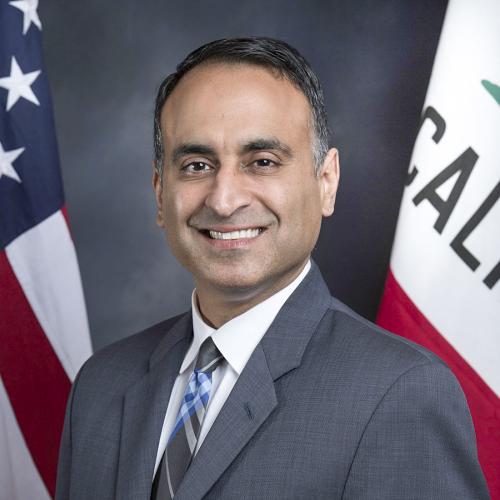
Ash Kalra
DDemocratic
Ask Maddy
·
AI policy assistant
Ask Maddy about AB 2300
Scope: CA
Hi! I can help you understand AB 2300. What would you like to know?
Try one of these
i
Maddy answers using official bill text and legislative records. Always verify before sharing.
Sources cited inline