

The California Age-Appropriate Design Code Act.
Summary
(1) Existing law, the California Privacy Rights Act of 2020, approved by the voters as Proposition 24 at the November 3, 2020, statewide general election, establishes the California Privacy Protection Agency. Existing law vests the agency with full administrative power, authority, and jurisdiction to implement and enforce the California Consumer Privacy Act of 2018 and requires the agency to be governed by a board. Existing law requires businesses to protect consumer privacy and information, make certain disclosures to consumers regarding a consumer's rights under the act in a specified manner, and disclose to consumers that a consumer has the right to request specific pieces of information, including the categories of information those businesses have collected about that consumer. Existing law, the Parent's Accountability and Child Protection Act, requires a person or business that conducts business in California and that seeks to sell specified products or services to take reasonable steps to ensure that the purchaser is of legal age at the time of purchase or delivery, including verifying the age of the purchaser. Existing law prohibits a person or business that is required to comply with these provisions from retaining, using, or disclosing any information it receives in an effort to verify age from a purchaser or recipient for any other purpose, except as specified, and subjects a business or person that violates these provisions to a civil penalty. This bill would enact the California Age-Appropriate Design Code Act, which, commencing July 1, 2024, would, among other things, require a business that provides an online service, product, or feature likely to be accessed by children to comply with specified requirements, including a requirement to configure all default privacy settings offered by the online service, product, or feature to the settings that offer a high level of privacy, unless the business can demonstrate a compelling reason that a different setting is in the best interests of children, and to provide privacy information, terms of service, policies, and community standards concisely, prominently, and using clear language suited to the age of children likely to access that online service, product, or feature. The bill would require a business, before any new online services, products, or features are offered to the public, to complete a Data Protection Impact Assessment, as defined, for any online service, product, or feature likely to be accessed by children and maintain documentation of this assessment as long as the online service, product, or feature is likely to be accessed by children. The bill would require a business to make a Data Protection Impact Assessment available, within 5 business days, to the Attorney General pursuant to a written request and would exempt a Data Protection Impact Assessment from public disclosure, as prescribed. The bill would prohibit a business that provides an online service, product, or feature likely to be accessed by children from taking proscribed action, including, if the end user is a child, using personal information for any reason other than a reason for which the personal information was collected, unless the business can demonstrate a compelling reason that use of the personal information is in the best interests of children. This bill would create the California Children's Data Protection Working Group to deliver a report to the Legislature regarding best practices for the implementation of these provisions, as specified. The bill would require the members of the working group to have certain expertise, including in the areas of children's data privacy and children's rights. The bill would require the working group to take input from a broad range of stakeholders, including from academia, consumer advocacy groups, and small, medium, and large businesses affected by data privacy policies, and make prescribed recommendations on best practices, including identifying online services, products, or features likely to be accessed by children. This bill would authorize the Attorney General to seek an injunction or civil penalty against any business that violates its provisions. The bill would hold violators liable for a civil penalty of not more than $2,500 per affected child for each negligent violation or not more than $7,500 per affected child for each intentional violation. The bill would require any penalties, fees, and expenses recovered in an action brought under the act to be deposited in the Consumer Privacy Fund with the intent that they be used to fully offset costs incurred by the Attorney General in connection with the act. (2) The California Privacy Rights Act of 2020 authorizes the Legislature to amend the act to further the purposes and intent of the act by a majority vote of both houses of the Legislature, as specified. This bill would declare that its provisions further the purposes and intent of the California Privacy Rights Act of 2020. (3) Existing constitutional provisions require that a statute that limits the right of access to the meetings of public bodies or the writings of public officials and agencies be adopted with findings demonstrating the interest protected by the limitation and the need for protecting that interest. This bill would make legislative findings to that effect.
Bill status
signed
all 5 stages cleared
Introduction
Feb 2022
Committee Review
Aug 2022
Assembly Passage
May 2022
Senate Passage
Aug 2022
Signed into Law
Sep 2022
Introduced Feb 16, 2022
Signed Sep 15, 2022
Floor votes · Senate Aug 30, 2022 · Assembly May 26, 2022
How they voted
30–0
Passed · 7 other
Total votes 37
Aug 30, 2022
D
Democratic29
100% Yea
R
Republican8
12% Yea
Vote distribution
All Yea
All Nay
Mixed
No data
Full legislative history
Actions timeline
Total actions
26
Key actions
10
Committee
7
Amendments
9
Sep 15, 2022
Signed into law
Approved by the Governor.
legislature
Aug 30, 2022
Lower · Passed
Senate amendments concurred in. To Engrossing and Enrolling. (Ayes 75. Noes 0.).
lower
Aug 30, 2022
Introduced
In Assembly. Concurrence in Senate amendments pending.
lower
Aug 30, 2022
Upper · Passed
Read third time. Passed. Ordered to the Assembly. (Ayes 33. Noes 0. Page 5235.).
upper
Aug 22, 2022
Upper · Passed
Read third time and amended. Ordered to second reading.
upper
Aug 11, 2022
Upper · Passed
Read second time and amended. Ordered returned to second reading.
upper
Aug 11, 2022
Introduced
From committee: Amend, and do pass as amended. (Ayes 5. Noes 0.) (August 11).
upper
Aug 2, 2022
Committee
In committee: Referred to suspense file.
upper
Jun 30, 2022
Upper · Passed
Read second time and amended. Re-referred to Com. on APPR.
upper
Jun 29, 2022
Introduced
From committee: Amend, and do pass as amended and re-refer to Com. on APPR. (Ayes 9. Noes 1.) (June 28).
upper
Jun 8, 2022
Committee
Referred to Com. on JUD.
upper
May 26, 2022
Lower · Passed
Read third time. Passed. Ordered to the Senate. (Ayes 72. Noes 0.)
lower
May 19, 2022
Lower · Passed
From committee: Do pass. (Ayes 16. Noes 0.) (May 19).
lower
May 11, 2022
Committee
In committee: Set, first hearing. Referred to suspense file.
lower
Apr 27, 2022
Committee
Re-referred to Com. on APPR.
lower
Apr 26, 2022
Lower · Passed
Read second time and amended.
lower
Apr 25, 2022
Introduced
From committee: Amend, and do pass as amended and re-refer to Com. on APPR. (Ayes 10. Noes 0.) (April 19).
lower
Mar 3, 2022
Committee
Referred to Com. on P. & C.P.
lower
Feb 17, 2022
Lower · Passed
From printer. May be heard in committee March 19.
lower
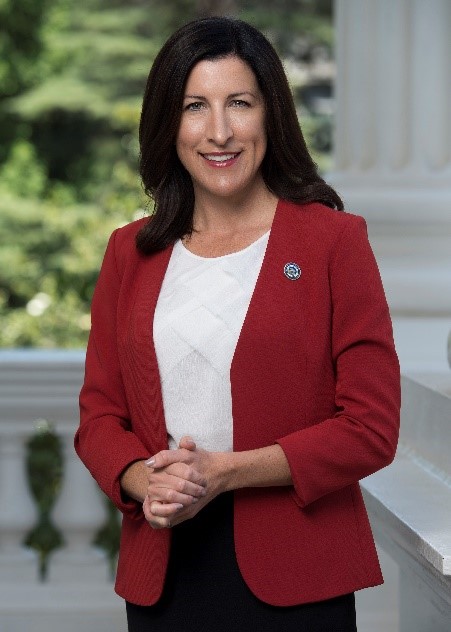
1 primary · 5 co-sponsors
Sponsors





Ask Maddy
·
AI policy assistant
Ask Maddy about AB 2273
Scope: CA
Hi! I can help you understand AB 2273. What would you like to know?
Try one of these
i
Maddy answers using official bill text and legislative records. Always verify before sharing.
Sources cited inline