

Agricultural labor relations: elections.
Summary
Existing law, the Alatorre-Zenovich-Dunlap-Berman Agricultural Labor Relations Act of 1975, grants agricultural employees the right to form and join labor organizations and engage in collective bargaining with respect to wages, terms of employment, and other employment conditions, and authorizes employees to elect exclusive bargaining representatives for these purposes. Existing law creates the Agricultural Labor Relations Board and prescribes its composition, duties, and powers. Existing law authorizes the board to hold hearings and conduct investigations and requires that certain procedures be the exclusive method of redressing unfair labor practices. Under existing law, any person who willfully resists, prevents, or interferes with a member of the board or its agents or agencies in the performance of their duties is guilty of a misdemeanor. Existing law requires the board to certify the results of an election conducted by secret ballot of employees in a collective bargaining unit to designate a collective bargaining representative, unless the board determines there are sufficient grounds to refuse to do so. Existing law further provides that if the board refuses to certify an election because of employer misconduct that would render slight the chances of a new election reflecting the free and fair choice of employees, the labor organization shall be certified as the bargaining representative for the bargaining unit. This bill would refer to the election by secret ballot process as a polling place election. The bill would establish alternative procedures to the polling place election and authorize a labor organization to be certified as the exclusive bargaining representative of a bargaining unit through either a labor peace election or a non-labor peace election, as prescribed, dependent on whether an employer enrolls and agrees to a labor peace election for labor organization representation campaigns. The bill would provide that a labor peace election or a non-labor peace election permits a bargaining unit to summarily select a labor organization as its representative for collective bargaining purposes without using the existing polling place process. Under the bill, a labor peace election would be a mail ballot election and a non-labor peace election would establish a process for the submission of a petition with proof of majority support, subject to certification by the board. Among other provisions, the bill would require for both alternative procedures that an employer respond to the board with regard to a petition, including providing a specified list of employees to the board. By expanding the definition of a crime, this bill would impose a state-mandated local program. This bill would establish a schedule for agricultural employers to indicate to the board whether they agree to a labor peace compact, defined to mean an agreement by the employer to, among other things, make no statements for or against union representation to its employees or publicly, in any written or oral form, at any time during employee hire, rehire, or orientation, or after certain documents regarding organization are filed with the board. The bill would prohibit a labor peace compact from prohibiting an employer from communicating truthful statements to employees regarding workplace policies or benefits, as specified. The bill would require the board to develop an online web-based labor peace election process that will allow employers to indicate their labor peace choice online, and that will allow labor organizations to see whether a specific agricultural employer has agreed to a labor peace election campaign. This bill would repeal the above provisions on January 1, 2028. This bill would prescribe civil penalties to be imposed upon an agricultural employer who commits an unfair labor practice in an amount not to exceed $10,000 for each violation, and would increase that sum to an amount not to exceed $25,000 for specified violations. The bill would require the board to consider specified factors in determining the amount of a civil penalty pursuant to these provisions. The bill would also authorize the board to impose personal liability for these penalties upon a director or officer of an employer in certain circumstances. Existing law authorizes a person aggrieved by the final order of the board granting or denying in whole or in part the relief sought for an unfair labor practice, to obtain a review of the order in a specified court of appeal by filing in the court a written petition requesting that the order of the board be modified or set aside. This bill would require an employer who appeals or petitions for a writ of review of any order of the board involving make-whole, backpay, or other monetary awards to employees, to post an appeal bond in the amount of the entire economic value of the order, as specified, and would provide for the bond to be forfeited under specified conditions. This bill would state that its provisions are severable. The California Constitution requires the state to reimburse local agencies and school districts for certain costs mandated by the state. Statutory provisions establish procedures for making that reimbursement. This bill would provide that no reimbursement is required by this act for a specified reason.
Bill status
signed
all 5 stages cleared
Introduction
Feb 2022
Committee Review
Aug 2022
Assembly Passage
May 2022
Senate Passage
Aug 2022
Signed into Law
Sep 2022
Introduced Feb 15, 2022
Signed Sep 28, 2022
Floor votes · Senate Aug 29, 2022 · Assembly May 25, 2022
How they voted
24–9
Passed · 4 other
Total votes 37
Aug 29, 2022
D
Democratic29
82% Yea
R
Republican8
100% Nay
Vote distribution
All Yea
All Nay
Mixed
No data
Full legislative history
Actions timeline
Total actions
29
Key actions
12
Committee
11
Amendments
5
Sep 28, 2022
Signed into law
Approved by the Governor.
legislature
Aug 29, 2022
Lower · Passed
Senate amendments concurred in. To Engrossing and Enrolling. (Ayes 55. Noes 18.).
lower
Aug 29, 2022
Introduced
In Assembly. Concurrence in Senate amendments pending. May be considered on or after August 31 pursuant to Assembly Rule 77.
lower
Aug 29, 2022
Upper · Passed
Read third time. Passed. Ordered to the Assembly. (Ayes 26. Noes 10. Page 5177.).
upper
Aug 22, 2022
Upper · Passed
Read third time and amended. Ordered to second reading.
upper
Aug 11, 2022
Upper · Passed
From committee: Do pass. (Ayes 5. Noes 2.) (August 11).
upper
Aug 2, 2022
Committee
In committee: Referred to suspense file.
upper
Jun 29, 2022
Upper · Passed
From committee: Do pass and re-refer to Com. on APPR. (Ayes 8. Noes 1.) (June 28). Re-referred to Com. on APPR.
upper
Jun 23, 2022
Upper · Passed
From committee: Do pass and re-refer to Com. on JUD. (Ayes 4. Noes 0.) (June 22). Re-referred to Com. on JUD.
upper
Jun 1, 2022
Committee
Referred to Coms. on L., P.E. & R. and JUD.
upper
May 25, 2022
Lower · Passed
Read third time. Passed. Ordered to the Senate. (Ayes 49. Noes 22. Page 4929.)
lower
May 19, 2022
Lower · Passed
From committee: Do pass. (Ayes 12. Noes 4.) (May 19).
lower
May 11, 2022
Committee
In committee: Set, first hearing. Referred to suspense file.
lower
Apr 25, 2022
Lower · Passed
Measure version as amended on March 24 corrected.
lower
Apr 21, 2022
Lower · Passed
From committee: Do pass and re-refer to Com. on APPR. (Ayes 5. Noes 2.) (April 20). Re-referred to Com. on APPR.
lower
Mar 28, 2022
Committee
Re-referred to Com. on L. & E.
lower
Mar 24, 2022
Introduced
From committee chair, with author's amendments: Amend, and re-refer to Com. on L. & E. Read second time and amended.
lower
Mar 24, 2022
Committee
Referred to Com. on L. & E.
lower
Feb 16, 2022
Lower · Passed
From printer. May be heard in committee March 18.
lower
1 primary · 48 co-sponsors
Sponsors
Role
Legislator
Party
State
District
P

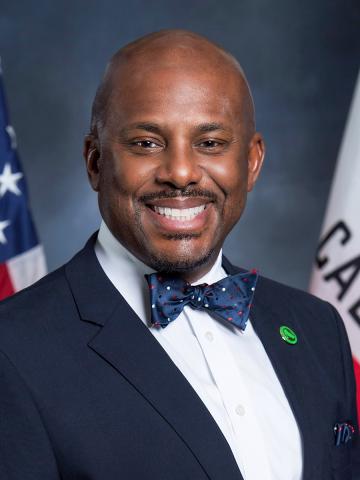
Mark Stone
DDemocratic
Co

Akilah Weber Pierson
DDemocratic
Co
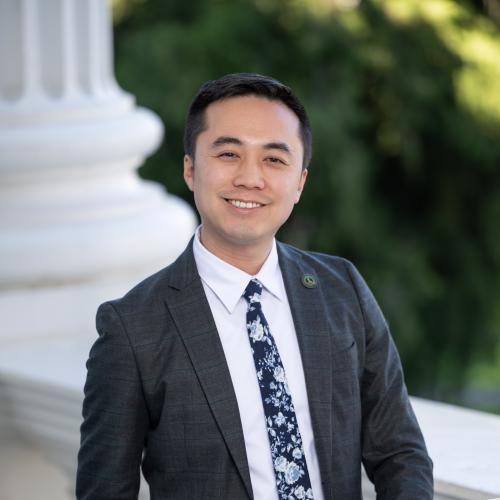
Alex Lee
DDemocratic
Co
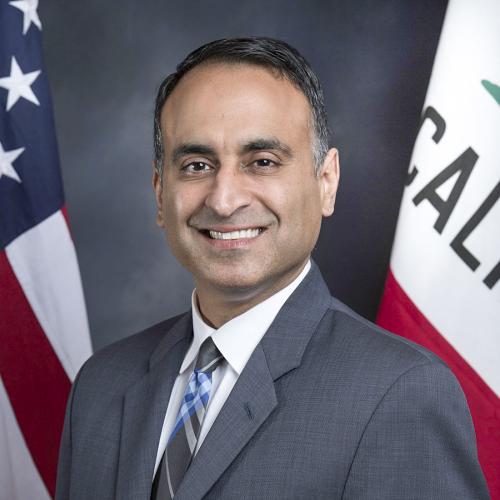
Ash Kalra
DDemocratic
Co
Ben Hueso
DDemocratic
Co

Bill Quirk
DDemocratic
Co
Bob Wieckowski
DDemocratic
Co
BM
Brian Maienschein
DDemocratic
Co

Buffy Wicks
DDemocratic
Co

Cecilia Aguiar-Curry
DDemocratic
Co
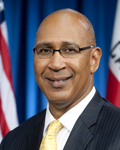
Chris Holden
DDemocratic















Ask Maddy
·
AI policy assistant
Ask Maddy about AB 2183
Scope: CA
Hi! I can help you understand AB 2183. What would you like to know?
Try one of these
i
Maddy answers using official bill text and legislative records. Always verify before sharing.
Sources cited inline