

California Global Warming Solutions Act of 2006: climate goal: natural and working lands.
Summary
The California Global Warming Solutions Act of 2006 establishes the State Air Resources Board as the state agency responsible for monitoring and regulating sources emitting greenhouse gases. The act requires the state board to approve a statewide greenhouse gas emissions limit equivalent to the statewide greenhouse gas emissions level in 1990 to be achieved by 2020 and to ensure that statewide greenhouse gas emissions are reduced to at least 40% below the 1990 level no later than December 31, 2030. The act requires the state board to prepare and approve a scoping plan for achieving the maximum technologically feasible and cost-effective reductions in greenhouse gas emissions and to update the scoping plan at least once every 5 years. Existing law requires, no later than July 1, 2023, the Natural Resources Agency, in coordination with the state board, the California Environmental Protection Agency, the Department of Food and Agriculture, and other relevant state agencies, to establish the Natural and Working Lands Climate Smart Strategy and, in developing the strategy, to create a framework to advance the state's climate goals. Existing law requires the state board, as part of its scoping plan, to establish specified carbon dioxide removal targets for 2030 and beyond. This bill would require the Natural Resources Agency, in collaboration with specified entities including the state board and the expert advisory committee described below, to determine on or before January 1, 2024, an ambitious range of targets for natural carbon sequestration, and for nature-based climate solutions, that reduce greenhouse gas emissions for 2030, 2038, and 2045 to support state goals to achieve carbon neutrality and foster climate adaptation and resilience. The bill would require these targets to be integrated into the above-described scoping plan and other state policies. The bill would require the Natural Resources Agency, in consultation with specified agencies including the state board, to review and update the Natural and Working Lands Climate Smart Strategy to achieve these targets. The bill would require the Natural Resources Agency and the state board to jointly establish an expert advisory committee to inform and review modeling and analyses for natural and working lands, to advise state agencies on implementation strategies and standardized accounting, and to provide recommendations on addressing barriers to efficient implementation of the provisions of the bill. The bill would require the Natural Resources Agency to publish data on its internet website on progress made in achieving these targets, as specified. This bill would require the state board, no later than January 1, 2025, to develop standard methods for state agencies to consistently track greenhouse gas emissions and reductions, carbon sequestration, and, where feasible and in consultation with the Natural Resources Agency and the Department of Food and Agriculture, additional benefits from natural and working lands over time. The bill would require the state board, in estimating and tracking greenhouse gas emissions and reductions and carbon sequestration from natural working lands, to take into account, where feasible, greenhouse gas emissions and reductions of carbon dioxide, methane, and nitrous oxide related to natural and working lands and the potential impacts of climate change on the ability to reduce greenhouse gas emissions and sequester carbon from natural and working lands.
Bill status
signed
all 5 stages cleared
Introduction
Feb 2022
Committee Review
Jun 2022
Assembly Passage
May 2022
Senate Passage
Aug 2022
Signed into Law
Sep 2022
Introduced Feb 2, 2022
Signed Sep 16, 2022
Floor votes · Senate Aug 31, 2022 · Assembly May 19, 2022
How they voted
27–9
Passed · 1 other
Total votes 37
Aug 31, 2022
D
Democratic29
93% Yea
R
Republican8
100% Nay
Vote distribution
All Yea
All Nay
Mixed
No data
Full legislative history
Actions timeline
Total actions
24
Key actions
7
Committee
7
Amendments
7
Sep 16, 2022
Signed into law
Approved by the Governor.
legislature
Aug 31, 2022
Lower · Passed
Senate amendments concurred in. To Engrossing and Enrolling. (Ayes 53. Noes 15.).
lower
Aug 31, 2022
Introduced
In Assembly. Concurrence in Senate amendments pending.
lower
Aug 31, 2022
Upper · Passed
Read third time. Passed. Ordered to the Assembly. (Ayes 28. Noes 10. Page 5401.).
upper
Aug 28, 2022
Introduced
From committee chair, with author's amendments: Amend, and re-refer to committee. Read second time, amended, and re-referred to Com. on N.R. & W.
upper
Jun 1, 2022
Committee
Referred to Com. on N.R. & W.
upper
May 19, 2022
Lower · Passed
Read third time. Passed. Ordered to the Senate. (Ayes 72. Noes 0. Page 4738.)
lower
May 11, 2022
Lower · Passed
From committee: Do pass. To Consent Calendar. (Ayes 16. Noes 0.) (May 11).
lower
May 11, 2022
Committee
Re-referred to Com. on APPR.
lower
May 10, 2022
Introduced
From committee chair, with author's amendments: Amend, and re-refer to Com. on APPR. Read second time and amended.
lower
Apr 28, 2022
Committee
Re-referred to Com. on APPR.
lower
Apr 27, 2022
Lower · Passed
Read second time and amended.
lower
Apr 26, 2022
Introduced
From committee: Amend, and do pass as amended and re-refer to Com. on APPR. with recommendation: To Consent Calendar. (Ayes 15. Noes 0.) (April 26).
lower
Mar 14, 2022
Committee
Re-referred to Com. on W.,P., & W.
lower
Mar 10, 2022
Introduced
From committee chair, with author's amendments: Amend, and re-refer to Com. on W.,P., & W. Read second time and amended.
lower
Mar 10, 2022
Committee
Referred to Com. on W.,P., & W.
lower
Feb 3, 2022
Lower · Passed
From printer. May be heard in committee March 5.
lower
1 primary · 12 co-sponsors
Sponsors
Role
Legislator
Party
State
District
P

Cristina Garcia
DDemocratic
Co
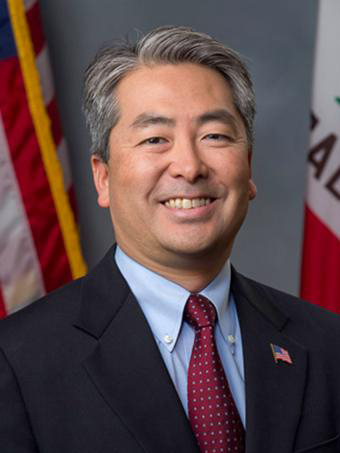
Al Muratsuchi
DDemocratic
Co
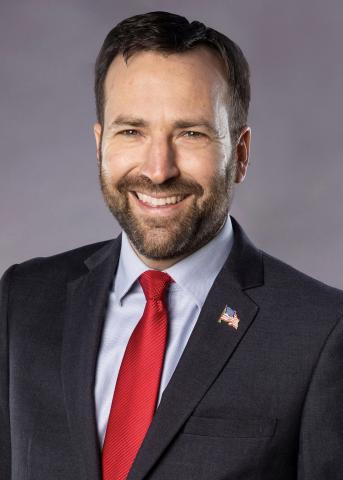
Ben Allen
DDemocratic
Co
Bob Wieckowski
DDemocratic
Co

John Laird
DDemocratic
Co
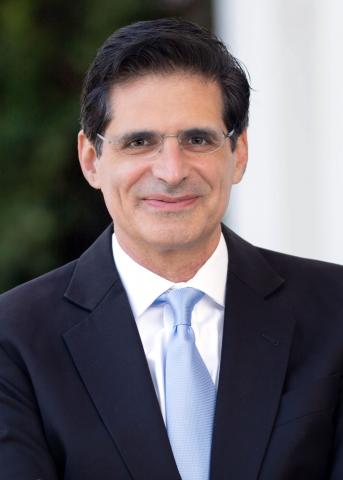
Josh Becker
DDemocratic
Co

Laura Friedman
DDemocratic
Co

Luz Rivas
DDemocratic
Co

Mark Stone
DDemocratic
Co
ML
Monique Limón
DDemocratic
Co

Nancy Skinner
DDemocratic

Ask Maddy
·
AI policy assistant
Ask Maddy about AB 1757
Scope: CA
Hi! I can help you understand AB 1757. What would you like to know?
Try one of these
i
Maddy answers using official bill text and legislative records. Always verify before sharing.
Sources cited inline