

Pupil attendance at community colleges: College and Career Access Pathways partnerships: county offices of education.
Summary
Existing law authorizes the governing board of a school district to authorize a pupil who meets specified criteria to attend community college. Existing law limits the number of pupils a principal is authorized to recommend for a community college summer session pursuant to those provisions to 5% of the total number of pupils in any grade level, as specified. Existing law, until January 1, 2027, exempts from the 5% limitation pupils who meet specified requirements, prohibits the Board of Governors of the California Community Colleges from including enrollment growth attributable to pupils enrolled pursuant to these provisions as part of its annual budget request for the California Community Colleges, and requires the Chancellor of the California Community Colleges to report to the Department of Finance the number of pupils who enrolled and received a passing grade in a community college summer session course under these provisions. This bill would extend those provisions indefinitely. Existing law, until January 1, 2027, authorizes the governing board of a community college district to enter into a College and Career Access Pathways (CCAP) partnership with the governing board of a school district or the governing body of a charter school with the goal of developing seamless pathways from high school to community college for career technical education or preparation for transfer, improving high school graduation rates, or helping high school pupils achieve college and career readiness. Existing law requires a CCAP partnership agreement to, among other things, certify that any remedial course taught by community college faculty at a partnering high school campus to be offered only to high school pupils who do not meet their grade level standard in mathematics, English, or both on an interim assessment in grade 10 or 11, as determined by the partnering school district or county office of education, and to involve a collaborative effort between high school and community college faculty to deliver an innovative remediation course as an intervention in the pupil's junior or senior year to ensure that the pupil is prepared for college-level work upon graduation. Existing law limits the statewide number of full-time equivalent students claimed as special admits to 10% of the total number of full-time equivalent students claimed statewide. This bill would specify that "high school," for purposes of a CCAP partnership, includes a community school, juvenile court school, or adult education program, as specified. The bill would authorize county offices of education to enter into CCAP partnerships with the governing boards of community college districts in accordance with these provisions. The bill would require the above-described certification requirement for certain remedial courses to instead apply to certain pretransfer-level courses, as provided. The bill would extend the provisions authorizing CCAP partnerships indefinitely and would remove the statewide limit for full-time equivalent students claimed as special admits. The bill would also make nonsubstantive conforming changes. This bill would incorporate additional changes to Section 76004 of the Education Code proposed by AB 2973 to be operative only if this bill and AB 2973 are enacted and this bill is enacted last.
Bill status
signed
all 5 stages cleared
Introduction
Dec 2020
Committee Review
Jun 2022
Assembly Passage
Jan 2022
Senate Passage
Aug 2022
Signed into Law
Sep 2022
Introduced Dec 11, 2020
Signed Sep 30, 2022
Floor votes · Senate Aug 31, 2022 · Assembly Jan 24, 2022
How they voted
37–0
Passed
Total votes 37
Aug 31, 2022
D
Democratic29
100% Yea
R
Republican8
100% Yea
Vote distribution
All Yea
All Nay
Mixed
No data
Full legislative history
Actions timeline
Total actions
33
Key actions
11
Committee
10
Amendments
10
Sep 30, 2022
Signed into law
Approved by the Governor.
legislature
Aug 31, 2022
Lower · Passed
Senate amendments concurred in. To Engrossing and Enrolling. (Ayes 80. Noes 0.).
lower
Aug 31, 2022
Introduced
In Assembly. Concurrence in Senate amendments pending.
lower
Aug 31, 2022
Upper · Passed
Read third time. Passed. Ordered to the Assembly. (Ayes 40. Noes 0. Page 5365.).
upper
Aug 22, 2022
Upper · Passed
Read third time and amended. Ordered to second reading.
upper
Aug 11, 2022
Upper · Passed
Read second time and amended. Ordered returned to second reading.
upper
Aug 11, 2022
Introduced
From committee: Amend, and do pass as amended. (Ayes 7. Noes 0.) (August 11).
upper
Jun 13, 2022
Committee
In committee: Referred to suspense file.
upper
Jun 1, 2022
Upper · Passed
From committee: Do pass and re-refer to Com. on APPR with recommendation: To Consent Calendar. (Ayes 6. Noes 0.) (June 1). Re-referred to Com. on APPR.
upper
May 18, 2022
Introduced
From committee chair, with author's amendments: Amend, and re-refer to committee. Read second time, amended, and re-referred to Com. on ED.
upper
May 4, 2022
Committee
Referred to Com. on ED.
upper
Jan 24, 2022
Lower · Passed
Read third time. Passed. Ordered to the Senate. (Ayes 66. Noes 0. Page 3367.)
lower
Jan 20, 2022
Lower · Passed
From committee: Do pass. (Ayes 15. Noes 0.) (January 20).
lower
Jan 12, 2022
Lower · Passed
From committee: Do pass and re-refer to Com. on APPR. with recommendation: To Consent Calendar. (Ayes 6. Noes 0.) (January 12). Re-referred to Com. on APPR.
lower
Jan 4, 2022
Committee
Re-referred to Com. on ED.
lower
Jan 3, 2022
Introduced
From committee chair, with author's amendments: Amend, and re-refer to Com. on ED. Read second time and amended.
lower
Mar 26, 2021
Committee
Re-referred to Com. on ED.
lower
Mar 25, 2021
Lower · Passed
Read second time and amended.
lower
Mar 24, 2021
Introduced
From committee: Amend, and do pass as amended and re-refer to Com. on ED. (Ayes 12. Noes 0.) (March 24).
lower
Mar 16, 2021
Committee
Re-referred to Com. on HIGHER ED.
lower
Mar 15, 2021
Introduced
From committee chair, with author's amendments: Amend, and re-refer to Com. on HIGHER ED. Read second time and amended.
lower
Jan 11, 2021
Committee
Referred to Coms. on HIGHER ED. and ED.
lower
Dec 12, 2020
Lower · Passed
From printer. May be heard in committee January 11.
lower
Dec 11, 2020
Introduced
Introduced. To print.
lower
1 primary · 0 co-sponsors
Sponsors
Role
Legislator
Party
State
District
P
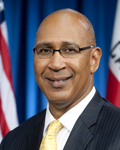
Chris Holden
DDemocratic
Ask Maddy
·
AI policy assistant
Ask Maddy about AB 102
Scope: CA
Hi! I can help you understand AB 102. What would you like to know?
Try one of these
i
Maddy answers using official bill text and legislative records. Always verify before sharing.
Sources cited inline