

Education: sex equity.
Summary
Existing federal law, known as Title IX, prohibits a person, on the basis of sex, from being excluded from participation in, being denied the benefits of, or being subject to discrimination, which includes sexual harassment, under any education program or activity receiving federal financial assistance. A portion of the Donahoe Higher Education Act, known as the Equity in Higher Education Act, declares, among other things, that it is the policy of the State of California that all persons, regardless of their sex, should enjoy freedom from discrimination of any kind in the educational institutions of the state. Existing law provides that a party to a written complaint of prohibited discrimination at certain public postsecondary educational institutions may appeal the action to specified bodies. Existing law also requires that persons who have filed a complaint of prohibited discrimination be advised by the educational institution that civil law remedies may also be available to the complainant. This bill would require, no later than January 1, 2022, except as specified, a postsecondary institution that receives state financial assistance to comply with requirements relating to the protection of students from, and providing students with procedural protections relating to complaints of, sexual harassment. In particular, the bill would require the governing board or body of each of these institutions to (1) disseminate a notice of nondiscrimination to each employee, volunteer, and individual or entity contracted with the institution, (2) designate at least one employee of the institution to coordinate its efforts to comply with its responsibilities specified in this act, (3) adopt rules and procedures for the prevention of sexual harassment, (4) adopt and publish on its internet website grievance procedures providing for the prompt and equitable resolution of sexual harassment complaints, (5) publish on the institution's internet website the name, title, and contact information for the Title IX coordinator or other employee designated to coordinate the institution's efforts to comply with and carry out the responsibilities specified in this act and any individual official with the authority to investigate complaints or to institute corrective measures, as specified, (6) include specified training to each employee engaged in the grievance procedure, (7) include annual training for residential life student and nonstudent staff for the trauma-informed handling of reports regarding incidents of sexual harassment or violence at an institution with on-campus housing, (8) notify employees of the obligation to report sexual harassment to appropriate school officials, and (9) provide training to all employees on the identification of sexual harassment. The bill would authorize enforcement of these provisions through a civil action brought pursuant to existing law, as specified. By imposing new duties on community college districts, this bill would impose a state-mandated local program. The California Constitution requires the state to reimburse local agencies and school districts for certain costs mandated by the state. Statutory provisions establish procedures for making that reimbursement. This bill would provide that, if the Commission on State Mandates determines that the bill contains costs mandated by the state, reimbursement for those costs shall be made pursuant to the statutory provisions noted above.
Bill status
signed
all 5 stages cleared
Introduction
Feb 2019
Committee Review
Aug 2020
Senate Passage
May 2019
Assembly Passage
Aug 2020
Signed into Law
Sep 2020
Introduced Feb 21, 2019
Signed Sep 29, 2020
Floor votes · Senate May 28, 2019 · Assembly Aug 31, 2020
How they voted
28–6
Passed
Total votes 34
May 28, 2019
D
Democratic26
100% Yea
R
Republican8
75% Nay
Vote distribution
All Yea
All Nay
Mixed
No data
Full legislative history
Actions timeline
Total actions
32
Key actions
14
Committee
9
Amendments
4
Sep 29, 2020
Signed into law
Approved by the Governor.
legislature
Aug 31, 2020
Assembly · Passed
Assembly Vote: pass (54-11-7)
assembly
Aug 31, 2020
Upper · Passed
Assembly amendments concurred in. (Ayes 31. Noes 8.) Ordered to engrossing and enrolling.
upper
Aug 30, 2020
Introduced
In Senate. Concurrence in Assembly amendments pending.
upper
Aug 30, 2020
Lower · Passed
Read third time. Passed. (Ayes 60. Noes 12. Page 5309.) Ordered to the Senate.
lower
Aug 24, 2020
Lower · Passed
Read second time and amended. Ordered to second reading.
lower
Aug 20, 2020
Lower · Passed
From committee: Do pass as amended. (Ayes 14. Noes 4.) (August 20).
lower
Aug 30, 2019
Lower · Passed
August 30 hearing postponed by committee.
lower
Jul 11, 2019
Lower · Passed
From committee: Do pass as amended and re-refer to Com. on APPR. (Ayes 9. Noes 2.) (July 9).
lower
Jun 26, 2019
Lower · Passed
From committee: Do pass and re-refer to Com. on JUD. (Ayes 9. Noes 3.) (June 25). Re-referred to Com. on JUD.
lower
Jun 6, 2019
Committee
Referred to Coms. on HIGHER ED. and JUD.
lower
May 28, 2019
Upper · Passed
Read third time. Passed. (Ayes 30. Noes 8. Page 1324.) Ordered to the Assembly.
upper
May 17, 2019
Upper · Passed
Read second time and amended. Ordered to second reading.
upper
May 17, 2019
Upper · Passed
From committee: Do pass as amended. (Ayes 4. Noes 2. Page 1101.) (May 16).
upper
Apr 29, 2019
Upper · Passed
From committee: Do pass as amended and re-refer to Com. on APPR. (Ayes 7. Noes 0. Page 799.) (April 23).
upper
Apr 3, 2019
Upper · Passed
From committee: Do pass and re-refer to Com. on JUD. (Ayes 6. Noes 0. Page 548.) (April 3). Re-referred to Com. on JUD.
upper
Mar 7, 2019
Committee
Referred to Coms. on ED. and JUD.
upper
Feb 21, 2019
Introduced
Introduced. Read first time. To Com. on RLS. for assignment. To print.
upper
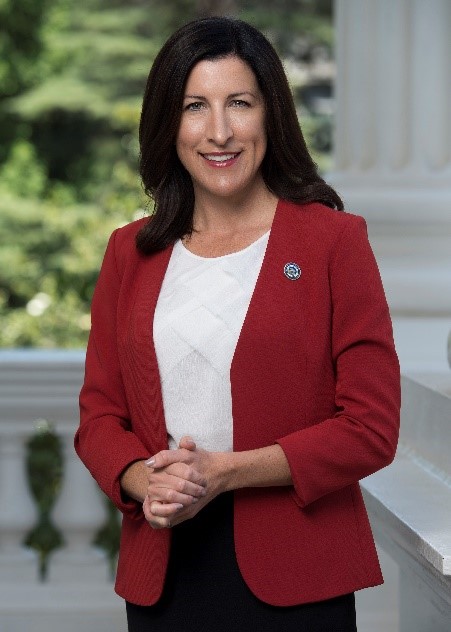
1 primary · 6 co-sponsors
Sponsors





Ask Maddy
·
AI policy assistant
Ask Maddy about SB 493
Scope: CA
Hi! I can help you understand SB 493. What would you like to know?
Try one of these
i
Maddy answers using official bill text and legislative records. Always verify before sharing.
Sources cited inline