

Juveniles: custodial interrogation.
Summary
Existing law authorizes a peace officer to take a minor into temporary custody when that officer has reasonable cause to believe that the minor has committed a crime or violated an order of the juvenile court. In these circumstances, existing law requires the peace officer to advise the minor that anything the minor says can be used against the minor, that the minor has the right to remain silent, that the minor has the right to have counsel present during any interrogation, and that the minor has the right to have counsel appointed if the minor is unable to afford counsel. Existing law requires, until January 1, 2025, that a youth 15 years of age or younger consult with legal counsel in person, by telephone, or by video conference prior to a custodial interrogation and before waiving any of the above-specified rights. Existing law directs a court deciding the admissibility of statements made by a youth 15 years of age or younger during or after a custodial interrogation to consider the effects of failing to provide counsel before the custodial interrogation. Existing law directs the Governor to convene a panel of experts to examine the effects and outcomes of these provisions, including the appropriate age of youth to whom these provisions should apply. This bill would instead apply these provisions to a youth 17 years of age or younger, and would indefinitely extend the operation of these provisions. The bill would direct a court to consider any willful failure of a law enforcement officer to allow a youth 17 years of age or younger to speak with counsel before a custodial interrogation in determining the credibility of that law enforcement officer, and would eliminate the above-specified provisions requiring the Governor to convene a panel of experts.
Bill status
signed
all 5 stages cleared
Introduction
Jan 2019
Committee Review
Aug 2020
Senate Passage
Jan 2020
Assembly Passage
Aug 2020
Signed into Law
Sep 2020
Introduced Jan 31, 2019
Signed Sep 30, 2020
Floor votes · Senate Jan 23, 2020 · Assembly Aug 31, 2020
How they voted
32–0
Passed · 2 other
Total votes 34
Jan 23, 2020
D
Democratic26
96% Yea
R
Republican8
87% Yea
Vote distribution
All Yea
All Nay
Mixed
No data
Full legislative history
Actions timeline
Total actions
28
Key actions
10
Committee
8
Amendments
2
Sep 30, 2020
Signed into law
Approved by the Governor.
legislature
Aug 31, 2020
Assembly · Passed
Assembly Vote: pass (48-13-11)
assembly
Aug 31, 2020
Upper · Passed
Assembly amendments concurred in. (Ayes 32. Noes 2.) Ordered to engrossing and enrolling.
upper
Aug 30, 2020
Introduced
In Senate. Concurrence in Assembly amendments pending.
upper
Aug 30, 2020
Lower · Passed
Read third time. Passed. (Ayes 54. Noes 13. Page 5306.) Ordered to the Senate.
lower
Aug 20, 2020
Lower · Passed
From committee: Do pass. (Ayes 13. Noes 3.) (August 20).
lower
Aug 6, 2020
Lower · Passed
From committee: Do pass and re-refer to Com. on APPR. (Ayes 6. Noes 1.) (August 5). Re-referred to Com. on APPR.
lower
Jul 27, 2020
Lower · Passed
August 3 hearing postponed by committee.
lower
Jun 29, 2020
Committee
Referred to Com. on PUB. S.
lower
Jan 23, 2020
Upper · Passed
Read third time. Passed. (Ayes 37. Noes 0. Page 3130.) Ordered to the Assembly.
upper
Jan 21, 2020
Upper · Passed
From committee: Be ordered to second reading pursuant to Senate Rule 28.8.
upper
Jan 15, 2020
Upper · Passed
From committee: Do pass and re-refer to Com. on APPR. (Ayes 12. Noes 0. Page 3099.) (January 15). Re-referred to Com. on APPR.
upper
Jan 6, 2020
Committee
Re-referred to Com. on E., U. & C.
upper
Feb 13, 2019
Committee
Referred to Com. on RLS.
upper
Jan 31, 2019
Introduced
Introduced. Read first time. To Com. on RLS. for assignment. To print.
upper
1 primary · 10 co-sponsors
Sponsors
Role
Legislator
Party
State
District
P

Steve Bradford
DDemocratic
Co
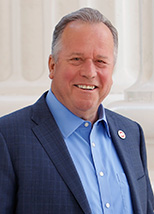
Bill Dodd
DDemocratic
Co
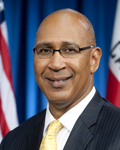
Chris Holden
DDemocratic
Co
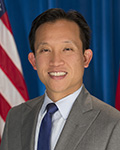
David Chiu
DDemocratic
Co
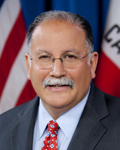
Jose Medina
DDemocratic
Co

Mark Stone
DDemocratic
Co
ME
María Elena Durazo
DDemocratic
Co

Phil Ting
DDemocratic
Co
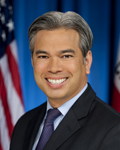
Rob Bonta
DDemocratic
Co

Scott Wiener
DDemocratic
Co
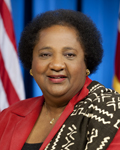
Shirley N. Weber
DDemocratic
Ask Maddy
·
AI policy assistant
Ask Maddy about SB 203
Scope: CA
Hi! I can help you understand SB 203. What would you like to know?
Try one of these
i
Maddy answers using official bill text and legislative records. Always verify before sharing.
Sources cited inline