

Emergency services: community response: grant program.
Summary
Existing law creates the Office of Emergency Services within the office of the Governor. The office is responsible for the state's emergency and disaster response services for natural, technological, or man-made disasters and emergencies. Existing law requires the office to establish by rule and regulation various classes of disaster service workers, the scope of the duties of each class, and to adopt rules and regulations for the registration of each class of these workers. Existing law requires the office to work with advocacy groups representing the deaf and hard of hearing for the purpose of improving accessibility to emergency information and services for the populations that they serve. Existing law requires the office to develop a plan for state and local utilization of volunteers during a state of emergency. This bill would, until January 1, 2024, enact the Community Response Initiative to Strengthen Emergency Systems Act or the C.R.I.S.E.S. Act for the purpose of creating, implementing, and evaluating the C.R.I.S.E.S. Act Grant Pilot Program, which the act would establish. The bill would require the Office of Emergency Services to establish rules and regulations for the act with the goal of making grants to community organizations, over 3 years, for the purpose of expanding the participation of community organizations in emergency response for specified vulnerable populations. The bill would require that grantees receive a minimum award of $250,000 per year. The bill would require a community organization receiving funds pursuant to the program to use the grant to stimulate and support involvement in emergency response activities that do not require a law enforcement officer, as specified. The bill would require the director of the office to assemble staff and resources to carry out certain duties in support of the program. The bill would require the office to support an 11-member C.R.I.S.E.S. Advisory Committee, selected by the Governor, the Chair of the Senate Rules Committee, and the Speaker of the Assembly, as specified, to be inclusive of community organizations with a proven history of leadership and partnership on emergency response. The committee would establish grant application criteria and parameters for eligible community organizations, review and decide upon grant proposals, ensure grants are adhering to standards, and make recommendations to the office, among other things. The bill would establish the Community Response Initiative to Strengthen Emergency Systems Act Fund in the State Treasury in support of the program, to be administered by the director. The bill would require that the act be implemented only if appropriate funding is made available to the office, which would make a determination to this effect, to be published on its internet website. The bill would provide that if the appropriation was not made, the office would bear no responsibility for implementing the act. The bill would make findings and declarations in regard to innovative approaches to emergency responses.
Bill status
vetoed
4 of 5 stages cleared
Introduction
Feb 2020
Committee Review
Aug 2020
Assembly Passage
Jun 2020
Senate Passage
Aug 2020
Vetoed
Sep 2020
Introduced Feb 3, 2020
Vetoed Sep 30, 2020
Floor votes · Senate Aug 28, 2020 · Assembly Jun 18, 2020
How they voted
32–2
Passed · 1 other
Total votes 35
Aug 28, 2020
D
Democratic26
100% Yea
R
Republican9
66% Yea
Vote distribution
All Yea
All Nay
Mixed
No data
Full legislative history
Actions timeline
Total actions
24
Key actions
9
Committee
9
Amendments
4
Sep 30, 2020
Vetoed
Vetoed by Governor.
lower
Aug 30, 2020
Lower · Passed
Senate amendments concurred in. To Engrossing and Enrolling. (Ayes 74. Noes 0. Page 5347.).
lower
Aug 28, 2020
Introduced
In Assembly. Concurrence in Senate amendments pending.
lower
Aug 28, 2020
Upper · Passed
Read third time. Passed. Ordered to the Assembly. (Ayes 35. Noes 2. Page 4400.).
upper
Aug 20, 2020
Upper · Passed
From committee: Do pass. (Ayes 7. Noes 0.) (August 20).
upper
Aug 19, 2020
Committee
In committee: Referred to APPR. suspense file.
upper
Aug 14, 2020
Upper · Passed
From committee: Do pass and re-refer to Com. on APPR. (Ayes 15. Noes 1.) (August 14). Re-referred to Com. on APPR.
upper
Jul 1, 2020
Committee
Referred to Com. on G.O.
upper
Jun 18, 2020
Lower · Passed
Read third time. Passed. Ordered to the Senate. (Ayes 78. Noes 0. Page 4919.)
lower
Jun 4, 2020
Lower · Passed
Read second time and amended. Ordered returned to second reading.
lower
Jun 3, 2020
Lower · Passed
From committee: Amend, and do pass as amended. (Ayes 18. Noes 0.) (June 3).
lower
Jun 2, 2020
Committee
In committee: Set, first hearing. Referred to APPR. suspense file.
lower
May 13, 2020
Lower · Passed
From committee: Do pass and re-refer to Com. on APPR. (Ayes 20. Noes 0.) (May 12). Re-referred to Com. on APPR.
lower
Mar 10, 2020
Committee
Re-referred to Com. on G.O.
lower
Feb 14, 2020
Committee
Referred to Com. on G.O.
lower
Feb 4, 2020
Lower · Passed
From printer. May be heard in committee March 5.
lower
1 primary · 19 co-sponsors
Sponsors
Role
Legislator
Party
State
District
P

Sydney Kamlager
DDemocratic
Co

Bill Dodd
DDemocratic
Co

Bill Quirk
DDemocratic
Co

Buffy Wicks
DDemocratic
Co

Cecilia Aguiar-Curry
DDemocratic
Co

David Chiu
DDemocratic
Co
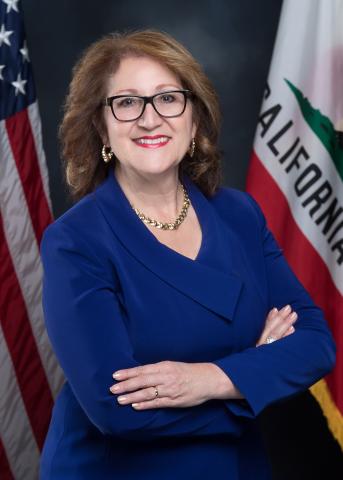
Eloise Reyes
DDemocratic
Co

Hannah-Beth Jackson
DDemocratic
Co

Holly J. Mitchell
DDemocratic
Co

Laura Friedman
DDemocratic
Co

Mark Stone
DDemocratic








Ask Maddy
·
AI policy assistant
Ask Maddy about AB 2054
Scope: CA
Hi! I can help you understand AB 2054. What would you like to know?
Try one of these
i
Maddy answers using official bill text and legislative records. Always verify before sharing.
Sources cited inline