

Employment violation complaints: requirements: time.
Summary
(1) Existing law creates the Division of Labor Standards Enforcement, which is headed by the Labor Commissioner, and commits to it the general authority to enforce the requirements of the Labor Code. Existing law generally authorizes people who believe that they have been discharged or otherwise discriminated against in violation of any law enforced by the Labor Commissioner to file a complaint with the Division of Labor Standards Enforcement within 6 months after the occurrence of the violation. Existing law generally requires the Labor Commissioner to commence actions to enforce labor standards within 3 years of their accrual, as specified. This bill would extend the period of time within which people may file complaints subject to the 6-month deadline, described above, to within one year after the occurrence of the violations. (2) Existing law prohibits employers and their agents from making, adopting, or enforcing a rule, regulation, or policy preventing an employee from disclosing information to certain entities or from providing information to, or testifying before, any public body conducting an investigation, hearing, or inquiry if the employee has reasonable cause to believe that the information discloses a violation of a law, as specified. Existing law also prohibits retaliation against an employee for various reasons. This bill would authorize a court to award reasonable attorney's fees to a plaintiff who brings a successful action for a violation of the provisions described above.
Bill status
signed
all 5 stages cleared
Introduction
Jan 2020
Committee Review
Aug 2020
Assembly Passage
Jun 2020
Senate Passage
Aug 2020
Signed into Law
Sep 2020
Introduced Jan 17, 2020
Signed Sep 30, 2020
Floor votes · Senate Aug 24, 2020 · Assembly Jun 10, 2020
How they voted
25–10
Passed
Total votes 35
Aug 24, 2020
D
Democratic26
96% Yea
R
Republican9
100% Nay
Vote distribution
All Yea
All Nay
Mixed
No data
Full legislative history
Actions timeline
Total actions
20
Key actions
10
Committee
11
Sep 30, 2020
Signed into law
Approved by the Governor.
legislature
Aug 24, 2020
Lower · Passed
In Assembly. Ordered to Engrossing and Enrolling.
lower
Aug 24, 2020
Upper · Passed
Read third time. Passed. Ordered to the Assembly. (Ayes 28. Noes 12. Page 4288.).
upper
Aug 20, 2020
Upper · Passed
From committee: Do pass. (Ayes 5. Noes 2.) (August 20).
upper
Aug 13, 2020
Committee
In committee: Referred to APPR. suspense file.
upper
Jul 31, 2020
Upper · Passed
From committee: Do pass and re-refer to Com. on APPR. (Ayes 7. Noes 2.) (July 30). Re-referred to Com. on APPR.
upper
Jul 1, 2020
Committee
Referred to Com. on JUD.
upper
Jun 10, 2020
Lower · Passed
Read third time. Passed. Ordered to the Senate. (Ayes 46. Noes 23. Page 4759.)
lower
Jun 3, 2020
Lower · Passed
From committee: Do pass. (Ayes 12. Noes 5.) (June 3).
lower
Jun 2, 2020
Committee
In committee: Set, first hearing. Referred to APPR. suspense file.
lower
May 21, 2020
Lower · Passed
From committee: Do pass and re-refer to Com. on APPR. (Ayes 5. Noes 2.) (May 20). Re-referred to Com. on APPR.
lower
Mar 16, 2020
Lower · Passed
In committee: Hearing postponed by committee.
lower
Jan 30, 2020
Committee
Referred to Coms. on L. & E. and JUD.
lower
Jan 18, 2020
Lower · Passed
From printer. May be heard in committee February 17.
lower
1 primary · 9 co-sponsors
Sponsors
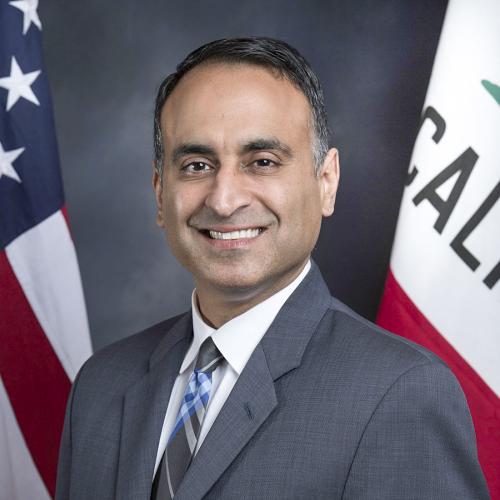









Ask Maddy
·
AI policy assistant
Ask Maddy about AB 1947
Scope: CA
Hi! I can help you understand AB 1947. What would you like to know?
Try one of these
i
Maddy answers using official bill text and legislative records. Always verify before sharing.
Sources cited inline