

Wireless telecommunications facilities.
Summary
(1) Existing federal law prohibits a state or local statute, regulation, or legal requirement from prohibiting an interstate or intrastate telecommunications service, but recognizes the ability of a state to impose, on a competitively neutral basis, requirements necessary to preserve and advance universal service, protect the public safety and welfare, ensure the continued quality of telecommunications services, and safeguard the rights of consumers. If the Federal Communications Commission (FCC) determines that this prohibition has been violated, existing federal law requires the FCC to preempt the enforcement of the offending statute, regulation, or legal requirement to the extent necessary to correct the violation. Existing federal law additionally recognizes the authority of a state or local government to manage public rights-of-way or to require fair and reasonable compensation from telecommunications providers, on a competitively neutral and nondiscriminatory basis, for the use of public rights-of-way on a nondiscriminatory basis, if the compensation required is publicly disclosed by that government. Existing federal law provides that no state or local government has the authority to regulate the entry of, or the rates charged by, a commercial mobile service, but permits a state to regulate the other terms and conditions of commercial mobile services. Under existing law, the placement or installation of certain wireless facilities, including antennas and related equipment, on or immediately adjacent to a wireless telecommunications facility, as specified, is a permitted use not subject to a city or county discretionary permit, but certain other wireless telecommunications facilities are subject to city or county discretionary permitting and are required to comply with specified criteria. This bill would provide that a small cell, as defined, is a permitted use, subject only to a specified permitting process adopted by a city or county, if the small cell meets specified requirements. By imposing new duties on local agencies, this bill would impose a state-mandated local program. The bill would authorize a city or county to require an encroachment permit or a building permit, and any additional ministerial permits, for a small cell, as specified. The bill would authorize a city or county to charge 3 types of fees relating to these small cells: an annual charge for each small cell attached to city or county vertical infrastructure, an annual attachment rate, and a one-time reimbursement fee. The bill would require the city or county to comply with notice and hearing requirements before imposing the annual attachment rate. The bill would require an action or proceeding to challenge a fee imposed under the provisions of this bill to be commenced within 120 days of the effective date of the ordinance or resolution. This bill would require each wireless service provider, on or before July 1, 2019, and again on or before December 31, 2020, to submit a report to the Legislature specifying the number of, and geographical location by ZIP Code of, the small cells that the wireless service provider has commenced operating within the state during the 18 months preceding the date of each report. (2) Existing law requires a local publicly owned electric utility, as defined, to make available appropriate space and capacity on and in certain utility poles and related structures. Existing law requires fees adopted to cover the costs to provide this use, and the terms and conditions of access, to meet specified requirements, and specifies the manner in which these fees and terms and conditions of access may be challenged. This bill would provide that it does not authorize or impose an obligation to charge a different use fee on a local publicly owned electric utility, and does not change or remove any obligation by the owner or operator of a small cell to comply with a local publicly owned electric utility's reasonable and feasible safety, reliability, and engineering policies. (3) The Digital Infrastructure and Video Competition Act of 2006 establishes a procedure for the issuance of state franchises for the provision of video service and cable service and designates the Public Utilities Commission as the sole franchising authority for a state franchise under the act. The act requires the holder of a state franchise to pay franchise fees, as specified. The act prescribes the extent of the obligation of a holder of a state franchise to provide public, educational, and governmental access (PEG) channels, but authorizes a local entity, as defined, to establish a fee to support the costs of PEG channel facilities, in the amount of 1% of gross revenues, or more in specified circumstances. This bill would prohibit a city or county from requiring a provider of video or cable service to obtain any additional authorization or permit not described above to provide any communications services that are provided by a provider that holds a franchise pursuant to the act. The bill would prohibit a city or county from requiring the provider of video or cable service to pay any tax, fee, assessment, or other charge not authorized by the act, this bill, or other state laws. (4) The California Constitution requires the state to reimburse local agencies and school districts for certain costs mandated by the state. Statutory provisions establish procedures for making that reimbursement. This bill would provide that no reimbursement is required by this act for a specified reason.
Bill status
vetoed
4 of 5 stages cleared
Introduction
Feb 2017
Committee Review
Sep 2017
Senate Passage
May 2017
Assembly Passage
Sep 2017
Vetoed
Mar 2018
Introduced Feb 17, 2017
Vetoed Mar 3, 2018
Floor votes · Senate Jun 1, 2017 · Assembly Sep 13, 2017
How they voted
26–1
Passed · 5 other
Total votes 32
Jun 1, 2017
D
Democratic22
72% Yea
R
Republican10
100% Yea
Vote distribution
All Yea
All Nay
Mixed
No data
Full legislative history
Actions timeline
Total actions
37
Key actions
13
Committee
10
Amendments
4
Mar 3, 2018
Vetoed
Last day to consider Governor’s veto pursuant to Joint Rule 58.5.
upper
Oct 15, 2017
Vetoed
In Senate. Consideration of Governor's veto pending.
upper
Oct 15, 2017
Vetoed
Vetoed by the Governor.
upper
Sep 14, 2017
Upper · Passed
Assembly amendments concurred in. (Ayes 22. Noes 10. Page 2898.) Ordered to engrossing and enrolling.
upper
Sep 14, 2017
Introduced
In Senate. Concurrence in Assembly amendments pending.
upper
Sep 13, 2017
Assembly · Passed
Assembly Vote: pass (39-15-15)
assembly
Sep 5, 2017
Lower · Passed
From committee: Do pass as amended. (Ayes 12. Noes 1.) (September 1).
lower
Jul 18, 2017
Lower · Passed
Read second time and amended. Re-referred to Com. on APPR.
lower
Jul 17, 2017
Lower · Passed
From committee: Do pass as amended and re-refer to Com. on APPR. (Ayes 10. Noes 0.) (July 12).
lower
Jul 3, 2017
Lower · Passed
Read second time and amended. Re-referred to Com. on C. & C.
lower
Jun 29, 2017
Lower · Passed
From committee: Do pass as amended and re-refer to Com. on C. & C. (Ayes 6. Noes 2.) (June 28).
lower
Jun 15, 2017
Committee
Referred to Coms. on L. GOV. and C. & C.
lower
Jun 1, 2017
Senate · Passed
Senate Vote: pass (26-1-5)
senate
May 25, 2017
Upper · Passed
From committee: Do pass. (Ayes 6. Noes 0. Page 1188.) (May 25).
upper
May 2, 2017
Upper · Passed
Read second time and amended. Re-referred to Com. on APPR.
upper
May 1, 2017
Upper · Passed
From committee: Do pass as amended and re-refer to Com. on APPR. (Ayes 7. Noes 0. Page 884.) (April 26).
upper
Apr 18, 2017
Upper · Passed
April 26 hearing postponed by committee.
upper
Apr 5, 2017
Upper · Passed
From committee: Do pass and re-refer to Com. on GOV. & F. (Ayes 11. Noes 0. Page 621.) (April 4). Re-referred to Com. on GOV. & F.
upper
Mar 2, 2017
Committee
Referred to Coms. on E., U. & C. and GOV. & F.
upper
Feb 17, 2017
Introduced
Introduced. Read first time. To Com. on RLS. for assignment. To print.
upper
1 primary · 3 co-sponsors
Sponsors
Role
Legislator
Party
State
District
P
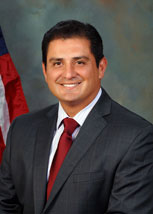
Ben Hueso
DDemocratic
Co
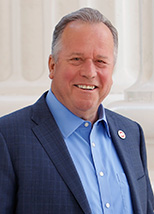
Bill Dodd
DDemocratic
Co

Bill Quirk
DDemocratic
Co
Matthew Dababneh
DDemocratic
Ask Maddy
·
AI policy assistant
Ask Maddy about SB 649
Scope: CA
Hi! I can help you understand SB 649. What would you like to know?
Try one of these
i
Maddy answers using official bill text and legislative records. Always verify before sharing.
Sources cited inline