

Accomplice liability for felony murder.
Summary
Existing law defines murder as the unlawful killing of a human being, or a fetus, with malice aforethought. Existing law defines malice for this purpose as either express or implied and defines those terms. This bill would require a principal in a crime to act with malice aforethought to be convicted of murder except when the person was a participant in the perpetration or attempted perpetration of a specified felony in which a death occurred and the person was the actual killer, was not the actual killer but, with the intent to kill, aided, abetted, counseled, commanded, induced, solicited, requested, or assisted the actual killer in the commission of murder in the first degree, or the person was a major participant in the underlying felony and acted with reckless indifference to human life. Existing law defines first degree murder, in part, as all murder that is committed in the perpetration of, or attempt to perpetrate, specified felonies, including arson, rape, carjacking, robbery, burglary, mayhem, and kidnapping. Existing law, as enacted by Proposition 7, approved by the voters at the November 7, 1978, statewide general election, prescribes a penalty for that crime of death, imprisonment in the state prison for life without the possibility of parole, or imprisonment in the state prison for a term of 25 years to life. Existing law defines 2nd degree murder as all murder that is not in the first degree and imposes a penalty of imprisonment in the state prison for a term of 15 years to life. This bill would prohibit a participant in the perpetration or attempted perpetration of one of the specified first degree murder felonies in which a death occurs from being liable for murder, unless the person was the actual killer or the person was not the actual killer but, with the intent to kill, aided, abetted, counseled, commanded, induced, solicited, requested, or assisted the actual killer, or the person was a major participant in the underlying felony and acted with reckless indifference to human life, unless the victim was a peace officer who was killed in the course of performing his or her duties where the defendant knew or should reasonably have known the victim was a peace officer engaged in the performance of his or her duties. This bill would provide a means of vacating the conviction and resentencing a defendant when a complaint, information, or indictment was filed against the defendant that allowed the prosecution to proceed under a theory of first degree felony murder or murder under the natural and probable consequences doctrine, the defendant was sentenced for first degree or 2nd degree murder or accepted a plea offer in lieu of a trial at which the defendant could be convicted for first degree or 2nd degree murder, and the defendant could not be charged with murder after the enactment of this bill. By requiring the participation of district attorneys and public defenders in the resentencing process, this bill would impose a state-mandated local program. The California Constitution requires the state to reimburse local agencies and school districts for certain costs mandated by the state. Statutory provisions establish procedures for making that reimbursement. This bill would provide that, if the Commission on State Mandates determines that the bill contains costs mandated by the state, reimbursement for those costs shall be made pursuant to the statutory provisions noted above.
Bill status
signed
all 5 stages cleared
Introduction
Feb 2018
Committee Review
Aug 2018
Senate Passage
May 2018
Assembly Passage
Aug 2018
Signed into Law
Sep 2018
Introduced Feb 16, 2018
Signed Sep 30, 2018
Floor votes · Senate May 30, 2018 · Assembly Aug 30, 2018
How they voted
22–8
Passed · 1 other
Total votes 31
May 30, 2018
D
Democratic21
90% Yea
R
Republican10
70% Nay
Vote distribution
All Yea
All Nay
Mixed
No data
Full legislative history
Actions timeline
Total actions
29
Key actions
8
Committee
7
Amendments
1
Sep 30, 2018
Signed into law
Approved by the Governor.
legislature
Aug 30, 2018
Assembly · Passed
Assembly Vote: pass (38-31-1)
assembly
Aug 30, 2018
Upper · Passed
Assembly amendments concurred in. (Ayes 27. Noes 10. Page 6034.) Ordered to engrossing and enrolling.
upper
Aug 29, 2018
Introduced
In Senate. Concurrence in Assembly amendments pending.
upper
Aug 16, 2018
Lower · Passed
From committee: Do pass as amended. (Ayes 12. Noes 1.) (August 16).
lower
Jun 26, 2018
Lower · Passed
From committee: Do pass and re-refer to Com. on APPR. (Ayes 5. Noes 2.) (June 26). Re-referred to Com. on APPR.
lower
Jun 11, 2018
Committee
Referred to Com. on PUB. S.
lower
May 30, 2018
Senate · Passed
Senate Vote: pass (22-8-1)
senate
May 25, 2018
Upper · Passed
From committee: Do pass as amended. (Ayes 5. Noes 2. Page 4310.) (May 25).
upper
Apr 25, 2018
Upper · Passed
From committee: Do pass and re-refer to Com. on APPR. (Ayes 6. Noes 1. Page 4820.) (April 24). Re-referred to Com. on APPR.
upper
Mar 8, 2018
Committee
Referred to Com. on PUB. S.
upper
Feb 16, 2018
Introduced
Introduced. Read first time. To Com. on RLS. for assignment. To print.
upper
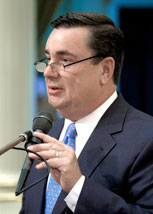
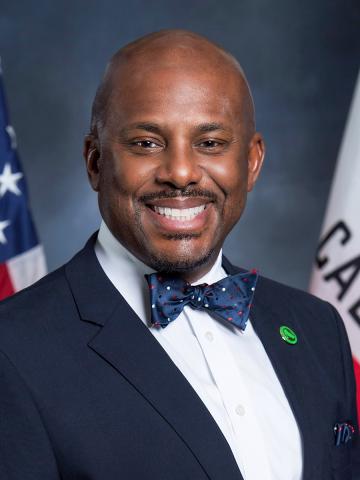
1 primary · 6 co-sponsors
Sponsors


Ask Maddy
·
AI policy assistant
Ask Maddy about SB 1437
Scope: CA
Hi! I can help you understand SB 1437. What would you like to know?
Try one of these
i
Maddy answers using official bill text and legislative records. Always verify before sharing.
Sources cited inline