

Public Utilities Commission.
Summary
(1) The California Constitution establishes the Public Utilities Commission, with jurisdiction over all public utilities. The Public Utilities Act provides that the office of the commission shall be in the City and County of San Francisco, that the office always be open, except on legal holidays and nonjudicial days, and that the commission hold its sessions at least once in each calendar month in the City and County of San Francisco. This bill would require that the commission hold its sessions at least once in each calendar month, without specifying the location. (2) The California Constitution authorizes the commission to establish its own procedures, subject to statutory limitations or directions and constitutional requirements of due process. Existing law requires the commission to determine whether a proceeding requires a hearing and, if so, to determine whether the matter requires a quasi-legislative, an adjudication, or a ratesetting hearing. For these purposes, quasi-legislative cases are cases that establish policy, including rulemakings and investigations which may establish rules affecting an entire industry; adjudication cases are enforcement cases and complaints except those challenging the reasonableness of any rates or charges; and ratesetting cases are cases in which rates are established for a specific company. Existing law requires the commission to publish and maintain certain documents on the Internet, including a docket card that lists all documents filed and all decisions or rulings issued in those proceedings, as provided. This bill would make the Administrative Adjudication Code of Ethics applicable to administrative law judges of the commission. Except in adjudication cases, the bill would require the commission, before determining the scope of the proceeding, where feasible and appropriate, to seek the participation of those who are likely to be affected by a decision in the proceeding. The bill would, until January 1, 2020, require the Policy and Planning Division of the commission to undertake one or more studies of outreach efforts undertaken by other state and federal utility regulatory bodies and to make recommendations to the commission to promote effective outreach, including metrics for use in evaluating success. The bill would require the commission to include a docket card that lists the public versions of all prepared oral and written testimony and advice letter filings, protests, and responses on its Internet Web site. The bill would require the commission to make additional information available on the Internet, including information on how members of the public and ratepayers can gain access to the commission's ratemaking process. (3) The Public Utilities Act requires the commission to develop, publish, and annually update an annual workplan that does all of the following: (A) describes in clear detail the scheduled ratemaking proceedings and other decisions that may be considered by the commission during the calendar year, (B) includes information on how members of the public and ratepayers can gain access to the commission's ratemaking process and information regarding the specific matters to be decided, (C) includes information on the operation of the office of the public advisor and identifies the names and telephone numbers of those contact persons responsible for specific cases and matters to be decided, and (D) includes a statement that specifies activities that the commission proposes to reduce the costs of, and rates for, energy, including electricity, and for improving the competitive opportunities for state agriculture and other rural energy consumers. The act requires the commission to submit the workplan to the Governor and Legislature by February 1 of each year. This bill would require the commission to develop, publish, and annually update a report that contains certain specified information, as provided, and would expand the requirement that the workplan, as part of that report, describe in clear detail the scheduled proceedings that may be considered by the commission during the calendar year to include all proceedings and not just ratemaking proceedings. The bill would additionally require that the report include performance criteria for the commission and executive director and evaluate the performance of the executive director during the previous year based on the criteria established in the prior year's workplan. The bill would require the report to include a list of the public meetings held outside San Francisco in the previous year and a schedule of meetings anticipated to be held outside San Francisco during the upcoming year. The bill would require the commission to post the report in a conspicuous area of its Internet Web site and disseminate the information in the report, as provided. (4) The Public Utilities Act requires the commission to submit an annual report to the Legislature on the number of cases where resolution exceeded the time periods prescribed in scoping memos and the days that commissioners presided in hearings. This bill would delete the requirement that the report include the number of cases where resolution exceeded the time periods prescribed in scoping memos and instead would require the commission to annually submit a report to the Legislature on the commission's timeliness in resolving cases and include information on the disposition of applications for rehearings. The bill would require that the report include the number of scoping memos issued in each proceeding and the number of orders issued extending the statutory deadlines for all adjudication, ratesetting, and quasi-legislative cases. (5) The Public Utilities Act provides intervenor compensation for reasonable advocate's fees, reasonable expert witness fees, and other reasonable costs to public utility customers or their representatives for participation or intervention in any proceeding of the commission based, in part, upon whether the intervenor would experience significant financial hardship and makes a substantial contribution to the adoption, in whole or in part, of the commission's order or decision. Existing law precludes a local government entity from receiving intervenor compensation by excluding them from the definition of a "customer" for purposes of the intervenor compensation provisions. This bill would state the intent of the Legislature that intervenors be compensated for making a substantial contribution to proceedings of the commission, regardless of whether a settlement agreement is reached. The bill would permit intervenor compensation to be paid to cities, counties, and cities and counties that intervene or participate in commission proceedings to the extent that their involvement was for the purpose of protecting health and safety, under specified circumstances. The bill would make conforming changes. Existing law requires a public utility that is the subject of the hearing, investigation, or proceeding in which intervenor fees are awarded to pay those intervenor fees within 30 days and makes the failure to do so a crime. By expanding the obligation of a public utility to pay intervenor fees to an eligible local government entity, the bill would impose a state-mandated local program by expanding the application of an existing crime. The California Constitution requires the state to reimburse local agencies and school districts for certain costs mandated by the state. Statutory provisions establish procedures for making that reimbursement. This bill would provide that no reimbursement is required by this act for a specified reason.
Bill status
signed
all 5 stages cleared
Introduction
Feb 2015
Committee Review
Aug 2016
Senate Passage
Jan 2016
Assembly Passage
Aug 2016
Signed into Law
Sep 2016
Introduced Feb 26, 2015
Signed Sep 29, 2016
Floor votes · Senate Jan 26, 2016 · Assembly Aug 29, 2016
How they voted
30–0
Passed · 3 other
Total votes 33
Jan 26, 2016
D
Democratic23
91% Yea
R
Republican10
90% Yea
Vote distribution
All Yea
All Nay
Mixed
No data
Full legislative history
Actions timeline
Total actions
44
Key actions
9
Committee
17
Amendments
2
Sep 29, 2016
Signed into law
Approved by the Governor.
legislature
Aug 31, 2016
Upper · Passed
Assembly amendments concurred in. (Ayes 32. Noes 6. Page 5571.) Ordered to engrossing and enrolling.
upper
Aug 30, 2016
Introduced
In Senate. Concurrence in Assembly amendments pending.
upper
Aug 29, 2016
Assembly · Passed
Assembly Vote: pass (54-11-6)
assembly
Aug 17, 2016
Lower · Passed
Read second time and amended. Ordered to second reading.
lower
Aug 16, 2016
Lower · Passed
From committee: Do pass as amended. (Ayes 12. Noes 2.) (August 11).
lower
Aug 3, 2016
Committee
From committee with author's amendments. Read second time and amended. Re-referred to Com. on APPR.
lower
Aug 1, 2016
Committee
Read second time and amended. Re-referred to Com. on APPR.
lower
Jun 30, 2016
Lower · Passed
From committee: Do pass as amended and re-refer to Com. on APPR. (Ayes 10. Noes 2.) (June 29).
lower
Jun 20, 2016
Committee
From committee with author's amendments. Read second time and amended. Re-referred to Com. on U. & C.
lower
Apr 28, 2016
Committee
Referred to Com. on U. & C.
lower
Jan 26, 2016
Senate · Passed
Senate Vote: pass (30-0-3)
senate
Jan 21, 2016
Upper · Passed
From committee: Do pass. (Ayes 7. Noes 0. Page 2934.) (January 21).
upper
Jan 13, 2016
Committee
From committee: Do pass and re-refer to Com. on APPR. (Ayes 10. Noes 0. Page 2895.) (January 13). Re-referred to Com. on APPR.
upper
Jan 6, 2016
Committee
Re-referred to Com. on E., U., & C.
upper
Jan 4, 2016
Committee
Re-referred to Com. on RLS.
upper
Jan 4, 2016
Committee
From committee with author's amendments. Read second time and amended. Re-referred to Com. on APPR.
upper
May 28, 2015
Upper · Passed
May 28 hearing: Held in committee and under submission.
upper
Apr 29, 2015
Committee
From committee: Do pass and re-refer to Com. on APPR. (Ayes 4. Noes 2. Page 823.) (April 28). Re-referred to Com. on APPR.
upper
Apr 9, 2015
Committee
Re-referred to Com. on PUB. S.
upper
Apr 6, 2015
Committee
From committee with author's amendments. Read second time and amended. Re-referred to Com. on RLS.
upper
Mar 12, 2015
Committee
Referred to Com. on RLS.
upper
Feb 26, 2015
Introduced
Introduced. Read first time. To Com. on RLS. for assignment. To print.
upper
1 primary · 0 co-sponsors
Sponsors
Role
Legislator
Party
State
District
P
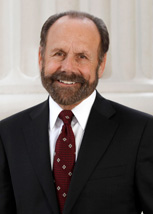
Jerry Hill
DDemocratic
Ask Maddy
·
AI policy assistant
Ask Maddy about SB 512
Scope: CA
Hi! I can help you understand SB 512. What would you like to know?
Try one of these
i
Maddy answers using official bill text and legislative records. Always verify before sharing.
Sources cited inline