

Political Reform Act of 1974.
Summary
(1) The Political Reform Act of 1974 provides for the comprehensive regulation of campaign financing and related matters, including the reporting of campaign contributions, as defined. Under existing law, a payment made at the behest of a candidate for elective office is considered a contribution unless the payment is made for purposes unrelated to the candidate's candidacy, and a payment is presumed to be unrelated to a candidate's candidacy if it is made principally for legislative, governmental, or charitable purposes. The bill would prohibit an elected officer from requesting that a payment be made, or a person from making a payment, at the behest of the elected officer to a nonprofit organization that is exempt from taxation under Section 501(c) (4) of the Internal Revenue Code and that the elected officer knows or has reason to know is owned or controlled by that officer or specified family members of the officer, except as specified. The bill would provide that an elected officer is deemed to have complied with that requirement if the Commission determines that the elected officer has made a reasonable effort to ascertain whether a nonprofit organization is owned or controlled by any of the specified persons. (2) The act prohibits specified officers from receiving gifts, as defined, in excess of $440 in value from a single source in a calendar year. The act exempts gift payments for the actual costs of specified types of travel that are reasonably related to a legislative or governmental purpose, or to an issue of state, national, or international public policy, from the annual limit on the value of gifts from a single source. This bill would require a nonprofit organization that pays for these types of travel for an elected state officer or local elected officeholder to disclose the names of donors responsible for funding the payments, as specified. The bill would require a person who receives a gift of a travel payment to report the travel destination on his or her statement of economic interests. (3) The act requires that contributions deposited into a campaign account be held in trust for expenses associated with the election of the candidate or for expenses associated with holding office. The act provides that an expenditure to seek office is within the lawful execution of this trust if it is reasonably related to a political purpose and an expenditure associated with holding office is within the lawful execution of this trust if it is reasonably related to a legislative or governmental purpose. Expenditures that confer a substantial personal benefit must be directly related to a political, legislative, or governmental purpose. The act authorizes the use of campaign funds to make donations or loans to bona fide charitable, educational, civic, religious, or similar tax-exempt nonprofit organizations. The act imposes additional limitations on certain expenditures, including those relating to automotive expenses, travel expenses, tickets for entertainment or sporting events, personal gifts, and real property expenses. The bill would prohibit an elected officer or a committee controlled by the elected officer from making an expenditure of campaign funds to a nonprofit organization that is exempt from taxation under Section 501(c) (4) of the Internal Revenue Code and that is owned or controlled by the officer or specified family members of the officer, as specified. This bill would also limit the expenditure of campaign funds for other purposes, as specified, including personal vacations, payments for membership dues for a country club, health club, or other recreational facility, specified tuition payments, utility payments, vehicle use that is not directly related to an election campaign, and certain gifts for specified family members of a candidate, elected officer, or other individuals with the authority to approve the expenditure of campaign funds held by a committee. (4) This bill would incorporate additional changes to Section 89513 of the Government Code, proposed by AB 1666 and AB 1692, that would become operative only if this bill and either or both of those bills are chaptered and become effective on or before January 1, 2015, and this bill is chaptered last. (5) A violation of the act's provisions is punishable as a misdemeanor. By expanding the scope of an existing crime, this bill would impose a state-mandated local program. The California Constitution requires the state to reimburse local agencies and school districts for certain costs mandated by the state. Statutory provisions establish procedures for making that reimbursement. This bill would provide that no reimbursement is required by this act for a specified reason. (6) The Political Reform Act of 1974, an initiative measure, provides that the Legislature may amend the act to further the act's purposes upon a 23 vote of each house and compliance with specified procedural requirements. This bill would declare that it furthers the purposes of the act.
Bill status
vetoed
4 of 5 stages cleared
Introduction
Jan 2014
Committee Review
Aug 2014
Senate Passage
Jun 2014
Assembly Passage
Aug 2014
Vetoed
Sep 2014
Introduced Jan 6, 2014
Vetoed Sep 30, 2014
Floor votes · Senate Jun 9, 2014 · Assembly Aug 30, 2014
How they voted
31–1
Passed · 3 other
Total votes 35
Jun 9, 2014
D
Democratic25
88% Yea
R
Republican10
90% Yea
Vote distribution
All Yea
All Nay
Mixed
No data
Full legislative history
Actions timeline
Total actions
36
Key actions
13
Committee
12
Amendments
1
Sep 30, 2014
Vetoed
In Senate. Consideration of Governor's veto pending.
upper
Sep 30, 2014
Vetoed
Vetoed by the Governor.
upper
Aug 30, 2014
Assembly · Passed
Assembly Vote: pass (63-0-2)
assembly
Aug 30, 2014
Upper · Passed
Assembly amendments concurred in. (Ayes 35. Noes 1. Page 5018.) Ordered to engrossing and enrolling.
upper
Aug 14, 2014
Lower · Passed
From committee: Do pass as amended. (Ayes 17. Noes 0.) (August 14).
lower
Aug 7, 2014
Lower · Passed
From committee with author's amendments. Read second time and amended. Re-referred to Com. on APPR.
lower
Jul 1, 2014
Lower · Passed
Read second time and amended. Re-referred to Com. on APPR.
lower
Jun 30, 2014
Lower · Passed
From committee: Do pass as amended and re-refer to Com. on APPR. (Ayes 6. Noes 0.) (June 24).
lower
Jun 18, 2014
Lower · Passed
From committee with author's amendments. Read second time and amended. Re-referred to Com. on E. & R.
lower
Jun 12, 2014
Committee
Referred to Com. on E. & R.
lower
Jun 9, 2014
Senate · Passed
Senate Vote: pass (31-1-3)
senate
May 23, 2014
Upper · Passed
From committee: Do pass as amended. (Ayes 7. Noes 0. Page 3703.) (May 23).
upper
May 14, 2014
Upper · Passed
From committee with author's amendments. Read second time and amended. Re-referred to Com. on APPR.
upper
Apr 23, 2014
Upper · Passed
From committee: Do pass and re-refer to Com. on APPR. (Ayes 4. Noes 1. Page 3233.) (April 22). Re-referred to Com. on APPR.
upper
Apr 10, 2014
Upper · Passed
From committee with author's amendments. Read second time and amended. Re-referred to Com. on E. & C.A.
upper
Mar 20, 2014
Upper · Passed
From committee with author's amendments. Read second time and amended. Re-referred to Com. on E. & C.A.
upper
Jan 23, 2014
Committee
Referred to Com. on E. & C.A.
upper
1 primary · 2 co-sponsors
Sponsors
Role
Legislator
Party
State
District
P
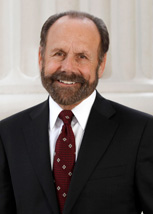
Jerry Hill
DDemocratic
Co

Jim Beall
DDemocratic
Co

Marc Levine
DDemocratic
Ask Maddy
·
AI policy assistant
Ask Maddy about SB 831
Scope: CA
Hi! I can help you understand SB 831. What would you like to know?
Try one of these
i
Maddy answers using official bill text and legislative records. Always verify before sharing.
Sources cited inline