

Sales and use taxes: exemption: aerospace products manufacturing: research and development.
Summary
Existing sales and use tax laws impose a tax on retailers measured by the gross receipts from the sale of tangible personal property sold at retail in this state, or on the storage, use, or other consumption in this state of tangible personal property purchased from a retailer for storage, use, or other consumption in this state, and provides various exemptions from those taxes. This bill would exempt from those taxes, on and after January 1, 2014, and before January 1, 2019, the gross receipts from the sale of, and the storage, use, or other consumption of, qualified tangible personal property purchased for use by a qualified person in the aerospace products and parts manufacturing industry for use primarily in any stage of manufacturing, processing, refining, fabricating, or recycling of tangible personal property, as specified, or for use primarily in research and development, as specified, or to maintain, repair, measure, or test that property. The bill would also exempt from those taxes the gross receipts from the sale of, and the storage, use, or other consumption of, tangible personal property purchased for use by a contractor, as specified, for a qualified person. The bill would require the purchaser to furnish the retailer with an exemption certificate, as specified. This bill would require the Legislative Analyst's Office, by January 1, 2018, to report on the effect of the exemption on employment in the aerospace and related industries, as specified. The Bradley-Burns Uniform Local Sales and Use Tax Law authorizes counties and cities to impose local sales and use taxes in conformity with the Sales and Use Tax Law, and existing law authorizes districts, as specified, to impose transactions and use taxes in accordance with the Transactions and Use Tax Law, which conforms to the Sales and Use Tax Law. Exemptions from state sales and use taxes are incorporated into these laws. This bill would specify that this exemption does not apply to local sales and use taxes, transactions and use taxes, and specified state taxes from which revenues are deposited into the Local Public Safety Fund, the Education Protection Account, the Local Revenue Fund, the Fiscal Recovery Fund, or the Local Revenue Fund 2011. The bill would remain in effect until January 1, 2019. This bill would take effect immediately as a tax levy.
Bill status
in committee
1 of 4 stages cleared
Introduction
Feb 2013
Committee Review
Floor Vote
Governor
Introduced Feb 20, 2013
Last action Feb 3, 2014
Floor votes
How they voted
No floor votes recorded yet.
Full legislative history
Actions timeline
Total actions
12
Key actions
4
Committee
4
Amendments
1
May 23, 2013
Upper · Passed
Held in committee and under submission.
upper
May 14, 2013
Upper · Passed
Read second time and amended. Re-referred to Com. on APPR.
upper
May 13, 2013
Upper · Passed
From committee: Do pass as amended and re-refer to Com. on APPR. (Ayes 7. Noes 0. Page 881.) (May 8).
upper
Apr 18, 2013
Upper · Passed
From committee with author's amendments. Read second time and amended. Re-referred to Com. on GOV. & F.
upper
Feb 28, 2013
Committee
Referred to Com. on GOV. & F.
upper
1 primary · 0 co-sponsors
Sponsors
Role
Legislator
Party
State
District
P
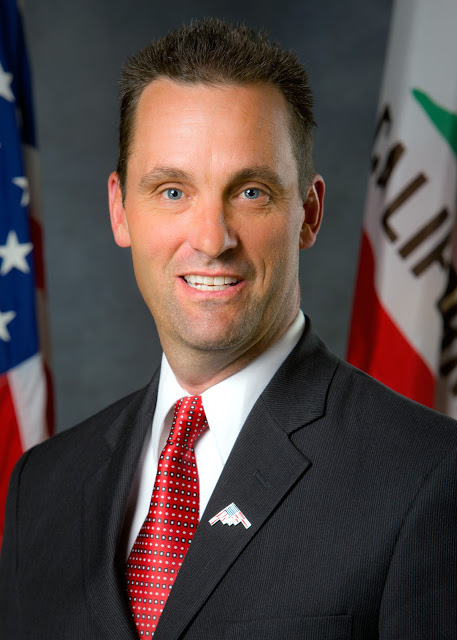
Steve Knight
RRepublican
Ask Maddy
·
AI policy assistant
Ask Maddy about SB 412
Scope: CA
Hi! I can help you understand SB 412. What would you like to know?
Try one of these
i
Maddy answers using official bill text and legislative records. Always verify before sharing.
Sources cited inline