

Political Reform Act of 1974.
Summary
(1) The Political Reform Act of 1974 defines various terms for purposes of the reporting and disclosure requirements under the act. The act defines the term "candidate" as including, in addition to other individuals, an officeholder who is the subject of a recall election. This definition also provides that an individual who becomes a candidate retains his or her status as a candidate until the time that this status is terminated. This bill would revise this definition to provide that the term "candidate" includes any officeholder, regardless of whether he or she is the subject of a recall election, and would provide that a candidate retains that status until the time that he or she leaves office and the status is terminated. The act defines a "committee" as any person or combination of persons who receives contributions or makes independent expenditures totaling $1,000 or more in a calendar year. This bill would increase the monetary threshold of contributions or independent expenditures that qualify a person or combination of persons as a committee to $2,000. The bill also would make conforming changes. (2) The act requires committees to file periodic campaign statements. The act requires that the campaign statements disclose certain information about contributors who have made aggregate contributions, as defined, of $100 or more. The bill would require the Fair Political Practices Commission to adopt regulations establishing reporting thresholds, with a minimum of $500 and a maximum of $2,500, for disclosure of contributions and expenditures, as specified, for a committee primarily formed to support or oppose a statewide ballot measure, and would authorize the Commission to adopt regulations to adjust these thresholds in any odd-numbered year after 2013 to reflect any increase or decrease in the Consumer Price Index, rounded to the nearest $100. This bill would revise the definition of "contribution" to include a payment to a multipurpose organization, as defined, made by a person who knows or has reason to know that the payment or portion of the payment will be used to make a contribution or an independent expenditure. The bill imposes a presumption that a donor has reason to know that his or her payment will be used to make a contribution or an independent expenditure if the recipient organization has made aggregate contributions or independent expenditures of $2,000 or more within the calendar year in which the payment is made or four preceding calendar years or if the donor payment is $50,000 or more, is made within the 6 months preceding the election, and the multipurpose organization makes a contribution or an independent expenditure of $50,000 or more within the 6 months prior to the election. (3) The act imposes specified duties on a filing officer with respect to reports and statements filed with that filing officer, including supplying the necessary forms and manuals and determining whether required documents have been filed and conform on their face with the requirements of the act. This bill would additionally require a filing officer to immediately affix a date stamp to each statement of economic interests that the officer receives to reflect the date of receipt. By imposing additional duties on local officials, this bill would impose a state-mandated local program. (4) The act requires that certain campaign statements be filed with the Secretary of State online or electronically. The act requires that persons filing campaign statements online or electronically also continue to file the statements in a paper format. This bill would repeal the requirement that a person file a paper copy of a campaign statement that is filed with the Secretary of State online or electronically, except during such times as the online or electronic system operated by the Secretary of State is malfunctioning, unavailable, or otherwise not capable of receiving online or electronically filed campaign statements. (5) The act is administered and enforced by the Fair Political Practices Commission. This bill would authorize the Commission to seek injunctive relief in a superior court to compel disclosure consistent with the act, and would require a court to grant expedited review of an action filed pursuant to this provision, as specified. (6) The act requires a lobbying firm and a lobbyist employer, as defined, to register and file periodic activity reports with the Secretary of State disclosing specified information. The act requires lobbyists, lobbying firms, and lobbyist employers to periodically report activity expenses, as defined. This bill would require the Secretary of State to make these registration documents and reports that are filed with the Secretary of State available to the Commission, upon request by the Commission. (7) The act makes a knowing or willful violation of its provisions a misdemeanor and subjects offenders to criminal penalties. By expanding the scope of an existing crime, this bill would impose a state-mandated local program. (8) The California Constitution requires the state to reimburse local agencies and school districts for certain costs mandated by the state. Statutory provisions establish procedures for making that reimbursement. This bill would provide that with regard to certain mandates no reimbursement is required by this act for a specified reason. With regard to any other mandates, this bill would provide that, if the Commission on State Mandates determines that the bill contains costs so mandated by the state, reimbursement for those costs shall be made pursuant to the statutory provisions noted above. (9) The Political Reform Act of 1974, an initiative measure, provides that the Legislature may amend the act to further the act's purposes upon a 23 vote of each house and compliance with specified procedural requirements. This bill would declare that it furthers the purposes of the act.
Bill status
failed
3 of 5 stages cleared
Introduction
Dec 2012
Committee Review
Jul 2013
Assembly Passage
Jun 2013
Senate Passage
Governor
Introduced Dec 19, 2012
Last action Nov 30, 2014
Floor votes · Assembly Jun 20, 2013
How they voted
42–19
Passed · 3 other
Total votes 64
Jun 20, 2013
D
Democratic43
97% Yea
R
Republican21
85% Nay
Vote distribution
All Yea
All Nay
Mixed
No data
Full legislative history
Actions timeline
Total actions
25
Key actions
5
Committee
10
Amendments
1
Jul 3, 2013
Committee
Referred to Com. on E. & C.A.
upper
Jun 20, 2013
Assembly · Passed
Assembly Vote: pass (42-19-3)
assembly
Jun 12, 2013
Lower · Passed
From committee: Do pass. (Ayes 5. Noes 1.) (June 11).
lower
Jun 3, 2013
Committee
Re-referred to Com. on E. & R.
lower
May 31, 2013
Committee
Re-referred to Com. on E. & R. pursuant to Assembly Rule 77.2.
lower
May 9, 2013
Lower · Passed
From committee: Do pass. (Ayes 12. Noes 5.) (May 8).
lower
May 1, 2013
Committee
Re-referred to Com. on APPR.
lower
Apr 29, 2013
Lower · Passed
From committee: Do pass as amended and re-refer to Com. on APPR. (Ayes 5. Noes 2.) (April 23).
lower
Apr 16, 2013
Committee
Re-referred to Com. on E. & R.
lower
Apr 15, 2013
Introduced
From committee chair, with author's amendments: Amend, and re-refer to Com. on E. & R. Read second time and amended.
lower
Jan 24, 2013
Committee
Referred to Com. on E. & R.
lower
Dec 20, 2012
Lower · Passed
From printer. May be heard in committee January 19.
lower
Dec 19, 2012
Introduced
Introduced. To print.
lower
1 primary · 2 co-sponsors
Sponsors
Role
Legislator
Party
State
District
P
RD
Roger Dickinson
DDemocratic
Co

Nancy Skinner
DDemocratic
Co
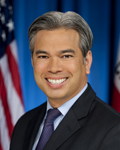
Rob Bonta
DDemocratic
Ask Maddy
·
AI policy assistant
Ask Maddy about AB 45
Scope: CA
Hi! I can help you understand AB 45. What would you like to know?
Try one of these
i
Maddy answers using official bill text and legislative records. Always verify before sharing.
Sources cited inline