

Telecommunications: universal service: regulation.
Summary
Existing law, the federal Telecommunications Act of 1996, establishes a program of cooperative federalism for the regulation of telecommunications to attain the goal of local competition, while implementing specific, predictable, and sufficient federal and state mechanisms to preserve and advance universal service, consistent with certain universal service principles. The universal service principles include the principle that consumers in all regions of the nation, including low-income consumers and those in rural, insular, and high-cost areas, should have access to telecommunications and information services, including interexchange services and advanced telecommunications and information services, that are reasonably comparable to those services provided in urban areas and that are available at rates that are reasonably comparable to rates charged for similar services in urban areas. Existing law authorizes the Public Utilities Commission to supervise and regulate every public utility in the state, including telephone corporations, and to fix just and reasonable rates and charges for the public utility. Existing law establishes the state's universal service funds, including the California High-Cost Fund-A Administrative Committee Fund (CHCF-A) and the California High-Cost Fund-B Administrative Committee Fund (CHCF-B) , in the State Treasury, and provides that moneys in each of the state's universal service funds are the proceeds of rates and are held in trust for the benefit of ratepayers and to compensate telephone corporations for their costs of providing universal service. Moneys in the funds may only be expended to accomplish specified telecommunications universal service programs, upon appropriation in the annual Budget Act or upon supplemental appropriation. Existing law, until January 1, 2015, requires the commission to develop, implement, and maintain a suitable program to establish a fair and equitable local rate structure aided by universal service rate support to small independent telephone corporations that serve rural areas and are subject to rate-of-return regulation by the commission (the CHCF-A program) . This bill would revise the CHCF-A program to instead require the commission, until January 1, 2015, to exercise its regulatory authority to maintain the CHCF-A program to provide universal rate support to small independent telephone corporations in amounts sufficient to meet the revenue requirements established by the commission through rate-of-return regulation in furtherance of the state's universal service commitment to the continued affordability and widespread availability of safe, reliable, high-quality communications services in rural areas of the state. The bill would specify eligibility requirements for small independent telephone corporations to participate in the CHCF-A program and requirements for the commission in maintaining the program. This bill would require a small independent telephone corporation that receives support from the CHCF-A program to provide information regarding revenues derived from the provision of unregulated internet access service upon request from the commission and would require the commission to treat this information as confidential. Under existing law, a violation of the Public Utilities Act or any order, decision, rule, direction, demand, or requirement of the commission is a crime. Because the provisions of this bill would be a part of the act and because a failure by a small independent telephone corporation that receives support from the CHCF-A program to provide information regarding revenues derived from unregulated internet access service when requested by the commission would be a crime, the bill would impose a state-mandated local program by creating a new crime. The California Constitution requires the state to reimburse local agencies and school districts for certain costs mandated by the state. Statutory provisions establish procedures for making that reimbursement. This bill would provide that no reimbursement is required by this act for a specified reason.
Bill status
signed
all 5 stages cleared
Introduction
Feb 2011
Committee Review
Aug 2012
Senate Passage
May 2011
Assembly Passage
Aug 2012
Signed into Law
Sep 2012
Introduced Feb 15, 2011
Signed Sep 28, 2012
Floor votes · Senate Aug 30, 2012 · Assembly Aug 23, 2012
How they voted
30–0
Passed · 1 other
Total votes 31
Aug 30, 2012
D
Democratic20
95% Yea
R
Republican11
100% Yea
Vote distribution
All Yea
All Nay
Mixed
No data
Full legislative history
Actions timeline
Total actions
35
Key actions
8
Committee
9
Amendments
3
Sep 28, 2012
Signed into law
Approved by the Governor.
legislature
Aug 30, 2012
Senate · Passed
Senate Vote: pass (30-0-1)
senate
Aug 30, 2012
Upper · Passed
Assembly amendments concurred in. (Ayes 38. Noes 0. Page 5009.) Ordered to engrossing and enrolling.
upper
Aug 29, 2012
Upper · Passed
From committee: That the Assembly amendments be concurred in. (Ayes 8. Noes 0. Page 4987.)
upper
Aug 27, 2012
Committee
From committee: Be re-referred to Com. on E., U. & C. pursuant to Senate Rule 29.10. (Ayes 5. Noes 0. Page 4854.) Re-referred to Com. on E., U. & C.
upper
Aug 27, 2012
Committee
Re-referred to Com. on RLS. pursuant to Senate Rule 29.10.
upper
Aug 24, 2012
Introduced
In Senate. Concurrence in Assembly amendments pending.
upper
Aug 23, 2012
Assembly · Passed
Assembly Vote: pass (68-0-2)
assembly
Aug 16, 2012
Lower · Passed
From committee: Do pass as amended. (Ayes 17. Noes 0.) (August 16).
lower
Aug 8, 2012
Committee
Set, first hearing. Referred to APPR. suspense file.
lower
Jun 21, 2012
Lower · Passed
From committee: Do pass as amended and re-refer to Com. on APPR. (Ayes 12. Noes 0.) (June 18).
lower
May 19, 2011
Committee
Referred to Com. on U. & C.
lower
May 3, 2011
Upper · Passed
From committee: Be placed on second reading file pursuant to Senate Rule 28.8.
upper
Apr 5, 2011
Committee
From committee: Do pass and re-refer to Com. on APPR. (Ayes 11. Noes 0. Page 542.) (April 5). Re-referred to Com. on APPR.
upper
Feb 24, 2011
Committee
Referred to Com. on E., U., & C.
upper
Feb 15, 2011
Introduced
Introduced. Read first time. To Com. on RLS. for assignment. To print.
upper
1 primary · 12 co-sponsors
Sponsors
Role
Legislator
Party
State
District
P

Jean Fuller
RRepublican
Co

Anthony Cannella
RRepublican
Co

Beth Gaines
RRepublican
Co
CC
Connie Conway
RRepublican
Co
DL
Dan Logue
RRepublican
Co
DL
Doug La Malfa
RRepublican
Co
HP
Henry Perea
DDemocratic
Co
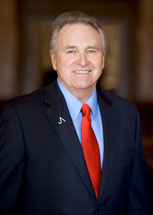
Jim Nielsen
RRepublican
Co
JB
Joan Buchanan
DDemocratic
Co
KD
Kevin D Jeffries
RRepublican
Co
KO
Kristin Olsen
RRepublican
Ask Maddy
·
AI policy assistant
Ask Maddy about SB 379
Scope: CA
Hi! I can help you understand SB 379. What would you like to know?
Try one of these
i
Maddy answers using official bill text and legislative records. Always verify before sharing.
Sources cited inline