

Disability access.
Summary
(1) Existing law requires an attorney to provide a written advisory to a building owner or tenant with each demand for money or complaint for any construction-related accessibility claim, as specified. A violation of this requirement may subject the attorney to disciplinary action. This bill would, instead, require an attorney to provide a written advisory with each demand letter or complaint, as defined, sent to or served upon a defendant or potential defendant for any construction-related accessibility claim, as specified. The bill would require the Judicial Council to update the form that may be used by attorneys to comply with this requirement on or before July 1, 2013. The bill would require an allegation of a construction-related accessibility claim in a demand letter or complaint to state facts sufficient to allow a reasonable person to identify the basis for the claim. The bill would require any complaint alleging a construction-related accessibility claim to be verified by the plaintiff, and would make any complaint filed without verification subject to a motion to strike. The bill would prohibit a demand letter from including a request or demand for money or an offer or agreement to accept money. The bill also would prohibit an attorney, or other person acting at the direction of an attorney, from issuing a demand for money to a building owner or tenant, or an agent or employee of a building owner or tenant, on the basis of one or more construction-related accessibility violations, as specified. The bill would require an attorney to include his or her State Bar license number in a demand letter, and to submit copies of the demand letter to the California Commission on Disability Access and, until January 1, 2016, to the State Bar. The bill also would require, until January 1, 2016, an attorney to submit a copy of a complaint to the commission. The bill would provide that a violation of these requirements may subject the attorney to disciplinary action, as specified. This bill would require the commission to review and report on the demand letters and complaints it receives until January 1, 2016. The bill also would require the State Bar, commencing July 31, 2013, and annually each July 31 thereafter, to report specified information to the Legislature regarding the demand letters that it receives. (2) Existing law provides, upon being served with a summons and complaint asserting a construction-related accessibility claim, a qualified defendant, as defined, may file a request for a court stay and early evaluation conference in the proceedings, as specified. Existing law requires the Judicial Council to prepare and post on its Internet Web site instructions and a form for a qualified defendant to use to file an application for stay and early evaluation conference pursuant to this provision. This bill would permit other defendants to file a request for a court stay and early evaluation conference pursuant to this provision, including (A) a defendant, until January 1, 2018, whose site's new construction or improvement on or after January 1, 2008, and before January 1, 2016, was approved pursuant to the local building permit and inspection process, (B) a defendant whose site's new construction or improvement was approved by a local public building department inspector who is a certified access specialist, and (C) a defendant who is a small business, as described. The bill would require the Judicial Council to prepare and post a form for filing an application for stay and early evaluation conference for use by qualified defendants and these additional defendants, and any additional forms appropriate to implement these provisions, as specified. The bill also would authorize a defendant who does not qualify for an early evaluation conference pursuant to these provisions, or who forgoes those provisions, to request a mandatory evaluation conference, as specified. The bill would authorize a plaintiff to make that request if the defendant does not make that request. (3) Existing law provides statutory damages in a construction-related accessibility claim against a place of public accommodation if a violation of construction-related accessibility standards denied the plaintiff full and equal access to that site on a particular occasion. A plaintiff is denied full and equal access only if, on a particular occasion, the plaintiff personally encountered the violation or was deterred from accessing the site. These statutory damages are in the amount of actual damages and any additional amount determined by a jury or the court up to a maximum of 3 times the amount of actual damages but not less than $4,000, or, for certain violations, $1,000. This bill would require the court, in assessing liability in any action alleging multiple claims for the same construction-related accessibility violation on different particular occasions, to consider the reasonableness of the plaintiff's conduct in light of the plaintiff's obligation, if any, to mitigate damages. The bill would reduce a defendant's minimum liability for statutory damages in a construction-related accessibility claim against a place of public accommodation to $1,000 for each offense if the defendant has corrected all construction-related violations that are the basis of the claim within 60 days of being served with the complaint and other specified conditions apply, and would reduce that minimum liability to $2,000 for each offense if the defendant has corrected all construction-related violations that are the basis of the claim within 30 days of being served with the complaint and the defendant is a small business, as specified. The bill would require the Department of General Services to make a biannual adjustment to financial criteria defining a small business for these purposes, and to post those adjusted amounts on its Internet Web site. (4) Existing law requires the State Architect to develop and submit for approval and adoption building standards for making buildings, structures, sidewalks, curbs, and related facilities accessible to, and usable by, persons with disabilities, as specified. Existing law provides for the inspection of places of public accommodation by certified access specialists to determine if the sites meet all applicable construction-related accessibility standards, and the provision of specified certificates and reports regarding those inspections. Existing law regulates the hiring of real property. This bill would require a commercial property owner to state on a lease form or rental agreement executed on or after July 1, 2013, if the property being leased or rented has undergone inspection by a certified access specialist. (5) The federal Americans with Disabilities Act of 1990 and the California Building Standards Code require that specified buildings, structures, and facilities be accessible to, and usable by, persons with disabilities. Existing law establishes in the Department of General Services, the Division of the State Architect with responsibilities relating to architectural services, state buildings, and disability access. Existing law requires the State Architect to establish a certified access specialist program for voluntary certification by the state of any person who meets specified criteria as a certified access specialist. Existing law authorizes the State Architect to require applicants for certification and renewal of certification under the certified access specialist program to pay specified fees, including an application fee, a course fee, and an examination fee, at a level sufficient to meet the costs of administering the program, for deposit into the Certified Access Specialist Fund. In administering the certified access specialist program, this bill would require the State Architect to periodically review its schedule of fees for certification under the program to ensure that the fees are not excessive. The bill would prohibit the State Architect from charging a California licensed architect, landscape architect, civil engineer, or structural engineer, an application fee for certification that exceeds $250. This bill would impose, on and after January 1, 2013, and until December 31, 2018, an additional state fee of $1 on any applicant for a local business license or equivalent instrument or permit, or renewal thereof, for purposes of increasing disability access and compliance with construction-related accessibility requirements and developing educational resources for businesses to facilitate compliance with federal and state disability laws, as specified. The bill would divide those moneys for the state between the local entity that collected the moneys and the Division of the State Architect, pursuant to specified percentages. The bill would create a continuously appropriated fund, the Disability Access and Education Revolving Fund, for the deposit of funds to be transferred to the Division of the State Architect, thereby making an appropriation. The bill would make an appropriation by authorizing local government entities to retain 70% of the fees imposed. By adding to the duties of a local entity, this bill would impose a state-mandated local program. (6) Existing law establishes the California Commission on Disability Access for purposes of developing recommendations to enable persons with disabilities to exercise their right to full and equal access to public facilities and facilitating business compliance with the laws and regulations to avoid unnecessary litigation. Existing law sets forth the powers and duties of the commission, as specified. Existing law requires the commission to study and make reports to the Legislature regarding disability access laws and compliance, as specified. Existing law requires the commission to act as an information center on the status of compliance with disability access laws, to publish a biennial report, and to coordinate with other state agencies and local building departments to ensure the uniformity of information provided to the public on disability access. This bill would revise and recast those duties and powers, as specified, and eliminate the biennial reporting requirement. The bill would instead provide that a priority of the commission shall be the development and dissemination of educational materials and information to promote and facilitate disability access compliance, including a requirement that the commission work with the Division of the State Architect and the Department of Rehabilitation to develop educational materials for use by businesses. The bill would require the commission to post specified information on its Internet Web site, including, but not limited to, educational materials and information that will assist business owners. The bill would require the commission to report to the Legislature on its implementation by a specified date. The bill would require the commission to compile data with respect to any demand letter or complaint sent to the commission and post that information on its Internet Web site. (7) Existing law, the California Building Standards Law, requires a state agency responsible for the adoption of building standards to submit its standards to the California Building Standards Commission for review and approval, subject to specified procedures and a triennial code adoption cycle. Existing law requires the commission to codify and publish approved standards in the California Building Code, as set forth in Title 24 of the California Code of Regulations. Existing law provides that building standards become effective 180 days after its publication, as specified. This bill would provide, for the purpose of an alleged violation of a construction-related accessibility standard, that upon publication of the 2013 California Building Standards Code, but prior to its effective date, as specified, compliance with the building standards for disabled accessibility in the 2013 California Building Standards Code is authorized as an alternative method of compliance. (8) The California Constitution requires the state to reimburse local agencies and school districts for certain costs mandated by the state. Statutory provisions establish procedures for making that reimbursement. This bill would provide that, if the Commission on State Mandates determines that the bill contains costs mandated by the state, reimbursement for those costs shall be made pursuant to these statutory provisions. (9) This bill would declare that it is to take effect immediately as an urgency statute.
Bill status
signed
all 5 stages cleared
Introduction
Feb 2012
Committee Review
Sep 2012
Senate Passage
Sep 2012
Assembly Passage
Aug 2012
Signed into Law
Sep 2012
Introduced Feb 22, 2012
Signed Sep 19, 2012
Floor votes · Senate Sep 1, 2012 · Assembly Sep 1, 2012
How they voted
27–3
Passed · 1 other
Total votes 31
Sep 1, 2012
D
Democratic20
80% Yea
R
Republican11
100% Yea
Vote distribution
All Yea
All Nay
Mixed
No data
Full legislative history
Actions timeline
Total actions
39
Key actions
8
Committee
11
Amendments
3
Sep 19, 2012
Signed into law
Approved by the Governor.
legislature
Sep 1, 2012
Upper · Passed
Assembly amendments concurred in. (Ayes 34. Noes 3. Page 5119.) Ordered to engrossing and enrolling.
upper
Sep 1, 2012
Upper · Passed
Urgency clause adopted.
upper
Sep 1, 2012
Upper · Passed
From committee: That the Assembly amendments be concurred in. (Ayes 3. Noes 2. Page 5131.)
upper
Aug 31, 2012
Committee
From committee: Be re-referred to Com. on JUD. pursuant to Senate Rule 29.10. (Ayes 4. Noes 0. Page 5101.) Re-referred to Com. on JUD.
upper
Aug 31, 2012
Committee
Re-referred to Com. on RLS. pursuant to Senate Rule 29.10.
upper
Aug 31, 2012
Introduced
In Senate. Concurrence in Assembly amendments pending.
upper
Aug 29, 2012
Lower · Passed
From committee: Do pass as amended. (Ayes 9. Noes 0.) (August 28).
lower
Aug 27, 2012
Committee
Re-referred to Com. on JUD. pursuant to Assembly Rule 77.2.
lower
Aug 9, 2012
Lower · Passed
From committee: Do pass. Ordered to consent calendar. (Ayes 17. Noes 0.) (August 8).
lower
Jul 3, 2012
Committee
From committee: Do pass and re-refer to Com. on APPR. (Ayes 10. Noes 0.) (July 3). Re-referred to Com. on APPR.
lower
Jun 14, 2012
Committee
Referred to Com. on JUD.
lower
May 21, 2012
Upper · Passed
From committee: Be placed on second reading file pursuant to Senate Rule 28.8.
upper
May 17, 2012
Committee
Re-referred to Com. on APPR. pursuant to Joint Rule 10.5.
upper
May 15, 2012
Upper · Passed
From committee: Do pass as amended. (Ayes 4. Noes 1. Page 3459.) (May 8).
upper
Mar 1, 2012
Committee
Referred to Com. on JUD.
upper
Feb 22, 2012
Introduced
Introduced. Read first time. To Com. on RLS. for assignment. To print.
upper
1 primary · 2 co-sponsors
Sponsors
Role
Legislator
Party
State
District
P
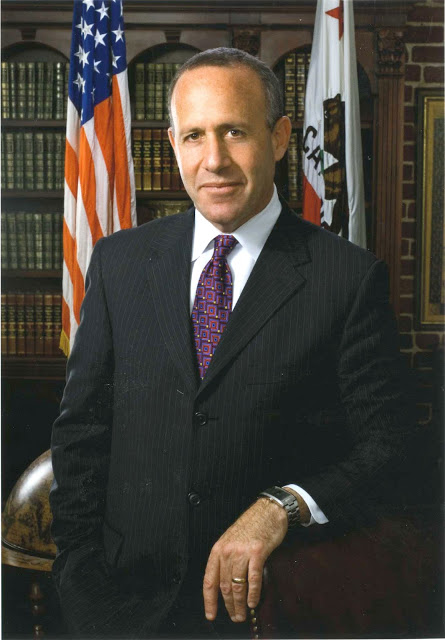
Darrell Steinberg
DDemocratic
Co

Anthony Cannella
RRepublican
Co

Robert Dutton
RRepublican
Ask Maddy
·
AI policy assistant
Ask Maddy about SB 1186
Scope: CA
Hi! I can help you understand SB 1186. What would you like to know?
Try one of these
i
Maddy answers using official bill text and legislative records. Always verify before sharing.
Sources cited inline