

Government compensation: disclosure.
Summary
(1) Existing law charges the Controller with various duties, including, among others, superintending the fiscal concerns of the state. Existing law authorizes a city council to enact an ordinance providing each member of the city council a salary based on the population of the city, and to provide for other forms of compensation, as specified. This bill would require the Controller to determine, based on a review of public records or reported salary information, whether a city is an excess compensation city, as defined. The bill would authorize a city to request a hearing, as specified, to contest the Controller's determination. The bill would require the Controller, if the city does not request a hearing or if the Attorney General concurs with the Controller's determination after a hearing, to notify the city and the redevelopment agency in the city of the city's status as an excess compensation city, as prescribed. (2) The Community Redevelopment Law authorizes the establishment of redevelopment agencies in communities to address the effects of blight, as defined, in blighted areas in those communities known as project areas, and authorizes the agency to issue bonds. This bill would prohibit the agency, once the agency has received written notice from the Controller that the city is an excess compensation city, from adopting a redevelopment plan for a new project area or amending an existing redevelopment plan for existing project areas; from issuing new bonds, notes, interim certificates, debentures, or other obligations, as specified; and from encumbering any funds or expending any moneys derived from any source except as specified. (3) Existing law, the Ralph M. Brown Act, requires that all meetings of a legislative body of a local agency be open and public and all persons be permitted to attend unless a closed session is authorized. The act authorizes a legislative body to hold a closed session with the local agency's designated representatives regarding various issues, including compensation, regarding its represented and unrepresented employees, but the legislative body is prohibited from taking final action on the proposed compensation of one or more unrepresented employees. Existing law also requires that all contracts of employment with a local agency, as defined, for certain positions be ratified in an open session of the governing body and be reflected in the governing body's minutes. This bill would require that any individual contract of employment or amendment to a contract of employment with an employee who is or will be employed by, and report directly to, the legislative body of the local agency be ratified in an open session of the legislative body after prescribed information regarding the contract or amendment to the contract is made available in a conspicuous location on the local agency's Internet Web site, if it maintains one, and in a location that is freely accessible to the public, no later than 5 days prior to the meeting to ratify the contract or amend the contract. By expanding the duties of local officials, these provisions would impose a state-mandated local program. This bill would also specify that final action on the proposed compensation of one or more unrepresented employees who are to be employed by, and report directly to, the legislative body of the local agency only be taken in open session, consistent with the prescribed disclosure requirements. By expanding the duties of local officials, these provisions would impose a state-mandated local program. (4) The bill would express a legislative finding and declaration that, to ensure the statewide integrity of local government, disclosure of compensation paid to officers and designated employees is an issue of statewide concern and not a municipal affair and that, therefore, all cities, including charter cities, would be subject to the provisions of the bill. (5) The California Constitution requires the state to reimburse local agencies and school districts for certain costs mandated by the state. Statutory provisions establish procedures for making that reimbursement. This bill would provide that, if the Commission on State Mandates determines that the bill contains costs mandated by the state, reimbursement for those costs shall be made pursuant to these statutory provisions.
Bill status
failed
4 of 5 stages cleared
Introduction
Feb 2009
Committee Review
Aug 2010
Senate Passage
May 2009
Assembly Passage
Aug 2010
Governor
Introduced Feb 27, 2009
Last action Nov 30, 2010
Floor votes · Senate May 21, 2009 · Assembly Aug 18, 2010
How they voted
26–4
Passed · 5 other
Total votes 35
May 21, 2009
D
Democratic22
81% Yea
R
Republican13
61% Yea
Vote distribution
All Yea
All Nay
Mixed
No data
Full legislative history
Actions timeline
Total actions
39
Key actions
9
Committee
13
Amendments
1
Aug 31, 2010
Committee
Read second time. Amended. Re-referred to Com. on RULES.
lower
Aug 31, 2010
Lower · Passed
(Heard in committee on August 31.)
lower
Aug 31, 2010
Lower · Passed
From committee: Amend and re-refer to Com. on RULES. (Ayes 7. Noes 1.)
lower
Aug 19, 2010
Committee
Re-referred to Com. on RULES.
lower
Aug 19, 2010
Committee
Action rescinded whereby the bill was re-referred to Com. on RULES pursuant to Assrmbly Rule 77.2.
upper
Aug 19, 2010
Committee
Re-referred to Com. On RULES pursuant to Assembly Rule 77.2.
upper
Aug 18, 2010
Assembly · Passed
Assembly Vote: pass (37-18-6)
assembly
Jul 8, 2009
Lower · Passed
(Heard in committee on July 8.)
lower
Jul 8, 2009
Lower · Passed
From committee: Do pass. (Ayes 11. Noes 3.)
lower
Jun 23, 2009
Lower · Passed
(Heard in committee on June 22.)
lower
Jun 23, 2009
Committee
From committee: Do pass, but first be re-referred to Com. on APPR. (Ayes 12. Noes 1.) Re-referred to Com. on APPR.
lower
May 21, 2009
Senate · Passed
Senate Vote: pass (26-4-5)
senate
May 19, 2009
Upper · Passed
From committee: Be placed on second reading file pursuant to Senate Rule 28.8.
upper
Apr 30, 2009
Committee
Read second time. Amended. Re-referred to Com. on APPR.
upper
Apr 29, 2009
Upper · Passed
From committee: Do pass as amended, but first amend, and re-refer to Com. on APPR. (Ayes 7. Noes 0. Page 680.)
upper
Apr 1, 2009
Committee
From committee: Do pass, but first be re-referred to Com. on EQ. (Ayes 10. Noes 1. Page 399.) Re-referred to Com. on EQ.
upper
Feb 27, 2009
Introduced
Introduced. To Com. on RLS. for assignment. To print.
upper
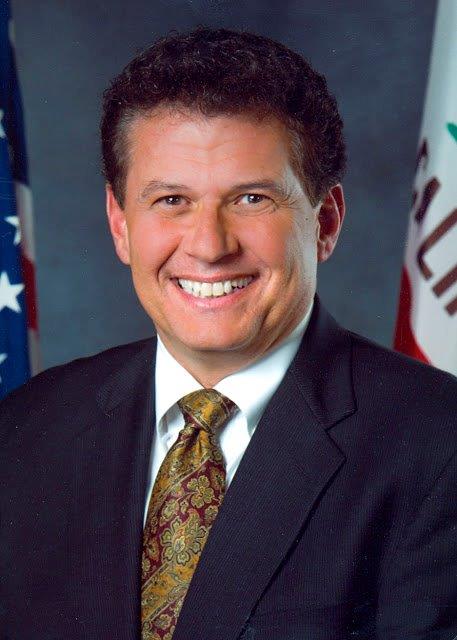
1 primary · 8 co-sponsors
Sponsors


Ask Maddy
·
AI policy assistant
Ask Maddy about SB 632
Scope: CA
Hi! I can help you understand SB 632. What would you like to know?
Try one of these
i
Maddy answers using official bill text and legislative records. Always verify before sharing.
Sources cited inline