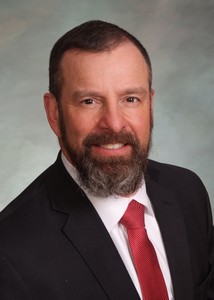
Photo of Eric Barlow
R Wyoming Senate · District 23

Sen. Eric Barlow

Compare
Total votes
1,838
all sessions
Attendance
96%
57 missed
Near the chamber average
With party
85%
of cast votes
Near the chamber average
Bipartisan score
9%
crosses aisle rarely
Near the chamber average
Sponsored
179
bills & resolutions
Near the chamber average
Committees
2
assignments
179 bills and resolutions

Sponsored bills

Total
179
Primary
18
Co-sponsor
161
This page
179
matching current filters
Primary SJ 9
Signed into law · Wyoming House · Lead sponsor
Keeping public lands protected and decisions local.

Maddy summaryWyoming's SJ 9 is a joint resolution urging Congress to protect the state's access to federal public lands while ensuring local communities have a say in land management decisions. It opposes broad or indiscriminate sales of public lands and demands federal agencies respect Wyoming's existing land-use plans, county-level input, and multiple-use frameworks that support recreation, agriculture, hunting, fishing, and resource development. The resolution also calls for funding to streamline efficient land exchanges under current laws when they benefit local communities and public access, without advocating for specific policy changes.

Signed into law Mar 9, 2026 0 co-sponsors
Co-sponsor SF 99
Signed into law · Wyoming Senate · Co-sponsor
Prescriptive easements for electricity delivery.

Maddy summaryThis bill creates a legal right for electric utilities to maintain existing power lines installed before 2006 across private land, without requiring written agreements. It directly affects landowners with pre-2006 lines and utilities that historically relied on informal neighborly cooperation for rural electrification. Key provisions require lines to be visibly installed, continuously used, and limit easements to 30 feet wide, while preventing utilities from expanding rights beyond original historic use. The law protects landowners from unreasonable utility burdens and ensures existing informal arrangements receive legal recognition.

Signed into law Mar 8, 2026 1 co-sponsor
Co-sponsor SF 113
Signed into law · Wyoming Senate · Co-sponsor
2026 election hand count comparison.

Maddy summaryWyoming's SF 113 requires county clerks to conduct hand counts of election ballots for the 2026 primary and general elections. Specifically, counties must physically examine approximately 5% of ballots for one federal race, one statewide race (selected by the state secretary of state), and all legislative races on the ballot. The hand count results must be compared to electronic tabulation results within nine days of the county canvass, with any discrepancies reported to the secretary of state. This bill directly affects county election officials who will implement the hand count audits. The law takes effect immediately upon becoming law, with reports due by May 1, 2027.

Signed into law Mar 8, 2026 1 co-sponsor
Co-sponsor SF 123
Signed into law · Wyoming Senate · Co-sponsor
Wyoming energy dominance fund.

Maddy summaryWyoming's SF 123 creates the Wyoming Energy Dominance Fund, administered by the Wyoming Energy Authority, to support the state's traditional energy industries. The fund receives a portion of severance tax revenues (50% for fiscal years 2027-2028, then 50% for 2029 onward) that would otherwise go to the permanent mineral trust fund or school accounts. It provides grants and loans for projects like coal innovation, natural gas, uranium processing, and pipeline infrastructure - requiring a 1:1 match from non-state funds - but explicitly excludes wind and solar energy projects. The fund aims to bolster Wyoming's energy sector, which supports over 60,000 jobs and generates significant state revenue.

Signed into law Mar 8, 2026 1 co-sponsor
Co-sponsor HB 39
Signed into law · Wyoming House · Co-sponsor
Firearms rights-restoration amendments.

Maddy summaryWyoming's HB 39 clarifies that individuals who have had their firearm rights restored under the laws of another state may legally possess firearms in Wyoming. The bill amends statutes (W.S. 6-8-102 and 6-10-106) to explicitly recognize out-of-state rights restoration as valid for Wyoming residents convicted of felonies or violent misdemeanors. This directly affects people with prior convictions who had their firearm rights restored in another jurisdiction but faced uncertainty under Wyoming law. The change takes effect immediately upon becoming law, removing barriers for these individuals to legally own firearms in Wyoming.

Signed into law Mar 8, 2026 1 co-sponsor
Co-sponsor HB 75
Signed into law · Wyoming House · Co-sponsor
Virtual currency kiosks.

Maddy summaryHB 75 establishes licensing requirements for businesses operating virtual currency kiosks in Wyoming. It requires operators to either hold a Wyoming money transmitter license or be a licensed financial institution, prohibiting unlicensed operation. The bill creates penalties for violations, including up to 3 years in jail or a $10,000 fine, and directs the banking commissioner to create rules for kiosk operations. It takes effect July 1, 2026, directly affecting businesses seeking to offer virtual currency exchange services through physical kiosks in the state.

Signed into law Mar 6, 2026 1 co-sponsor
Co-sponsor SF 105
Signed into law · Wyoming Senate · Co-sponsor
Real estate brokers-duties and disclosure amendments.

Maddy summarySF 105 redefines "customer" in Wyoming real estate law as a person who has not established an agency relationship with a broker, such as someone viewing properties without formal representation. It requires real estate licensees to provide written disclosures about agency relationships before discussing transactions, clarifying that customers do not need to sign agency agreements to tour properties and are not entitled to confidentiality. The bill specifies that these disclosures must include key details about the customer relationship and include a signature line for acknowledgment, though the acknowledgment alone does not create a binding contract. The changes take effect July 1, 2026, and apply to all new transactions after that date.

Signed into law Mar 6, 2026 1 co-sponsor
Primary SF 48
Signed into law · Wyoming Senate · Lead sponsor
Stem Cell Freedom Act.

Maddy summaryWyoming's SF 48, the Stem Cell Freedom Act, allows physicians to recommend and perform stem cell therapy using a patient's own cells (autologous mesenchymal stem cells), provided it follows institutional review board approval, current manufacturing standards, and includes written informed consent acknowledging the therapy isn't FDA-approved. The law prohibits the state board of medicine from disciplining doctors for offering this therapy and prevents state entities from denying patient access. It explicitly excludes abortion-derived materials and states insurers may choose but aren't required to cover the therapy. The bill creates no legal liability for providers who follow its requirements and medical standards.

Signed into law Mar 6, 2026 0 co-sponsors
Co-sponsor HB 26
Signed into law · Wyoming House · Co-sponsor
Vehicle registration fees-tribal governments.

Maddy summaryHB 26 exempts vehicles owned by the Eastern Shoshone and Northern Arapaho tribes (Wind River Indian Reservation) from Wyoming's county and state vehicle registration fees. The bill amends existing law to explicitly include tribal government vehicles under the exemption list, which previously covered federal/state/local governments and certain districts. This change applies only to vehicles used for tribal operations, not commercial activity. The exemption takes effect July 1, 2026. The bill directly affects tribal governments' operational costs for their official vehicles.

Signed into law Mar 6, 2026 1 co-sponsor
Co-sponsor SF 110
Failed · Wyoming Senate · Co-sponsor
Residential property tax revisions.

Maddy summaryWyoming's SF 110 establishes a lower property tax assessment rate for primary residences owned by residents who live there year-round. It sets an 8.3% assessment rate for owner-occupied primary homes (down from 9.5%) while maintaining a 9.5% rate for other residential properties. To qualify for the lower rate, homeowners must submit an annual claim to their county assessor by May 4th, demonstrating they occupy the property as their primary residence for at least six months. The bill repeals an existing exemption for primary residences and takes effect for the 2027 tax year.

Failed Mar 5, 2026 1 co-sponsor
Showing 1 to 10 of 179 bills
1 2 3 18 Next