Maddy summaryHB 102 prohibits the creation and distribution of AI-generated sexual images of children without consent (Section 6-4-307) and bans developing or distributing AI systems specifically designed to create or promote child sexual material (Section 6-4-308). It makes these acts felonies punishable by up to 10 years in prison and $10,000 fines, with harsher penalties for repeat offenses. The bill also clarifies that using AI to commit crimes isn’t a defense (Section 6-1-206) and provides limited immunity for AI developers who didn’t intend illegal use. It directly affects developers of AI tools, distributors of nonconsensual deepfakes, and individuals using AI to exploit children.

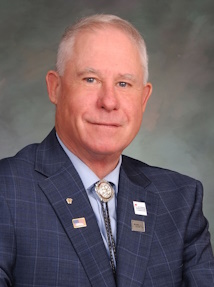
Rep. Bill Allemand
Sponsored bills
Maddy summaryWyoming's HB 96 lowers the minimum age to obtain a concealed carry permit from 21 to 18 years. It directly affects 18- to 20-year-olds who previously could not legally carry concealed weapons under state law. The bill amends permit eligibility requirements in statute and adds legal immunity for officials issuing or denying permits. The law takes effect July 1, 2026.
Maddy summaryWyoming's HB 120 creates "industrial sovereign zones" where natural gas producers and manufacturers can transform gas into new products (like hydrogen or ammonia) through substantial chemical changes. It provides tax exemptions for facilities in these zones, fast-track permitting for new manufacturing operations, and establishes a voluntary "gold standard" certification for products with low methane emissions (under 0.2%). The bill directly affects natural gas producers selling to these facilities and manufacturers building new processing plants within designated zones. Key provisions include streamlined licensing, tax breaks for machinery and gas sales, and certification standards to promote Wyoming-made products as distinct from raw fossil fuels.
Maddy summaryWyoming's HB 28 amends the legal definition of "explicit sexual conduct" under the state's child exploitation law. It adds specific examples like bestiality, masturbation, and sadistic/masochistic abuse to the existing definition, clarifying what constitutes the crime. This change directly affects law enforcement and prosecutors handling child exploitation cases by providing a more detailed standard for charging offenders. The updated definition takes effect on July 1, 2026.
Maddy summaryThis bill prohibits Wyoming state agencies and local law enforcement from using state funds to enforce federal gun regulations that conflict with Second Amendment rights. It creates criminal penalties (up to 1 year in jail or $2,000 fine) and civil penalties of $50,000 per violation for agencies that enforce such federal rules. The law specifically exempts cooperation with federal authorities on non-gun-related matters and defines key terms like "federal regulation" and "law abiding citizen."
Maddy summaryHB 147 ensures that Wyoming's current homeowner property tax exemption ends if voters approve a people's initiative creating a similar exemption. It adds a provision to repeal the existing exemption (under W.S. 39-11-105) on the date the Secretary of State certifies voter approval of such an initiative. This affects homeowners currently benefiting from the exemption, as the exemption would no longer apply for the 2027 tax year if the initiative passes. The bill becomes effective July 1, 2026, but the exemption repeal only triggers upon certification of voter approval.
Maddy summaryHB 95 allows individuals legally carrying concealed weapons without a permit under Wyoming law to do so at public colleges and universities, with one exception: they cannot carry during athletic events where alcoholic beverages are sold. The bill amends Wyoming's concealed carry statute to explicitly include college/university facilities as permitted locations, removing prior restrictions. It directly affects permitless concealed carry holders who are already authorized to carry under existing law (specifically W.S. 6-8-104(a)(ii)-(iv)). The law takes effect July 1, 2026, and does not change rules for campus employees or volunteers, who remain subject to separate school district regulations.
Maddy summaryHB 22 establishes a process for Wyoming residents to remove elected municipal officers (like mayors or city council members) through a voter petition. To trigger a recall, a petition must collect signatures from at least 25% of registered voters in the municipality, include general grounds for removal, and follow specific filing rules. If valid, the city clerk schedules a special election 30-40 days later, with a preliminary primary election if multiple candidates run for the position. The officer seeking removal can run against opponents, and the winner takes office for the remaining term unless they fail to qualify within 10 days. This bill directly affects local elected officials in Wyoming cities and towns, effective July 1, 2026.
Maddy summaryHB 90 requires Wyoming's state engineer to study how large-scale industrial water use permanently removes water from the natural water cycle (like data centers, carbon capture, and hydrogen production), excluding normal evaporation from irrigation. The study must analyze current impacts on all water users - including agriculture, municipalities, and recreation - and recommend ways to limit future impacts. It mandates a report to the legislature by November 2026, funded by a $500,000 appropriation specifically for this study. This bill does not change water rules but creates a formal process to assess emerging industrial water demands.
Maddy summaryHB 68 expands Wyoming's property tax exemption for veterans with permanent, total service-connected disabilities. It allows eligible veterans certified as having a 100% service-connected disability to claim a full exemption on the assessed value of their primary residence, including up to 10 acres of associated land - replacing the previous $6,000 annual limit. Surviving spouses who haven't remarried and keep the property as their primary residence also retain this full exemption. The change applies to tax years beginning January 1, 2027, and does not affect veterans who qualify only for the standard $6,000 exemption.