Maddy summaryWyoming's SJ 9 is a joint resolution urging Congress to protect the state's access to federal public lands while ensuring local communities have a say in land management decisions. It opposes broad or indiscriminate sales of public lands and demands federal agencies respect Wyoming's existing land-use plans, county-level input, and multiple-use frameworks that support recreation, agriculture, hunting, fishing, and resource development. The resolution also calls for funding to streamline efficient land exchanges under current laws when they benefit local communities and public access, without advocating for specific policy changes.

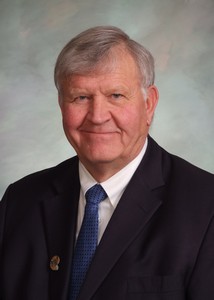
Rep. Lloyd Larsen
Sponsored bills
Maddy summaryHB 69 transfers two specific parcels of land from Wyoming's Department of Health to other entities. The first parcel (28.94 acres) in Fremont County is conveyed to the Wyoming Department of Transportation, and the second parcel (90.87 acres) is transferred to the City of Lander for residential housing use. The transfers involve only the surface estate, require no payment of consideration (though closing costs are paid by the recipient entities), and must comply with existing easements and restrictions. This bill is purely procedural, authorizing land conveyances without creating new policy or affecting broader state land management.
Maddy summaryThis bill updates Wyoming's rules for involuntary mental health treatment. It expands the list of qualified professionals who can conduct initial examinations for individuals needing hospitalization, while requiring a licensed physician or psychologist to review findings if non-physician examiners are used. For outpatient commitment (where patients don't require hospitalization but need supervision), courts must set a maximum two-year period with mandatory court reviews every six months. These changes apply to all Wyoming courts handling mental health commitment cases.
Maddy summaryHB 26 exempts vehicles owned by the Eastern Shoshone and Northern Arapaho tribes (Wind River Indian Reservation) from Wyoming's county and state vehicle registration fees. The bill amends existing law to explicitly include tribal government vehicles under the exemption list, which previously covered federal/state/local governments and certain districts. This change applies only to vehicles used for tribal operations, not commercial activity. The exemption takes effect July 1, 2026. The bill directly affects tribal governments' operational costs for their official vehicles.
Maddy summaryThis bill appropriates $15 million from Wyoming's tourism reserve fund to support the development of a rodeo and cowboy museum and hall of fame in Wyoming. The funds will be distributed in three installments of $5 million each on July 1, 2026, 2027, and 2028, contingent on the Wyoming Tourism Board certifying that relocation efforts will boost tourism, jobs, and state revenue. Applicants must provide matching funds (at least $1 for every $1 granted) and relocate to Wyoming by June 30, 2028, or repay the grant. The Wyoming Office of Tourism must report annually on fund usage until 2036.
Maddy summaryHB 115 requires all Wyoming school districts (including charter schools) to create and implement cardiac emergency response plans for general school settings and separate plans for athletic events. Key provisions mandate that schools place and maintain AEDs in unlocked, accessible locations (within 3 minutes), train staff in CPR and AED use per American Heart Association standards, and rehearse athletic venue protocols annually. The bill allocates $50,000 for reimbursement of implementation costs during the 2026-2027 and 2027-2028 school years, with priority for districts serving higher percentages of students eligible for free meals. It applies directly to school staff, students, and emergency medical providers by standardizing cardiac emergency protocols across all school properties and athletic events.
Maddy summaryThis bill requires regular drivers to yield to roadside service and tire repair vehicles when they're stopped or moving slowly near roadways. It allows these vehicles to use flashing white, amber, red, or blue lights and exempts them from having to install horns or sirens like emergency vehicles. The law directly affects roadside service crews, tire repair businesses, and all other drivers sharing roads with these vehicles. It takes effect on July 1, 2026.
Maddy summaryThis bill allows Wyoming county clerks to reject or add a "frivolous" notation to certain public filings that lack legal or factual merit or are submitted for improper purposes like harassment. It directly affects individuals and organizations submitting documents to county clerks, such as legal papers or public records. County clerks must first seek a court order after providing notice and a hearing opportunity to the filer before rejecting or noting a filing as frivolous. If a court declares a filing frivolous, it has no legal effect, and the clerk must refund any fees paid within 10 days. The law takes effect on July 1, 2026.
Maddy summaryHB 168 prohibits requesting an employer's experience rating to assess their safety record, including for construction projects in Wyoming. It requires the state worker's compensation division to determine within 15 days (or 45 days with additional information) whether an injury should be charged to an employer's account, and states such determinations can only be used for setting insurance premiums - not in court. The bill also clarifies that experience rating adjustments for premiums are capped at 65% until 2016 and 85% from 2017, and ensures injuries caused by third parties are not charged to employers. The law takes effect July 1, 2026.
Maddy summaryHB 161 requires Wyoming's health, insurance, and administration departments to conduct a study on health insurance markets, focusing on options that could lower costs for vulnerable groups like small businesses, rural residents, and early retirees. The study will examine three specific mechanisms: whether non-state residents could join the state employees' insurance plan (paying full costs), feasibility of a state reinsurance program to stabilize premiums, and strategies used by other low-population states. Crucially, the study is strictly advisory - no new programs, subsidies, or mandates will be created, and it explicitly prohibits expanding Medicaid or public assistance. The $250,000 study must be completed by October 2026, with findings reported to the legislature.