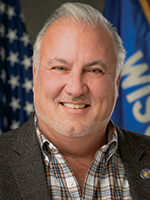
Photo of Cory Tomczyk
R Wisconsin Senate · District 29 On the 2026 ballot

Sen. Cory Tomczyk

Compare
Total votes
411
all sessions
Attendance
100%
of floor votes
Near the chamber average
With party
99%
of cast votes
Near the chamber average
Bipartisan score
2%
crosses aisle rarely
Near the chamber average
Sponsored
385
bills & resolutions
Near the chamber average
Committees
6
assignments
385 bills and resolutions

Sponsored bills

Total
385
Primary
385
Co-sponsor
0
This page
385
matching current filters
Primary SJR 116
Signed into law · Wisconsin Senate · Lead sponsor
Relating to: prohibiting the governor from using the partial veto to create or increase any tax or fee (second consideration).

Maddy summarySJR 116 is a proposed constitutional amendment that would prohibit governors from using their partial veto power to create or increase taxes or fees. If approved by voters, it would amend Article V, Section 10(1)(c) of the state constitution to block governors from altering tax or fee provisions during the veto process. This measure directly affects the governor's executive authority and state budget negotiations, requiring legislative action for any tax or fee changes. The amendment is now pending voter approval in the November 2026 election after passing the legislature with 18 "yes" votes.

Signed into law Jun 23, 2026 0 co-sponsors
Primary SB 420
Vetoed · Wisconsin Senate · Lead sponsor
Relating to: prohibiting rights of nature ordinances. (FE)

Maddy summarySB 420 prohibits cities, towns, villages, and counties from enacting "rights of nature ordinances," which are local laws granting legal rights to natural resources (like rivers or forests) to exist, be protected from pollution, or maintain healthy ecosystems. The bill directly affects local governments that might consider such ordinances. It creates a new statute (66.0132) explicitly banning these ordinances without providing exceptions. The law is purely procedural, preventing local governments from passing this specific type of ordinance.

Vetoed May 13, 2026 0 co-sponsors
Primary SB 184
Vetoed · Wisconsin Senate · Lead sponsor
Relating to: governmental restrictions based on the energy source of a motor vehicle or other device.

Maddy summarySB 184 would prevent Wisconsin state agencies and local governments from restricting the use or sale of motor vehicles or other devices based on their energy source (such as gasoline, electricity, or hydrogen). It specifically prohibits rules that ban or limit vehicles/devices due to their power source, though government fleets may still select energy types for their own purchases. The law would apply to all state and local regulations, including those governing vehicle access, sales, or device usage. This bill aimed to remove barriers for alternative-energy vehicles in public policy contexts.

Vetoed May 13, 2026 0 co-sponsors
Primary SB 25
Vetoed · Wisconsin Senate · Lead sponsor
Relating to: court-issued criminal complaints in officer-involved deaths.

Maddy summarySB 25 would require courts to defer to a district attorney's determination that there is no basis to prosecute a law enforcement officer involved in a death. Specifically, it prohibits judges from issuing criminal complaints against such officers unless new or unused evidence is presented, after the district attorney has already concluded there is no case to pursue. The bill directly affects officers in officer-involved death cases defined under Wisconsin law (s. 175.47 (1) (c)). This change shifts authority from courts to district attorneys in determining whether charges proceed, streamlining the process for cases where prosecutors have already declined to file.

Vetoed May 13, 2026 0 co-sponsors
Primary SB 76
Vetoed · Wisconsin Senate · Lead sponsor
Relating to: dismissing or amending certain criminal charges and deferred prosecution agreements for certain crimes.

Maddy summarySB 76 requires courts to approve any dismissal or amendment of criminal charges for specific "covered crimes" (like domestic abuse violations, certain traffic offenses, or crimes under Chapter 948). Prosecutors must provide reasons for seeking such changes, and courts can only approve if the action aligns with deterring these offenses. The bill also prohibits deferred prosecution agreements for these crimes and mandates annual court reports detailing approved dismissals. This directly affects prosecutors, courts, and defendants charged with the listed offenses.

Vetoed May 13, 2026 0 co-sponsors
Primary SB 610
Vetoed · Wisconsin Senate · Lead sponsor
Relating to: increasing the maximum penalty for certain controlled substances offenses if the violation occurs near a homeless shelter and providing a penalty.

Maddy summarySB 610 increases the maximum prison sentence for distributing methamphetamine or similar drugs near homeless shelters. If someone distributes these drugs within 1,000 feet of a homeless shelter - knowing or reasonably aware the shelter is nearby - their maximum prison term rises by 5 years. The bill specifically targets violations of drug distribution laws (Section 961.65) occurring in these proximity circumstances. This policy change directly affects individuals convicted of such drug distribution offenses near shelters, without altering existing penalties for other drug offenses.

Vetoed May 13, 2026 0 co-sponsors
Primary SB 276
Vetoed · Wisconsin Senate · Lead sponsor
Relating to: challenges to the validity of administrative rules and making an appropriation. (FE)

Maddy summarySB 276 changes how legal fees are handled when courts invalidate agency rules. It requires courts to award reasonable attorney fees and costs to parties successfully challenging administrative rules or guidance documents, provided the challenge is based on constitutional violations, exceeding statutory authority, or improper rule-making procedures. These fees and costs must be paid from specific state appropriations outlined in statutes (20.865 (1) (a), (g), or (q)), not from general funds. The bill directly affects individuals or organizations challenging agency rules and state agencies responsible for paying these costs.

Vetoed May 13, 2026 0 co-sponsors
Primary SB 275
Vetoed · Wisconsin Senate · Lead sponsor
Relating to: statements of scope for administrative rules. (FE)

Maddy summarySB 275 establishes time limits for statements of scope used by state agencies when creating administrative rules. It requires permanent rule scope statements to expire after 30 months and emergency rule statements after 6 months, after which agencies cannot base new rules on expired statements. The bill also mandates separate scope statements for concurrent emergency and permanent rule proposals and prohibits agencies from using a single scope statement for multiple rules. These changes apply to all Wisconsin administrative agencies creating new rules under the state's rulemaking process.

Vetoed May 13, 2026 0 co-sponsors
Primary SB 289
Vetoed · Wisconsin Senate · Lead sponsor
Relating to: requirements for proposed administrative rules that impose any costs.

Maddy summarySB 289 requires state agencies to provide detailed economic impact analyses for proposed rules that impose costs on businesses, local governments, or individuals. Agencies must quantify expected implementation and compliance costs (and potential savings) for each affected group, attribute all costs directly to the rule (not other laws or federal requirements), and include this in their analysis. If an independent analysis shows costs exceed $10 million over two years, the rule must be paused until costs are addressed or offset. This bill directly affects state agencies creating new rules and the businesses, local governments, and individuals who would bear the financial impact.

Vetoed May 13, 2026 0 co-sponsors
Primary SB 417
Vetoed · Wisconsin Senate · Lead sponsor
Relating to: visitation of a long-term care facility resident or hospital patient during a communicable disease outbreak.

Maddy summarySB 417 establishes rules for allowing essential visitors and clergy to visit residents in long-term care facilities (like nursing homes) and hospitals during communicable disease outbreaks. It requires facilities to permit at least one designated essential visitor (such as a family member or legal guardian) or clergy member in specific compassionate situations, including end-of-life care, grief support, or when a health professional determines the visitor’s presence benefits the patient. Facilities may deny visitation only if the visitor refuses safety protocols, poses a contagion risk, or the patient declines the visit. The bill also creates a process for residents to file complaints if facilities violate these rules and provides liability protection for facilities following the policy.

Vetoed May 13, 2026 0 co-sponsors
Showing 1 to 10 of 385 bills
1 2 3 39 Next