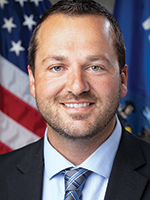
Photo of Romaine Quinn
R Wisconsin Senate · District 25

Sen. Romaine Quinn

Compare
Total votes
411
all sessions
Attendance
100%
of floor votes
Near the chamber average
With party
99%
of cast votes
Near the chamber average
Bipartisan score
2%
crosses aisle rarely
Near the chamber average
Sponsored
683
bills & resolutions
Near the chamber average
Committees
6
assignments
683 bills and resolutions

Sponsored bills

Total
683
Primary
683
Co-sponsor
0
This page
683
matching current filters
Primary SJR 6
Signed into law · Wisconsin Senate · Lead sponsor
Relating to: honoring the life and enduring legacy of Robert George Uecker.

Maddy summaryThis Senate Joint Resolution (SJR 6) is a ceremonial honor recognizing the life and legacy of Bob Uecker, the longtime Milwaukee Brewers radio broadcaster and entertainer. It formally acknowledges his 54-year broadcasting career with the Brewers, his acting roles (including *Mr. Belvedere* and *Major League*), philanthropy, and contributions to baseball and Wisconsin culture. The resolution has no policy impact - it simply expresses the Wisconsin Legislature’s tribute to Uecker’s "extraordinary contributions" through a symbolic resolution passed on March 20, 2025.

Signed into law May 26, 2026 0 co-sponsors
Primary SB 799
Vetoed · Wisconsin Senate · Lead sponsor
Relating to: parental access to health records of minors.

Maddy summarySB 799 modifies parental access to minors' health records. It requires parents to obtain written consent from minors aged 14 or older before accessing their health records, unless the minor is developmentally disabled (where consent isn't required). The bill also restricts access for parents who caused child protection cases (e.g., abuse/neglect), denying them access to health records if their child was placed under child protection services due to their actions. This applies specifically to health records covered under statutes related to patient care and treatment.

Vetoed May 13, 2026 0 co-sponsors
Primary SB 214
Vetoed · Wisconsin Senate · Lead sponsor
Relating to: registration of out-of-state health care providers to provide telehealth services. (FE)

Maddy summarySB 214 requires out-of-state health care providers (like doctors and nurses) to register with Wisconsin to offer telehealth services within the state. The bill establishes a new registration fee and mandates that providers maintain malpractice insurance coverage meeting Wisconsin’s standards for health care providers. It also requires registrants to report any license issues to Wisconsin authorities. The law directly affects telehealth providers from other states seeking to serve Wisconsin patients remotely. This bill creates a formal registration process to ensure provider accountability and patient protection in telehealth.

Vetoed May 13, 2026 0 co-sponsors
Primary SB 184
Vetoed · Wisconsin Senate · Lead sponsor
Relating to: governmental restrictions based on the energy source of a motor vehicle or other device.

Maddy summarySB 184 would prevent Wisconsin state agencies and local governments from restricting the use or sale of motor vehicles or other devices based on their energy source (such as gasoline, electricity, or hydrogen). It specifically prohibits rules that ban or limit vehicles/devices due to their power source, though government fleets may still select energy types for their own purchases. The law would apply to all state and local regulations, including those governing vehicle access, sales, or device usage. This bill aimed to remove barriers for alternative-energy vehicles in public policy contexts.

Vetoed May 13, 2026 0 co-sponsors
Primary SB 622
Vetoed · Wisconsin Senate · Lead sponsor
Relating to: fees related to animal markets, animal dealers, animal truckers, and animal transport vehicles. (FE)

Maddy summarySB 622 revises annual fee structures for animal market operators, dealers, and truckers in Wisconsin. It establishes three new market license classes: Class A ($420/year, allows livestock/auction sales any day), Class B ($220/year, limits auctions to 4 days), and Class E ($280/year, limited to equine sales only). The bill also creates a $20 annual fee for each registered animal transport vehicle and repeals outdated reinspection fee provisions. These changes directly affect businesses operating animal markets, dealers, and transporters by clarifying licensing requirements and standardizing fees.

Vetoed May 13, 2026 0 co-sponsors
Primary SB 289
Vetoed · Wisconsin Senate · Lead sponsor
Relating to: requirements for proposed administrative rules that impose any costs.

Maddy summarySB 289 requires state agencies to provide detailed economic impact analyses for proposed rules that impose costs on businesses, local governments, or individuals. Agencies must quantify expected implementation and compliance costs (and potential savings) for each affected group, attribute all costs directly to the rule (not other laws or federal requirements), and include this in their analysis. If an independent analysis shows costs exceed $10 million over two years, the rule must be paused until costs are addressed or offset. This bill directly affects state agencies creating new rules and the businesses, local governments, and individuals who would bear the financial impact.

Vetoed May 13, 2026 0 co-sponsors
Primary SB 36
Vetoed · Wisconsin Senate · Lead sponsor
Relating to: an income tax exemption for cash tips paid to an employee. (FE)

Maddy summarySB 36 creates a state income tax exemption for cash tips received by employees, directly benefiting service industry workers (like servers or bartenders) who report cash tips to their employers. The bill allows taxpayers to subtract up to $25,000 in qualified tips from their taxable income each year, provided the tips are reported via federal tax forms (like those used for IRS Form 1099-NEC). This exemption phases out for higher earners: single filers see reductions when their modified adjusted gross income exceeds $150,000, while joint filers face reductions above $300,000. To claim the exemption, filers must include their Social Security number and, for married couples, file a joint return.

Vetoed May 13, 2026 0 co-sponsors
Primary SB 176
Vetoed · Wisconsin Senate · Lead sponsor
Relating to: an income and franchise tax exemption for broadband expansion grants and for federal high-cost program funding for broadband expansion. (FE)

Maddy summarySB 176 creates tax exemptions for income received from broadband expansion grants and federal high-cost program funding. It exempts from state income and franchise taxes funds provided by the state, local governments, tribal governments, or the federal government for broadband expansion projects. This directly affects businesses, internet service providers, and organizations receiving these specific grants or federal funding. The exemption applies to both state broadband grants and federal high-cost program funds (under 47 USC 254) used for expanding broadband access in the state, effective for tax years beginning after December 31, 2024.

Vetoed May 13, 2026 0 co-sponsors
Primary SB 291
Vetoed · Wisconsin Senate · Lead sponsor
Relating to: making certain child care expenditures eligible for the business development tax credit. (FE)

Maddy summarySB 291 expands Wisconsin's business development tax credit to include certain employer-provided child care costs. It allows businesses to claim a tax credit equal to up to 15% of qualifying expenses for establishing or operating child care programs for employees, such as upfront setup costs, operational expenses, employee reimbursements, or reserved child care slots. The bill directly affects Wisconsin-based businesses that provide child care benefits to employees, making these costs eligible for the tax credit starting in 2025. Key provisions define "eligible child care costs" broadly to cover capital expenditures, operational spending, and reimbursements, while capping the credit at 15% of those expenses. The law applies to taxable years beginning after December 31, 2024.

Vetoed May 13, 2026 0 co-sponsors
Primary SB 432
Vetoed · Wisconsin Senate · Lead sponsor
Relating to: mandatory reporting requirements and referring cases of threatened or suspected child abuse to law enforcement. (FE)

Maddy summarySB 432 requires certain professionals, including social workers and agency employees who interact directly with children or handle child welfare cases, to report suspected or threatened child abuse to law enforcement. It mandates that county departments, the state department, and licensed child welfare agencies refer most abuse cases to police within 12 hours (excluding weekends/holidays) and adopt written policies for reporting specific types of abuse or neglect defined in state law. The bill adds a new reporting category for child welfare employees and clarifies when written policies must be created for certain abuse cases. This changes existing procedures by expanding who must report and requiring standardized policies for specific scenarios.

Vetoed May 13, 2026 0 co-sponsors
Showing 1 to 10 of 683 bills
1 2 3 69 Next