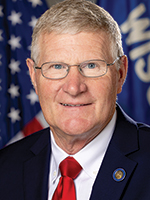
Photo of Howard Marklein
R Wisconsin Senate · District 17 On the 2026 ballot

Sen. Howard Marklein

Compare
Total votes
595
all sessions
Attendance
100%
of floor votes
Near the chamber average
With party
99%
of cast votes
Near the chamber average
Bipartisan score
1%
crosses aisle rarely
Near the chamber average
Sponsored
586
bills & resolutions
Near the chamber average
Committees
6
assignments
586 bills and resolutions

Sponsored bills

Total
586
Primary
586
Co-sponsor
0
This page
586
matching current filters
Primary SJR 6
Signed into law · Wisconsin Senate · Lead sponsor
Relating to: honoring the life and enduring legacy of Robert George Uecker.

Maddy summaryThis Senate Joint Resolution (SJR 6) is a ceremonial honor recognizing the life and legacy of Bob Uecker, the longtime Milwaukee Brewers radio broadcaster and entertainer. It formally acknowledges his 54-year broadcasting career with the Brewers, his acting roles (including *Mr. Belvedere* and *Major League*), philanthropy, and contributions to baseball and Wisconsin culture. The resolution has no policy impact - it simply expresses the Wisconsin Legislature’s tribute to Uecker’s "extraordinary contributions" through a symbolic resolution passed on March 20, 2025.

Signed into law May 26, 2026 0 co-sponsors
Primary SB 699
Vetoed · Wisconsin Senate · Lead sponsor
Relating to: alternative methods of providing pupil transportation services. (FE)

Maddy summarySB 699 modifies school transportation rules to allow more flexible options. It lowers the standard passenger limit for school buses from 14 to 9 or fewer people (excluding the driver) and creates a new emergency process: school boards can request temporary transportation for 10+ passengers if regular service is unavailable, requiring approval from the transportation secretary. The bill also specifies insurance requirements, mandating minimum $10,000 property damage and $25,000 bodily injury coverage for non-school-owned vehicles carrying 9 or fewer passengers. These changes directly affect school districts, bus contractors, and private providers offering pupil transportation services.

Vetoed May 13, 2026 0 co-sponsors
Primary SB 622
Vetoed · Wisconsin Senate · Lead sponsor
Relating to: fees related to animal markets, animal dealers, animal truckers, and animal transport vehicles. (FE)

Maddy summarySB 622 revises annual fee structures for animal market operators, dealers, and truckers in Wisconsin. It establishes three new market license classes: Class A ($420/year, allows livestock/auction sales any day), Class B ($220/year, limits auctions to 4 days), and Class E ($280/year, limited to equine sales only). The bill also creates a $20 annual fee for each registered animal transport vehicle and repeals outdated reinspection fee provisions. These changes directly affect businesses operating animal markets, dealers, and transporters by clarifying licensing requirements and standardizing fees.

Vetoed May 13, 2026 0 co-sponsors
Primary SB 291
Vetoed · Wisconsin Senate · Lead sponsor
Relating to: making certain child care expenditures eligible for the business development tax credit. (FE)

Maddy summarySB 291 expands Wisconsin's business development tax credit to include certain employer-provided child care costs. It allows businesses to claim a tax credit equal to up to 15% of qualifying expenses for establishing or operating child care programs for employees, such as upfront setup costs, operational expenses, employee reimbursements, or reserved child care slots. The bill directly affects Wisconsin-based businesses that provide child care benefits to employees, making these costs eligible for the tax credit starting in 2025. Key provisions define "eligible child care costs" broadly to cover capital expenditures, operational spending, and reimbursements, while capping the credit at 15% of those expenses. The law applies to taxable years beginning after December 31, 2024.

Vetoed May 13, 2026 0 co-sponsors
Primary SB 432
Vetoed · Wisconsin Senate · Lead sponsor
Relating to: mandatory reporting requirements and referring cases of threatened or suspected child abuse to law enforcement. (FE)

Maddy summarySB 432 requires certain professionals, including social workers and agency employees who interact directly with children or handle child welfare cases, to report suspected or threatened child abuse to law enforcement. It mandates that county departments, the state department, and licensed child welfare agencies refer most abuse cases to police within 12 hours (excluding weekends/holidays) and adopt written policies for reporting specific types of abuse or neglect defined in state law. The bill adds a new reporting category for child welfare employees and clarifies when written policies must be created for certain abuse cases. This changes existing procedures by expanding who must report and requiring standardized policies for specific scenarios.

Vetoed May 13, 2026 0 co-sponsors
Primary SB 424
Vetoed · Wisconsin Senate · Lead sponsor
Relating to: teacher preparatory programs.

Maddy summarySB 424 amends Wisconsin law to require all teacher preparatory programs in the state to mandate student teaching consisting of full days for a full semester or summer session, aligned with the cooperating school's daily schedule and calendar. This affects teacher preparation programs and applicants seeking teaching licenses in Wisconsin public schools. The bill specifies that the state superintendent must accept accreditation from U.S. Department of Education-recognized agencies for licensing or program approval purposes. Exceptions to the student teaching requirement are permitted only when institutional and school calendars conflict, as determined by the state superintendent.

Vetoed May 13, 2026 0 co-sponsors
Primary SB 810
Signed into law · Wisconsin Senate · Lead sponsor
Relating to: reimbursement for the provision of military funeral honors. (FE)

Maddy summarySB 810 increases the state reimbursement rate for certified veteran organizations providing military funeral honors from $50 to $100 per funeral. It directly affects local veteran groups certified by the department that offer these honors to eligible individuals. The bill amends statute 45.60(2) to update the reimbursement cap while maintaining the requirement that costs must be covered by the department from a specific appropriation. This is a procedural change to the existing reimbursement policy with no new eligibility criteria.

Signed into law Apr 9, 2026 0 co-sponsors
Primary SB 96
Signed into law Apr 9, 2026 0 co-sponsors
Primary SB 181
Signed into law · Wisconsin Senate · Lead sponsor
Relating to: a levy limit exemption for regional emergency medical systems and eligibility for the expenditure restraint incentive program. (FE)

Maddy summarySB 181 creates a levy limit exemption for local governments that fund regional emergency medical services (EMS). It allows counties or municipalities to count costs for regional EMS (via joint districts or agreements) toward their budget without triggering standard spending limits, provided the service area covers at least 232 square miles or 8+ municipalities. The bill requires that annual EMS funding increases stay within an inflation-adjusted cap (U.S. CPI plus 5%) and that the local government confirms a coordinated regional service area. This directly affects local governments operating regional EMS systems by making their funding more flexible under budget constraints. The exemption applies to costs for fire department-provided EMS and excludes these expenditures from standard spending limit calculations.

Signed into law Apr 9, 2026 0 co-sponsors
Primary SB 480
Signed into law · Wisconsin Senate · Lead sponsor
Relating to: residential tax incremental districts. (FE)

Maddy summarySB 480 modifies Wisconsin's rules for residential tax incremental districts (TIDs), which are special tax zones used to fund local development projects. It allows towns with sewer systems to create residential TIDs using city-level powers (previously limited to cities), extends the standard TID lifespan to 20 years (up from 15), and adds conditions for extensions: cities must provide an independent audit proving they cannot repay project costs within 20 years to request a 3-year extension. The bill also clarifies that project costs for residential TIDs can include expenses for newly platted single-family homes and adjusts lot size requirements for residential developments. These changes apply to TIDs created on or after October 1, 2004, with specific adjustments for districts approved after March 3, 2016.

Signed into law Apr 9, 2026 0 co-sponsors
Showing 1 to 10 of 586 bills
1 2 3 59 Next