Maddy summaryAB 500 bans corporal punishment in all public and private schools, defining it as intentional physical pain used for discipline (e.g., paddling or slapping). The bill prohibits school staff from using such punishment on students but allows reasonable force for safety under new school policies. Schools must adopt policies clarifying when force is permitted, excluding individualized education programs and athletic training. This directly affects all public and private schools and their staff in the state.

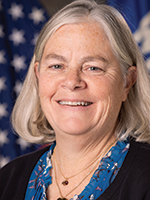
Rep. Tara Johnson
Sponsored bills
Maddy summaryAB 1012 establishes a family and medical leave insurance program that would allow eligible workers to take up to 14 weeks of leave per year to care for a newborn, newly adopted child, or family member with a serious health condition, or to address certain family military needs. The bill would require employers with 50 or more employees to provide this leave, funded through a new family and medical leave insurance trust fund. It defines "family member" broadly to include spouses, domestic partners, parents, children, siblings, and other close relatives or people in close association with the employee. The legislation also sets specific limits on leave availability, including a maximum of 6 weeks for certain family situations and 8-14 weeks for combined reasons within a 12-month period.
Maddy summaryAJR 126 is a ceremonial resolution honoring the late Representative Rudolph L. "Rudy" Silbaugh (1930-2025), who served in the Wisconsin State Assembly from 1991 to 1997. The resolution formally recognizes his 25 years of public service - including his work as a Stoughton alderman, his legislative committee roles, and his advocacy for seniors - and extends condolences to his family. It contains no policy changes or funding provisions, as it is solely a commemorative gesture by the Wisconsin Legislature. This procedural resolution directly affects no constituents or policies, serving only to memorialize Representative Silbaugh's legacy.
Maddy summaryAJR 11 is a ceremonial resolution honoring the late Wisconsin State Assembly Representative Jim Soletski (2006-2010). It recognizes his career in the energy industry, service as chair of the Assembly Energy and Utilities Committee, advocacy for Native American relations, and community involvement with groups like JOSHUA. The resolution expresses the legislature's condolences to his family and extends recognition of his public service. Passed by both chambers in October 2025, it was deposited with the Secretary of State as a formal commemoration, with no policy or financial impact.
Maddy summaryAB 80 would allow social workers, marriage and family therapists, and professional counselors licensed in this state to practice in other states that join the Social Work Licensure Compact without needing separate state licenses. The bill amends existing statutes to align state definitions and requirements with the compact framework, ensuring professionals certified under Chapter 457 can work across participating states. It directly affects licensed social work professionals seeking to practice in multiple states and changes how their credentials are recognized in statutes related to child welfare, mental health, and professional practice. The compact aims to streamline licensure for these professionals while maintaining state-specific standards.
Maddy summaryAB 326 creates a program providing grants to small local governments (populations under 7,500) to cover costs for grant writing and compliance assistance services. Grants up to $5,000 can be used for securing funding related to public works, transportation infrastructure, public safety, utility costs, or cybersecurity projects. The program requires a simple application listing only basic details (project purpose, contact info, and estimated costs) and prioritizes first-time applicants. A report evaluating the program must be submitted by December 2028.
Maddy summaryThis bill amends Wisconsin's Special Needs Scholarship Program to require private schools to implement individualized education programs or services plans for students with disabilities, as modified by agreement between the school and the parent. It mandates that private schools provide all records related to these program implementations within five days of receiving a request from the resident school board. The changes take effect starting with the 2026-27 school year, ensuring greater transparency and accountability in how private schools serving students with disabilities manage their educational plans.
Maddy summaryThis bill creates a new Civic Information Consortium Board within the University of Wisconsin System to oversee a grant program that supports local journalism and media projects across the state. The board will consist of representatives from the university system, local media organizations covering print, online, radio, and television, and public members, with funding of $20 million initially allocated for grants and operations. The nonprofit corporation established to administer the grants must ensure recipients remain independent from state influence, direct at least 30% of funding to rural communities, and prioritize projects that address underserved populations and improve media literacy. The program aims to strengthen access to quality local news and civic engagement while requiring annual reports on how funds are spent and their impact on the public.
Maddy summaryThis bill creates a journalism fellowship program within the University of Wisconsin System to place recent journalism graduates into local newsrooms. The program would establish a selection committee made up of university faculty and journalism industry professionals to review applications from candidates with degrees in journalism, media, or communications. Each year, the program would award 25 one-year fellowships providing $40,000 in salary to selected fellows, with funding appropriated for the 2025-26 and 2026-27 fiscal years. The bill also authorizes 25 full-time equivalent positions within the university system to administer the program starting July 1, 2026.
Maddy summaryAB 847 creates a state grant program providing $1.6 million annually to counties and tribes for mental health diversion programs. These programs offer alternatives to prosecution and incarceration for low-to-medium risk individuals with mental illness who interact with the criminal justice system, including deferred prosecution and restorative justice services. Eligible programs must provide holistic treatment (mental health care, housing, employment support), avoid including violent offenders, and collaborate with courts, prosecutors, and mental health providers. Counties receiving grants must submit annual reports on program impact, including effects on jail populations and participant outcomes, and comply with state audits. The bill aims to reduce incarceration costs, improve public safety, and address mental health needs through evidence-based approaches.