

Maddy summaryThis bill would create a tuition exemption for nonresident students attending University of Wisconsin System schools if they meet specific residency and immigration status requirements. To qualify, a student must have lived in Wisconsin for 12 consecutive months before registering for classes and must have approved deferred action status under the federal Deferred Action for Childhood Arrivals program. The exemption applies to students enrolling in the semester or session following the bill's effective date. This legislation is designed to provide financial relief to certain immigrant students by allowing them to pay in-state tuition rates despite not being Wisconsin residents. The bill was introduced in March 2026 and referred to the Committee on Colleges and Universities for review.
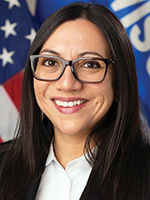
Rep. Angelina Cruz
Sponsored bills
Maddy summaryAB 847 creates a state grant program providing $1.6 million annually to counties and tribes for mental health diversion programs. These programs offer alternatives to prosecution and incarceration for low-to-medium risk individuals with mental illness who interact with the criminal justice system, including deferred prosecution and restorative justice services. Eligible programs must provide holistic treatment (mental health care, housing, employment support), avoid including violent offenders, and collaborate with courts, prosecutors, and mental health providers. Counties receiving grants must submit annual reports on program impact, including effects on jail populations and participant outcomes, and comply with state audits. The bill aims to reduce incarceration costs, improve public safety, and address mental health needs through evidence-based approaches.
Maddy summaryAB 790 creates a dedicated "Water Fund for Our Future" with an initial $250 million transfer from the general fund. The fund establishes a rapid response account to cover clean water-related costs during natural disasters or public health emergencies, including remediation and assistance for affected individuals. A new joint committee oversees fund spending, reviewing requests for funding (excluding non-clean-water uses) and recommending approvals to the finance committee. All funds must be used exclusively for clean water activities, with specific rules for disbursement and oversight.
Maddy summaryThis bill establishes a comprehensive clean energy framework requiring Wisconsin to achieve 100 percent clean electricity production and net-zero carbon emissions by 2050. It creates a new Office of Sustainability and Clean Energy within the Department of Administration to develop and update an economy-wide decarbonization roadmap using sector-based modeling. The legislation sets specific interim targets for carbon-free electricity, including 50 percent by 2030, 65 percent by 2035, 80 percent by 2040, 90 percent by 2045, and full carbon-free status by 2050. State agencies must consider purchasing renewable energy from providers with long-term contracts, though the requirements do not apply if generation is not technically feasible or cost-effective. The bill also provides funding for technology implementation and defines carbon-free resources to include hydroelectric power alongside other renewable sources.
Maddy summaryThis bill establishes a program to eliminate medical debt for eligible Wisconsin residents by creating a $10 million annual appropriation for the Department of Health Services to purchase and cancel outstanding medical bills. To qualify, residents must either have household income at or below 400 percent of the federal poverty line or owe medical debt equal to at least 5 percent of their annual household income. The department will identify eligible individuals, negotiate with healthcare providers and debt collectors to buy their outstanding balances, and then formally abolish the debt while minimizing tax consequences for recipients. The program prioritizes purchasing debt from providers serving low-income populations and those in areas disproportionately affected by medical debt, with annual reporting required to track the number of debts eliminated and demographic information of affected residents.
Maddy summaryThis bill creates a grant program to help school districts build or upgrade playgrounds to be accessible for students with disabilities. It allocates $1 million for each of the 2025-26 and 2026-27 fiscal years to fund these projects. The program requires school districts to match the grant amount with their own spending on playground construction or upgrades. Only school districts can apply for these grants, and the funding is intended specifically for making playgrounds accessible to pupils with disabilities.
Maddy summaryThis bill prohibits disability insurance policies and self-insured health plans from using artificial intelligence to deny prior authorization requests for medical necessity or experimental treatments. Instead, it requires that a licensed human healthcare provider must review these specific requests before any denial can occur. The law applies to limited service health organizations, preferred provider plans, and defined network plans, with exceptions for plans covered by collective bargaining agreements. If passed, the restrictions would take effect at the start of the fourth month following the bill's publication.
Maddy summaryThis bill establishes new funding and administrative provisions for Wisconsin's Medical Assistance program, including grants for community primary care and outreach services. It allocates $41.75 million for 2025-26 and $66.75 million for 2026-27 to support community health centers in hiring health workers, nurses, and social workers to provide care coordination services, particularly for individuals facing barriers like mental illness or homelessness. The legislation also creates a stabilization fund of $20 million for the BadgerCare Direct program, which pays providers directly for services rather than through insurance intermediaries. Additionally, the bill adds requirements for the state to maintain a 24/7 nurse consultation helpline, improve provider recruitment, and explore ways to reduce healthcare costs while ensuring timely access to medically necessary services.
Maddy summaryAB 1061 legalizes recreational cannabis possession and establishes a regulatory framework for cannabis production, sales, and medical use in Wisconsin. It directly affects individuals with past marijuana-related convictions (by creating a review unit to expunge these records), cannabis businesses (through new licensing and regulations), and state agencies (by creating a Division of Cannabis Regulation under the Department of Agriculture). Key provisions include allocating $30 million annually for regulatory operations, establishing medical cannabis registry fees, creating a $5 million fund for conviction reviews, and repealing outdated marijuana criminal penalties. The bill also introduces new taxes on cannabis sales to fund these programs and public health research.
Maddy summaryThis bill proposes to amend the legal definition of a "tenant at will" in the state's statutes. It would clarify that a tenant at will is someone who occupies a property with the landlord's permission but does not have a valid lease and does not make periodic rent payments. The bill also specifies that individuals holding property under a purchase contract or employment agreement are excluded from this definition. This change would affect how landlords and tenants are classified in housing situations without formal leases.