Maddy summaryAJR 11 is a ceremonial resolution honoring the late Wisconsin State Assembly Representative Jim Soletski (2006-2010). It recognizes his career in the energy industry, service as chair of the Assembly Energy and Utilities Committee, advocacy for Native American relations, and community involvement with groups like JOSHUA. The resolution expresses the legislature's condolences to his family and extends recognition of his public service. Passed by both chambers in October 2025, it was deposited with the Secretary of State as a formal commemoration, with no policy or financial impact.

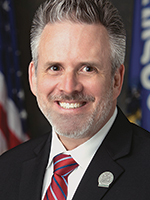
Rep. David Steffen
Sponsored bills
Maddy summaryAB 100 requires public and participating private schools to designate athletic teams and sports as "males" or "females" based solely on the sex assigned at birth (as recorded on a birth certificate). It prohibits students assigned male at birth from participating on female-designated teams or using female-designated locker rooms. The bill allows students denied participation or harmed by violations to sue for relief, and gives schools legal recourse if they face penalties for following the policy. This directly affects student athletes in school sports programs and defines participation eligibility based on biological sex at birth.
Maddy summaryAB 102 requires University of Wisconsin and technical college athletic programs to designate intercollegiate and club sports teams exclusively for "males" or "females" based on birth sex as recorded on a student's birth certificate. It prohibits students assigned male at birth from participating on teams designated for females or using female-designated locker rooms. The bill creates legal remedies for female students denied participation or harmed by violations, and for institutions facing penalties for compliance. It applies to all such teams starting in the first semester after the law takes effect, overriding existing anti-discrimination protections for these specific athletic contexts.
Maddy summaryAB 104 prohibits health care providers from performing or referring minors under 18 for medical interventions intended to change their physical characteristics to match a gender different from their biological sex. It specifically bans surgeries (like hysterectomy or orchiectomy), mastectomies, puberty-blocking drugs, and high-dose cross-sex hormone treatments. Exceptions apply for genetic disorders of sex development, treating complications from prior procedures, or immediate life-threatening conditions. Violations could result in license revocation for health care providers by the licensing board.
Maddy summaryAB 24 requires Wisconsin county sheriffs to verify the immigration status of individuals jailed for felony offenses by requesting specific documentation (such as passports, birth records, or immigration documents) to confirm lawful presence in the U.S. If verification fails, sheriffs must notify federal Homeland Security and comply with federal detainer requests. Sheriffs must annually report compliance and maintain records of individuals found unlawfully present, with data shared with the state justice department. Counties failing to comply face a 15% reduction in state funding for the following year. The bill directly affects felony inmates, sheriffs, and state-local funding relationships.
Maddy summaryAB 461 creates a new tax deduction for Wisconsin taxpayers who earn qualifying overtime pay. It allows individuals to subtract up to $12,500 (or $25,000 for joint filers) of overtime compensation from their taxable income, provided the overtime was reported to the IRS via standard forms (like Form 1099-NEC). The deduction phases out for higher earners: it decreases by $100 for every $1,000 their modified federal adjusted gross income exceeds $150,000 (or $300,000 for joint filers). This applies only to overtime pay reported to the IRS, excluding tips, and requires taxpayers to include their Social Security number on their return.
Maddy summaryAB 549 updates rules for manufactured home sales and title certificates in the state. It directly affects manufactured home dealers, buyers, and county offices handling title records. Key changes include requiring dealers to provide receipts for title payments, preventing dealers from listing themselves as owners on title applications when reselling, and mandating that title records include the home's location by county. The bill also clarifies when title applications are considered submitted and specifies details required on title documents, such as the home's address and identification number.
Maddy summaryAB 281 requires state agencies and contractors to verify employees' work eligibility through the federal E-Verify program before hiring or awarding government contracts. It prohibits contracts with employers not enrolled in E-Verify or who knowingly hire workers flagged as ineligible by the program. Contracts must include written verification statements, and violations require immediate termination without liability for uncompleted work. The law applies to state procurement, construction, and local government hiring, but stops if the federal E-Verify program ends.
Maddy summaryAB 457 would allow California school districts to adopt resolutions exceeding their legally set revenue limits under specific, defined conditions. It directly affects school districts seeking flexibility to spend more than their allocated budget for certain needs, such as addressing unexpected costs or funding critical projects. The bill establishes clear criteria and procedures districts must follow to request and receive approval for exceeding revenue limits. Currently, the bill has passed the Education Committee and is pending further review by the Rules Committee, but it has not yet become law.
Maddy summaryAB 326 creates a program providing grants to small local governments (populations under 7,500) to cover costs for grant writing and compliance assistance services. Grants up to $5,000 can be used for securing funding related to public works, transportation infrastructure, public safety, utility costs, or cybersecurity projects. The program requires a simple application listing only basic details (project purpose, contact info, and estimated costs) and prioritizes first-time applicants. A report evaluating the program must be submitted by December 2028.