Maddy summaryAJR 11 is a ceremonial resolution honoring the late Wisconsin State Assembly Representative Jim Soletski (2006-2010). It recognizes his career in the energy industry, service as chair of the Assembly Energy and Utilities Committee, advocacy for Native American relations, and community involvement with groups like JOSHUA. The resolution expresses the legislature's condolences to his family and extends recognition of his public service. Passed by both chambers in October 2025, it was deposited with the Secretary of State as a formal commemoration, with no policy or financial impact.

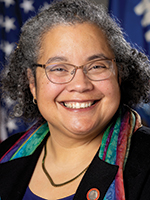
Rep. Margaret Arney
Sponsored bills
Maddy summaryThis bill establishes a longevity bonus program for teachers in Wisconsin school districts, providing a $7,000 payment to educators who have been continuously licensed and employed by the same school board for five consecutive school years starting in the 2031-32 academic year. The program allows teachers to receive additional bonuses for each subsequent five-year period of continuous service, with school boards required to annually report eligible teacher names to the Department of Public Instruction. The legislation creates new statutory sections to authorize funding for these payments and defines eligibility requirements based on continuous licensure and employment history.
Maddy summaryAB 943 creates a new law (Section 941.236) prohibiting people from carrying firearms within 100 feet of polling places during voting hours (one hour before opening to one hour after closing). It directly affects voters, election workers, and anyone near polling locations during elections. The law applies to all individuals except law enforcement officers, qualified out-of-state officers, former officers, property owners on their own land, and security personnel acting in their official duties. Violating this provision is a serious misdemeanor charge.
Maddy summaryAB 790 creates a dedicated "Water Fund for Our Future" with an initial $250 million transfer from the general fund. The fund establishes a rapid response account to cover clean water-related costs during natural disasters or public health emergencies, including remediation and assistance for affected individuals. A new joint committee oversees fund spending, reviewing requests for funding (excluding non-clean-water uses) and recommending approvals to the finance committee. All funds must be used exclusively for clean water activities, with specific rules for disbursement and oversight.
Maddy summaryThis bill establishes a comprehensive clean energy framework requiring Wisconsin to achieve 100 percent clean electricity production and net-zero carbon emissions by 2050. It creates a new Office of Sustainability and Clean Energy within the Department of Administration to develop and update an economy-wide decarbonization roadmap using sector-based modeling. The legislation sets specific interim targets for carbon-free electricity, including 50 percent by 2030, 65 percent by 2035, 80 percent by 2040, 90 percent by 2045, and full carbon-free status by 2050. State agencies must consider purchasing renewable energy from providers with long-term contracts, though the requirements do not apply if generation is not technically feasible or cost-effective. The bill also provides funding for technology implementation and defines carbon-free resources to include hydroelectric power alongside other renewable sources.
Maddy summaryThis bill establishes a state assistance program to help smaller municipalities, specifically 3rd and 4th class cities, villages, and towns, upgrade their water infrastructure to meet federal water quality standards. The program would provide grants covering up to 50 percent of project costs, with the Department of Natural Resources responsible for administering applications, setting eligibility criteria, and prioritizing projects based on established rules. An appropriation of $10 million is included for the 2025-26 fiscal year to fund these assistance payments, and the department must approve all project plans and specifications before funds are released.
Maddy summaryAB 890 allows healthcare providers to administer medically appropriate vaccines to minors aged 16 or older without parental consent if the minor requests it. The bill requires providers to obtain the minor’s consent before billing third parties for the vaccination; if the minor declines third-party billing, they pay directly and the department bills them per existing fee rules. This directly affects minors aged 16+ seeking vaccinations, healthcare providers, and billing processes for such services. The policy changes focus on expanding minor autonomy for specific vaccinations while maintaining clear billing requirements.
Maddy summaryThis bill establishes a program to eliminate medical debt for eligible Wisconsin residents by creating a $10 million annual appropriation for the Department of Health Services to purchase and cancel outstanding medical bills. To qualify, residents must either have household income at or below 400 percent of the federal poverty line or owe medical debt equal to at least 5 percent of their annual household income. The department will identify eligible individuals, negotiate with healthcare providers and debt collectors to buy their outstanding balances, and then formally abolish the debt while minimizing tax consequences for recipients. The program prioritizes purchasing debt from providers serving low-income populations and those in areas disproportionately affected by medical debt, with annual reporting required to track the number of debts eliminated and demographic information of affected residents.
Maddy summaryThis bill creates a new state program called WisEARNS designed to help workers in Wisconsin who do not have access to employer-sponsored retirement plans save for their future. The legislation establishes a WisEARNS board with members representing investors, small business owners, employees, employers, and financial experts to oversee the program's implementation. The program would automatically enroll eligible employees who work in Wisconsin and lack retirement savings options into a state-managed retirement savings account, with the board responsible for selecting a vendor to administer the plan. The bill also authorizes the state treasurer to make rules for the program and includes an appropriation to fund its initial operations.
Maddy summaryAB 916 creates a state-funded home repair program to address habitability issues and improve energy efficiency in affordable housing. It provides grants of up to $25,000 per unit to eligible homeowners (income ≤100% of area median income who own or occupy their homes) and interest-free loans of up to $25,000 to eligible landlords (owning ≤5 properties/15 units of affordable housing). The program prioritizes repairs for homes with health/safety hazards, energy efficiency upgrades, and accessibility improvements for individuals with disabilities or young children. Properties must be between 10 and 40 years old to qualify, and funds are administered by the state authority or contracted counties/nonprofits with strict reporting requirements.