

Maddy summaryThis bill, known as the Ratepayer Protection Act, modifies federal energy laws to ensure that large industrial customers pay for the specific infrastructure upgrades needed to serve their high electricity demands. It directly affects non-residential facilities with a peak power usage of 100 megawatts or more, requiring utilities to charge these customers the full incremental cost of any necessary generation, transmission, or distribution improvements. Under the new rules, large customers must also provide financial guarantees or contributions before such upgrades are made, ensuring utilities can recover costs even if the customer leaves the contract early. State regulators have two years to implement these standards, though the bill exempts utilities in states that have already enacted similar measures or are actively considering them.
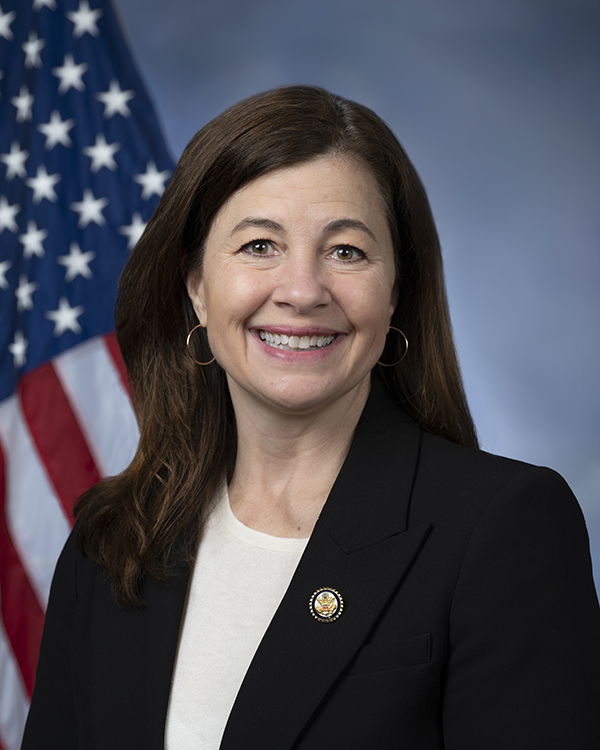
Rep. Kristen McDonald Rivet
Sponsored bills
Maddy summaryThis bill designates the United States Postal Service facility at 117 West Lovett Street in Charlotte, Michigan, as the "Francis C. Flaherty Post Office Building." It directly affects the specific postal location by officially changing its name in federal records and documents. The key provision ensures that all future legal and official references to this building will use the new name. This is a commemorative measure that honors an individual without altering operational policies or funding.
This bill designates the facility of the United States Postal Service located at 401 North Elm Street in Tuskegee, Alabama, as the "Tuskegee Airmen Memorial Post Office".
Maddy summaryThe Reverse Big Ugly Tax Breaks for Data Centers Act removes specific tax incentives for large-scale data centers and artificial intelligence facilities. It excludes these facilities from bonus depreciation, a provision that currently allows businesses to deduct the full cost of certain equipment in the year it is purchased. Additionally, the bill prevents these properties from qualifying as opportunity zone business property, which would otherwise offer significant tax benefits for investments in designated areas. The legislation targets structures with a power capacity exceeding 50 megawatts that are dedicated to data storage, processing, or AI operations.
Maddy summaryThis bill would require Medicare to cover early detection screening tests for Alzheimer's disease and related dementias starting January 1, 2028. It defines eligible tests as FDA-cleared genomic blood tests, blood product analyses, or equivalent medical imaging methods (like protein expression or whole genome sequencing) that detect pre-symptomatic or early-stage conditions. Medicare beneficiaries would receive this coverage without cost-sharing for these specific screenings. The bill amends Medicare coverage rules to explicitly include these tests under Section 1861(nnn) of the Social Security Act.
Maddy summaryHR 2805, the PLAN for Broadband Act, requires the federal government to create a National Strategy to Close the Digital Divide within one year of enactment. This strategy must coordinate all federal broadband programs, streamline permitting for infrastructure installation on federal property, and reduce administrative burdens for state, local, and Tribal governments participating in these programs. The bill mandates a follow-up Implementation Plan within 120 days, including accountability measures, common data standards for funding, and regular congressional briefings. The strategy and plan aim to reduce program duplication, improve efficiency, and address gaps in broadband access, particularly for underserved communities and Tribal lands, with oversight from the Government Accountability Office.
Maddy summaryHR 1266, the Combating Illicit Xylazine Act, adds xylazine - a veterinary sedative increasingly found in illicit drug mixtures - to Schedule III of the Controlled Substances Act, regulating its use and trafficking. It directly affects veterinarians, animal owners, and manufacturers by allowing xylazine to be legally dispensed for animal use under specific veterinary prescriptions, while prohibiting non-veterinary human use. The bill includes transition periods (60 days for practitioners, 1 year for labeling) to ease compliance for manufacturers and practitioners, and requires the DEA and FDA to expedite necessary applications. It also mandates two congressional reports on xylazine's illicit use and trafficking patterns, and directs the Sentencing Commission to review penalties for offenses involving xylazine.
Maddy summaryThe Pray Safe Act of 2025 establishes a federal Clearinghouse within the Department of Homeland Security to provide houses of worship, faith-based organizations, and nonprofit groups at risk of threats with evidence-based safety resources. The Clearinghouse will publish online best practices for security planning, facility safety, and incident response, while listing existing federal and state grant programs to help these organizations implement these measures. It requires annual updates based on user feedback and includes a centralized resource section for contacts like Protective Security Advisors and Fusion Centers. The program expires four years after enactment and does not create new funding but coordinates existing federal and state safety resources.
Maddy summary# Summary of Digital Commodities and Blockchain Technology Regulatory Framework This comprehensive legislation establishes a new regulatory framework specifically for digital commodities and blockchain technology, creating a balanced approach that protects investors while fostering innovation. ## Key Components 1. **New Regulatory Structure**: - Creates new categories for digital commodity exchanges, brokers, and dealers under the Commodity Futures Trading Commission (CFTC) - Establishes "qualified digital asset custodians" as a new regulatory category - Defines "mature blockchain systems" with special regulatory treatment 2. **Core Requirements**: - Mandates segregation of customer assets and strict custody requirements - Requires robust risk management systems - Sets capital requirements for digital commodity brokers and dealers - Establishes new disclosure and reporting obligations - Defines "blockchain control persons" with special restrictions on selling digital commodities 3. **Innovation-Focused Provisions**: - Creates a "Strategic Hub for Innovation and Financial Technology" (FinHub) at the SEC - Establishes "LabCFTC" as a dedicated innovation lab within the CFTC - Provides exemptions for SEC-registered entities from certain CFTC requirements - Includes provisions for expedited hiring of digital commodities experts 4. **Studies and Research**: - Mandates studies on decentralized finance (DeFi) - Requires a study on non-fungible tokens (NFTs) - Directs a study on financial literacy among digital commodity holders - Requires a study on tokenized securities and derivatives 5. **Exclusions**: - Excludes decentralized finance activities from regulation - Excludes certain blockchain-related activities from regulatory requirements The legislation aims to create a functional regulatory framework that acknowledges the unique benefits and risks of digital commodities while ensuring investor protection, preventing market manipulation, and promoting the responsible development of this emerging technology within the United States. It seeks to prevent the shift of digital commodity development to less regulated countries by establishing a clear, balanced regulatory path.
Maddy summaryHR 2592, the Aviation Medication Transparency Act of 2025, requires the Federal Aviation Administration (FAA) to create and maintain a public website listing medications approved for use by pilots and aircrew (airmen) during medical certification. The list must be developed with input from pilots' unions, air traffic controllers' representatives, and other stakeholders, and include details like "Do Not Issue" medications, required duty limitations for new medications, and contact information for medical providers. The FAA must publish this list within one year of the bill's enactment and update it annually. This directly affects pilots seeking or holding medical certifications by providing clear, accessible information about medication use in aviation.